
DIY Natural Orange Peel & Vinegar Cleaner
Affiliate Disclosure: This post may contain affiliate links. If you purchase through them, I may earn a commission at no extra cost to you.
Don’t toss out those orange peels! Why waste them when they can be used to make your own all-purpose orange peels & vinegar cleaner? Whether you’re deeply invested in the urban homesteading lifestyle or just trying to stretch every last dollar in this crazy economy, making your own orange peel and vinegar cleaner is a great way to save more and waste less!
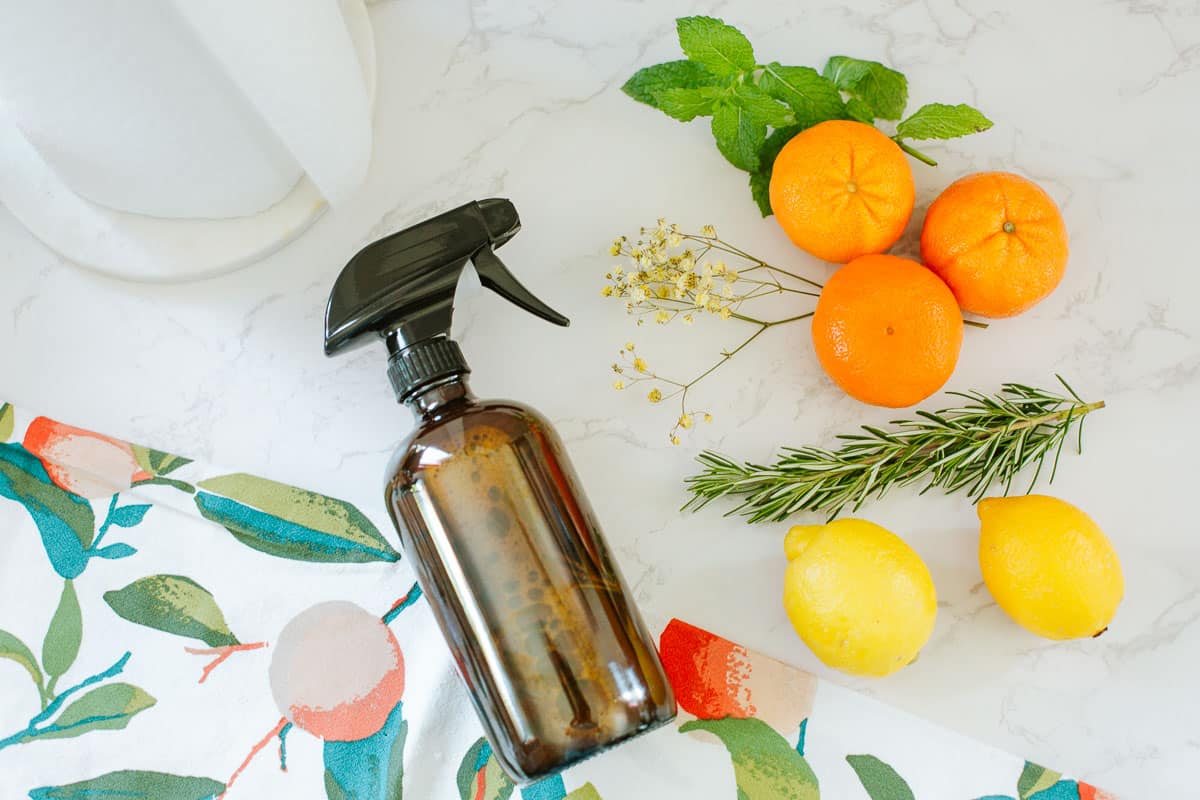
Even though this DIY orange peel and vinegar cleaner calls for oranges, you can use any citrus fruit! This time around I used up 2 navel oranges and 1 lemon to make orange simple syrup before using the peels to make this natural multipurpose cleaner, but what you do with your fruit is entirely up to you!
You can use oranges and lemons to make a Mediterranean charcuterie board or use them to add a burst of citrus to jasmine simple syrup or Empress gin cocktails. If you’re working with limes, use them to make this drunken serrano salsa, tacos de camaron, or this vegan tom kha soup.
Vinegar is great for cleaning! The acidity helps break down grease, scum, sticky residue, and more! Plus, if you’ve ever forgotten about the laundry in the washing machine, you may have learned that vinegar is great for removing odors and stains too! The orange peels in this recipe infuse the vinegar with even more cleaning power, as well as a pleasant smell.
💡 Why This DIY Recipe Works
- With the rising price of groceries (and also everything else), it’s becoming more and more beneficial to make what you can from home to save on household costs.
- Enjoy the fruits of your labor – literally! The first step is to eat up those fresh oranges (or other citrus fruits), then instead of discarding the rinds, we’re gonna put them to good use!
- You can keep it super simple by just combining orange peels & vinegar, or you can have fun with it by adding herbs, flowers, essential oils, and more!
- Making your own eco-friendly household cleaners reduces exposure to potentially harmful synthetic chemicals.
Did you know most multipurpose cleaners contain chemicals like ammonia, phthalates, triclosan, and more? Exposure to these chemicals (and others) has been shown to cause irritation to the eyes, skin, and respiratory system. Combining certain cleaners, such as window cleaners and bleach, can create harmful gasses that can lead to coughing and difficulty breathing. Prolonged exposure can even lead to serious issues like bronchitis or pneumonia.
🛒 What You Need To Make Rosemary Water
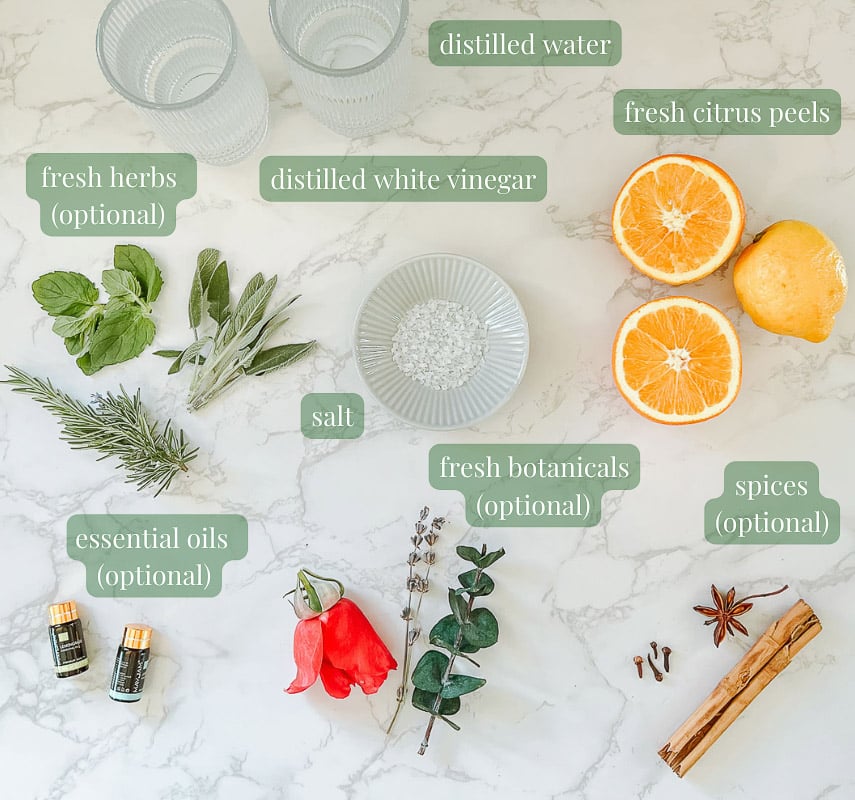
📝 Ingredients And Substitutions
Citrus
Any citrus peels will do! Citrus peels contain natural compounds such as d-limonene, which is great for breaking down dirt, grime, and grease. They also contain oils that have antibacterial properties, and smell great too! You can use oranges, lemons, limes, grapefruits, etc.
Herbs
Herbs such as rosemary, thyme, oregano, sage, mint, and many others contain natural compounds that give them antibacterial, antifungal, and antimicrobial properties that can inhibit the growth of bacteria.
Spices
Spices such as cinnamon, clove, star anise, etc. can help naturally de-odorize surfaces.
Flowers
Many fresh flowers and botanicals such as eucalyptus, rose, lavender, and chamomile have antibiotic properties. Plus, they add a pleasant fragrance!
Essential Oils
You can use any essential oils you like to enhance the fragrance, but certain oils such as tea tree, lemongrass, eucalyptus, and rosemary can also be used to give your orange peel & vinegar spray an antimicrobial & antifungal boost! These oils also help prolong shelf-life.

This ultimate guide to natural, eco-friendly cleaning is a great resource for more ideas!
If you’re interested in learning more about herbalism, The Modern Herbal Dispensatory is a great place to start.
🧺 What Equipment Do I Need?
- Large mason jar or airtight container
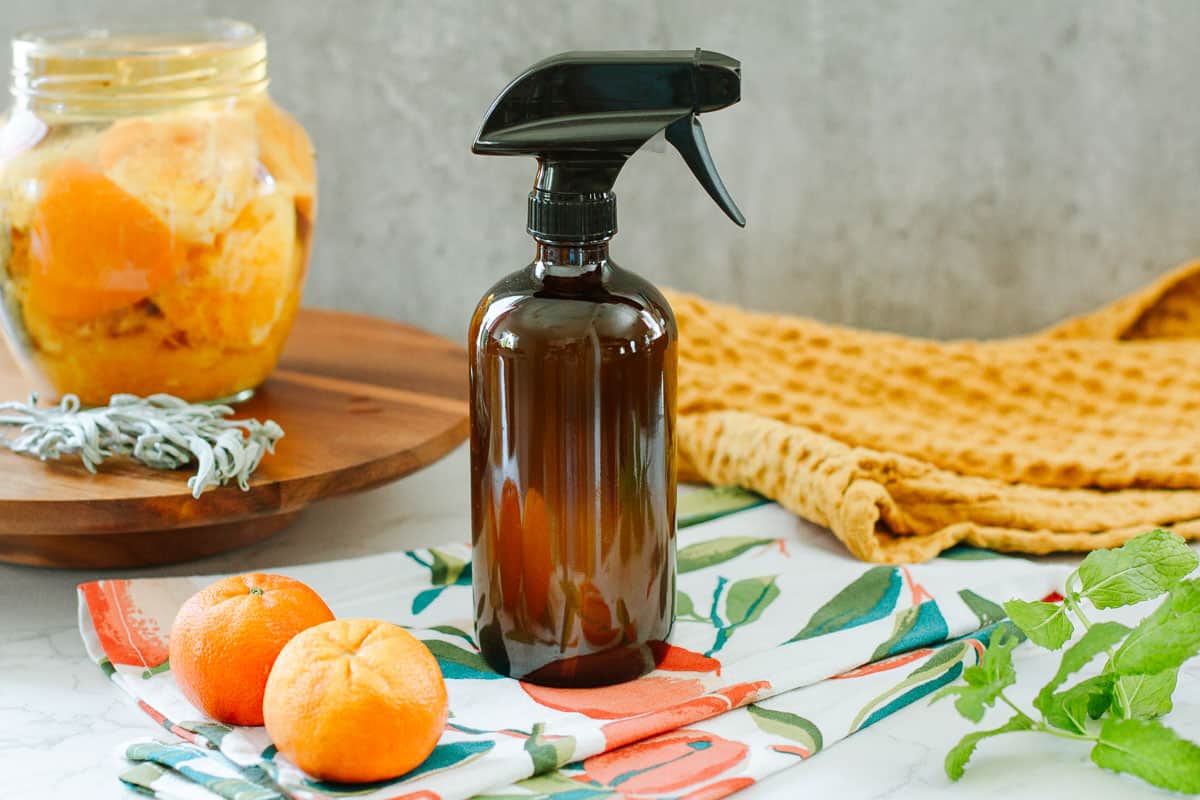
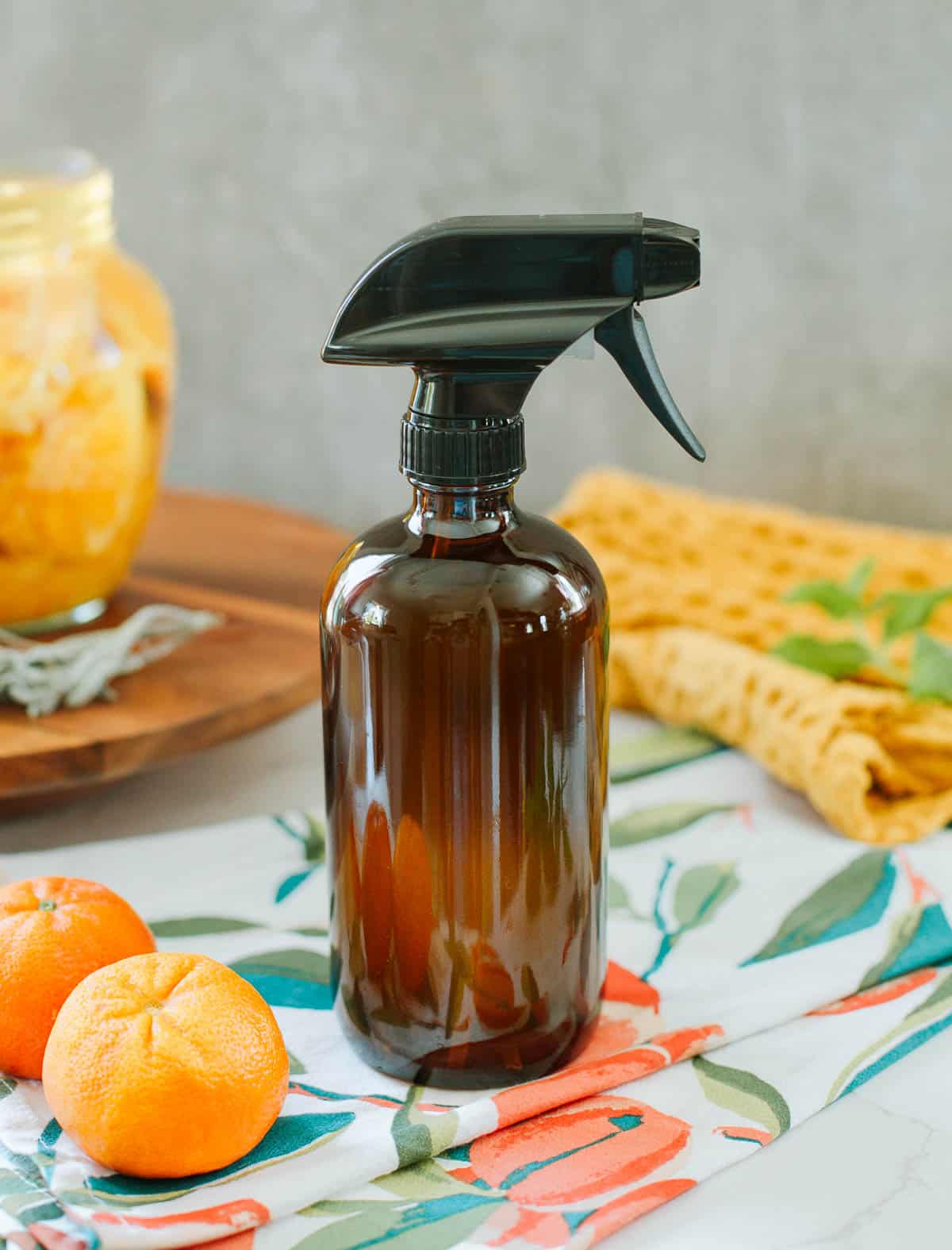
- Spray bottles. I recommend using amber glass because it will protect & preserve the quality of the spray from UV rays.
- Fine mesh strainer
- Funnel
- Fermentation weights to keep ingredients under the surface. You can also use a clean stone.
- Essential oils (optional)
- Labels so you won’t forget what’s in the bottle (optional)
🍊 How To Make Orange Peels + Vinegar Cleaner
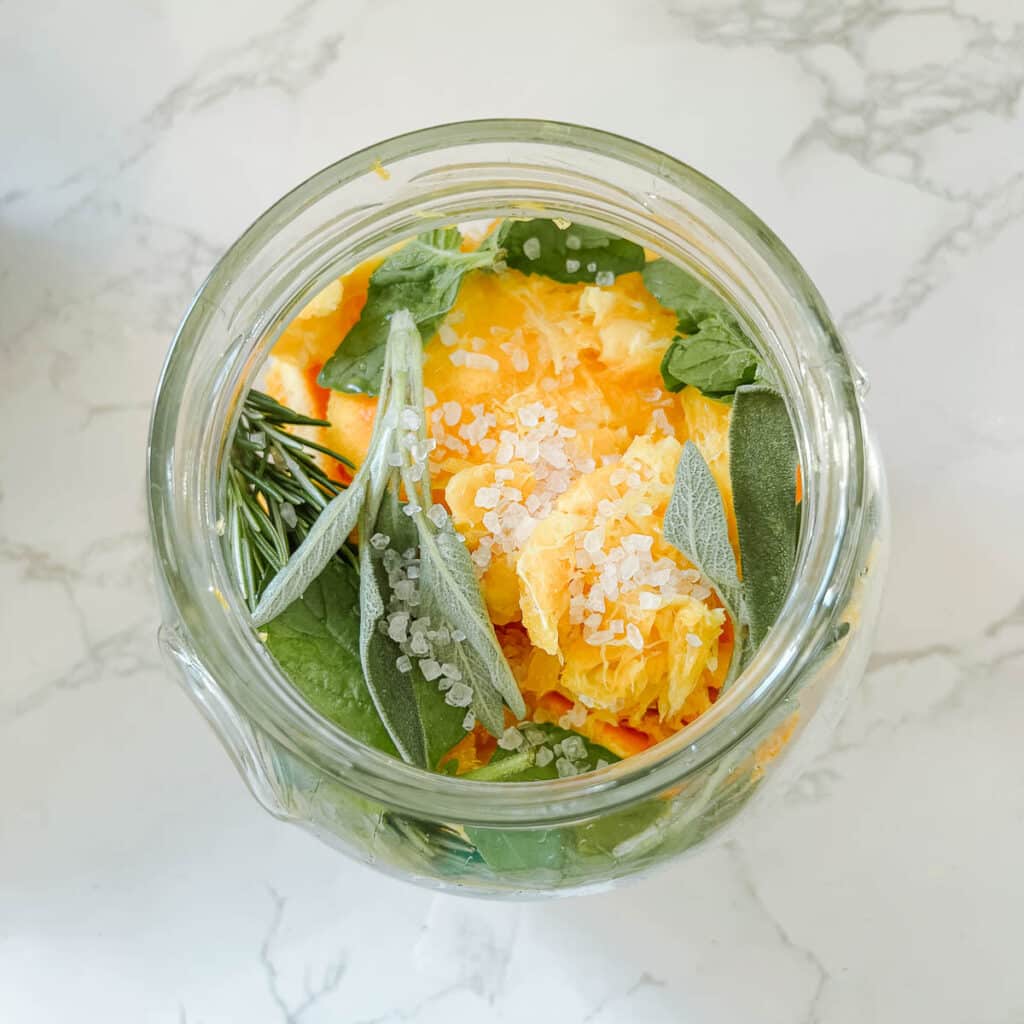
Step 1: Layer citrus peels into a large glass jar, along with fresh herbs and sea salt.
Pro Tip: The orange peels I used this time still had a lot of flesh on them because I had been juicing the oranges for a recipe. You can do what I did or just peel the oranges like normal. Either way, we’ll be straining it later.
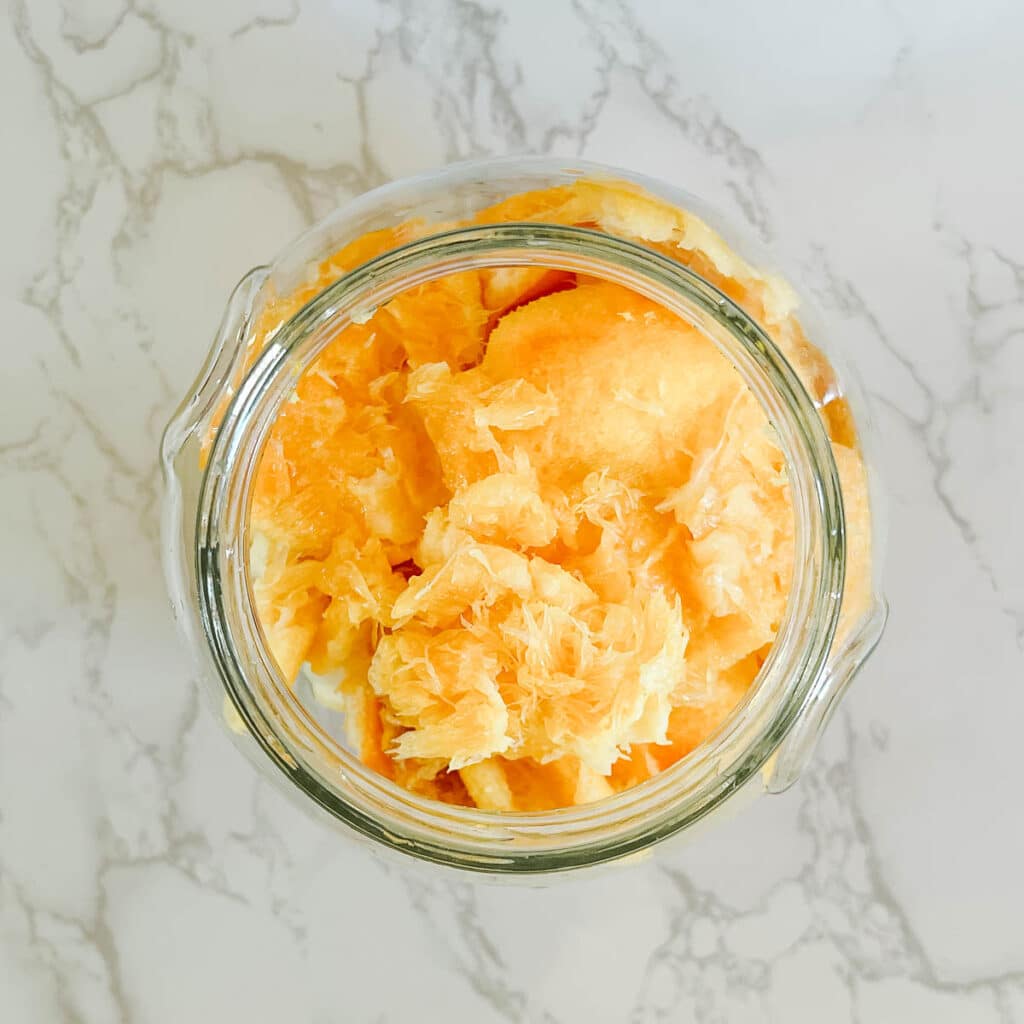
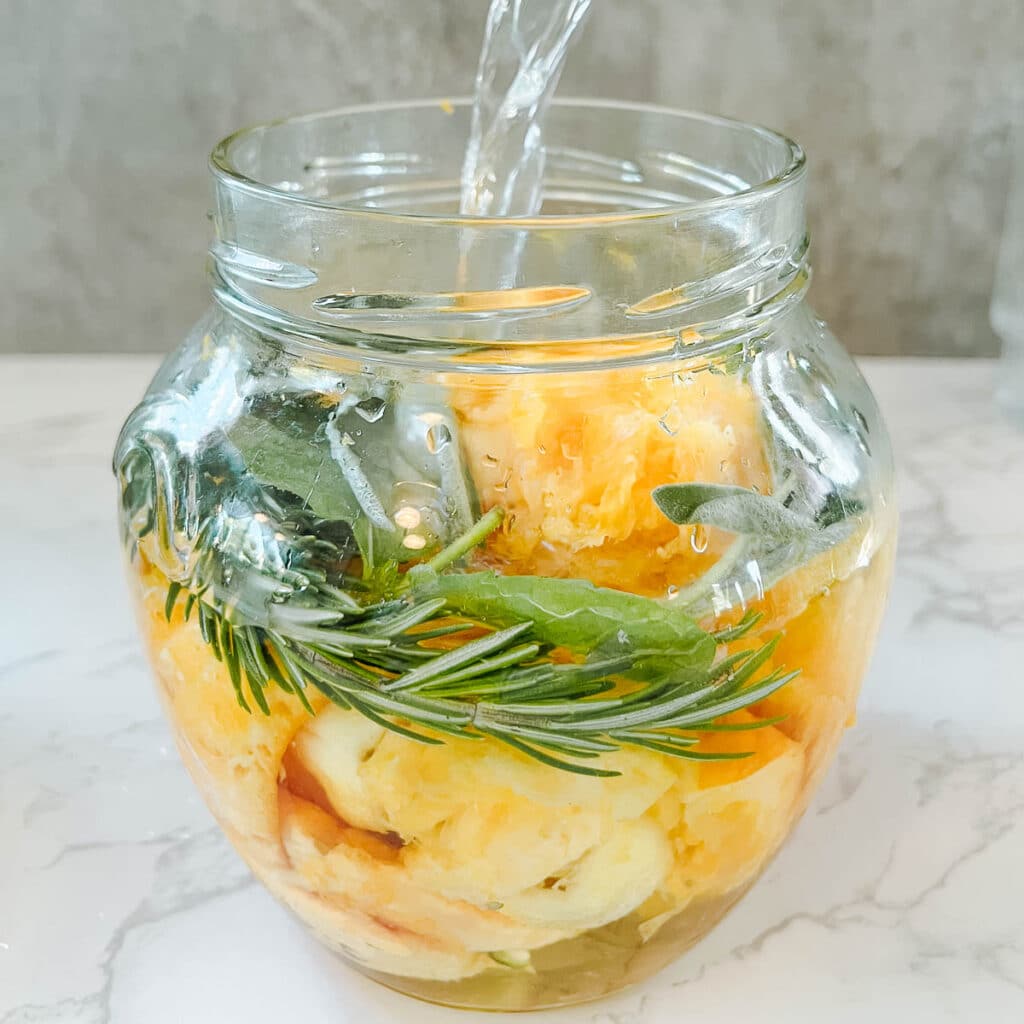
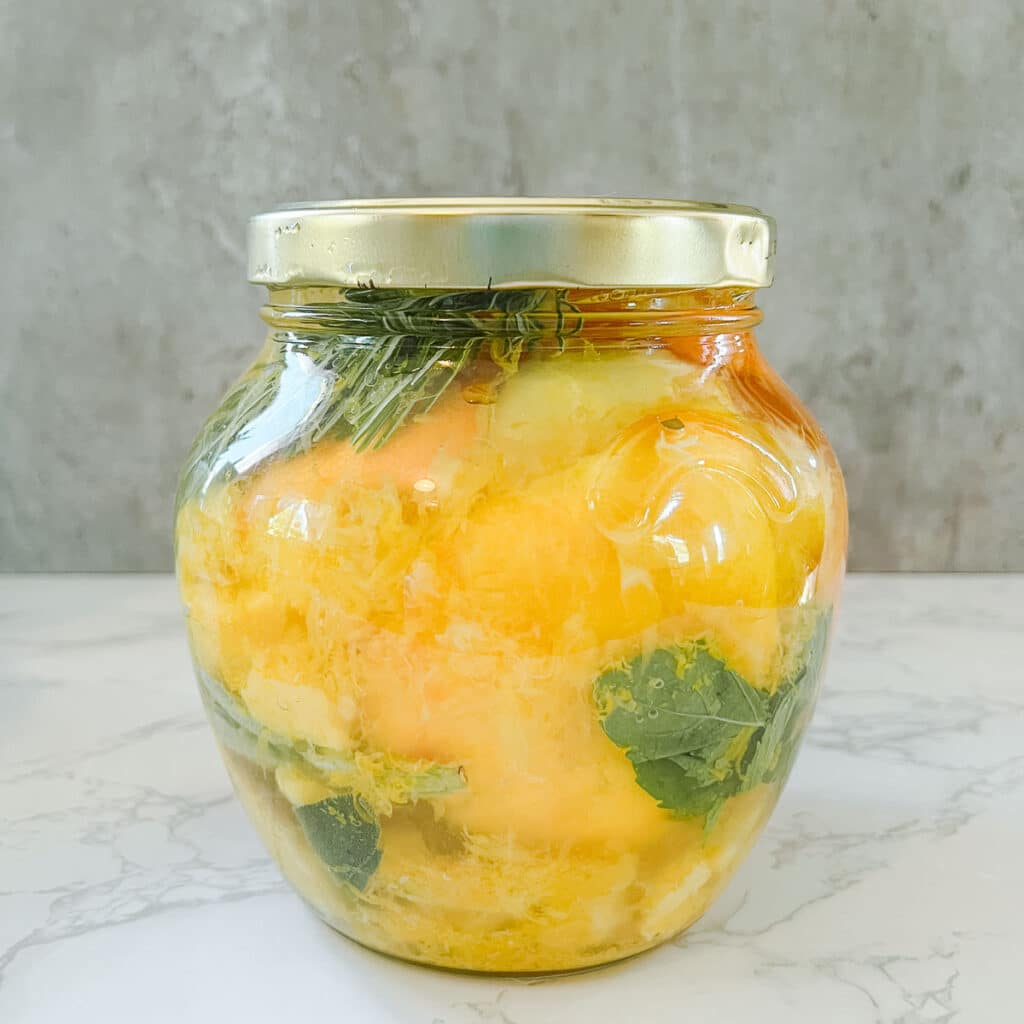
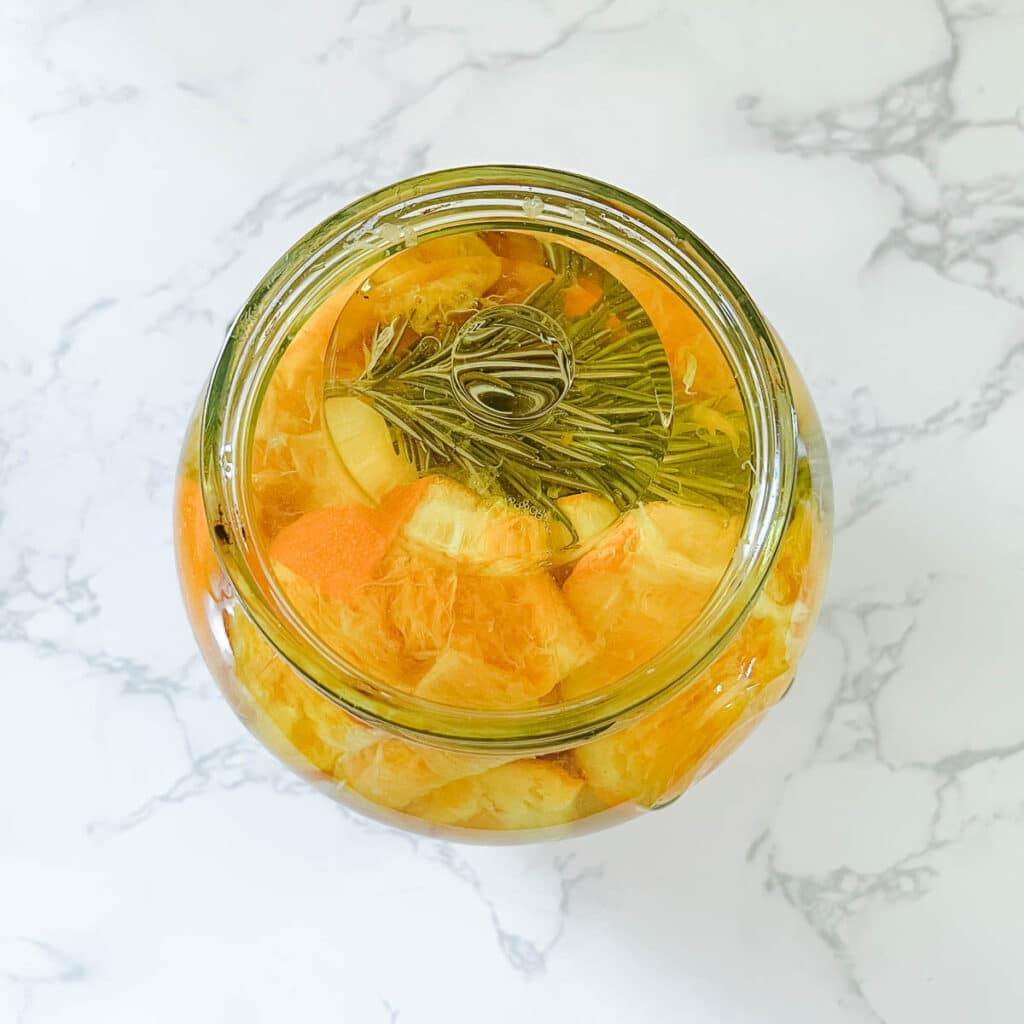
Step 2: Add distilled white vinegar and distilled water, making sure contents are fully submerged. Seal with lid and store in a cupboard or other cool, dark place for 2 weeks.
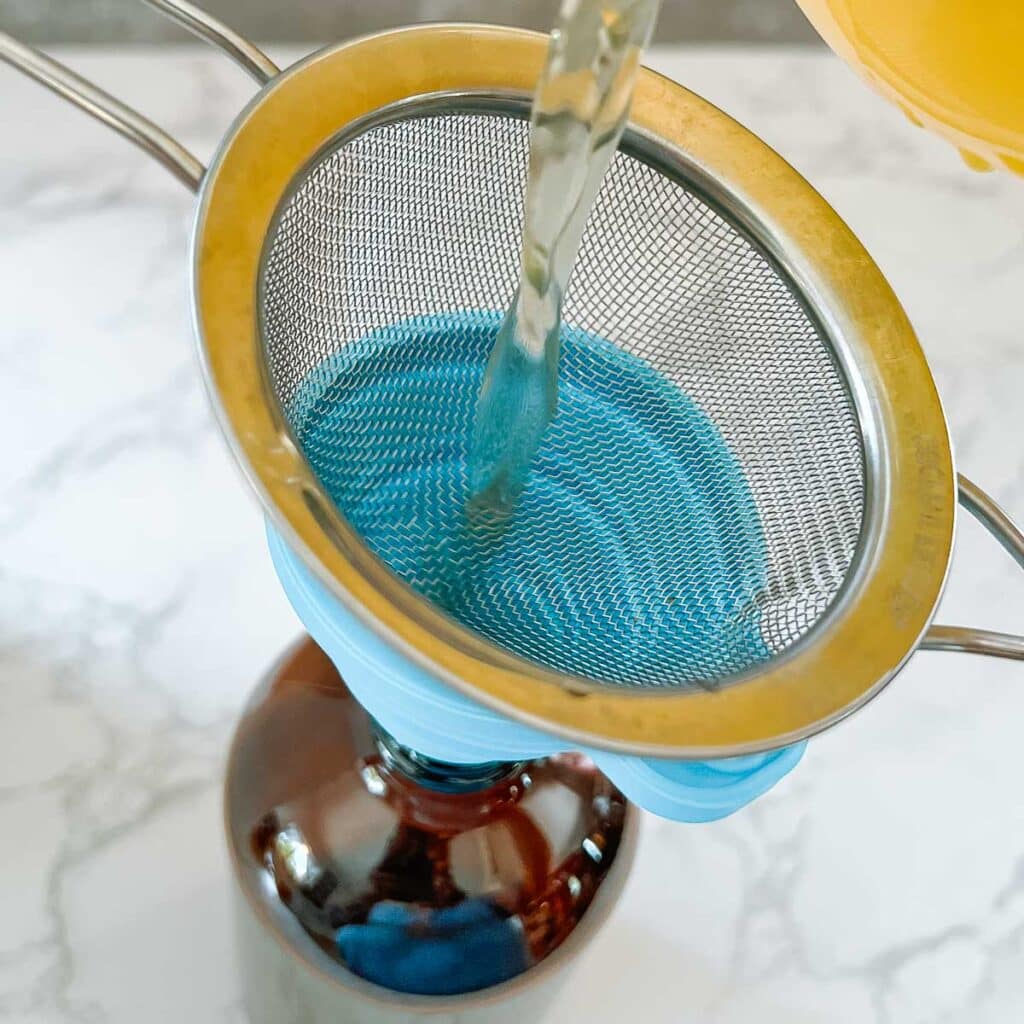
Step 3: Strain liquid, then pour into glass spray bottles using a funnel.
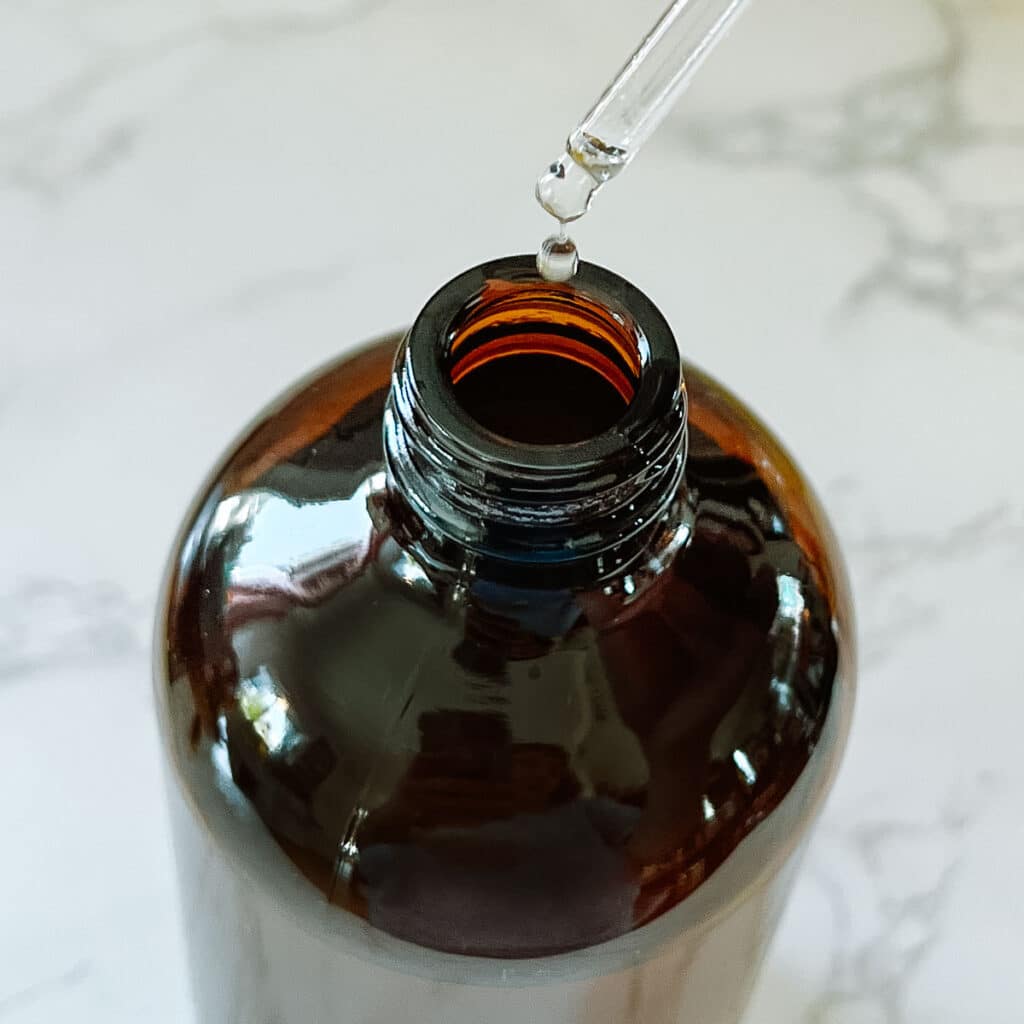
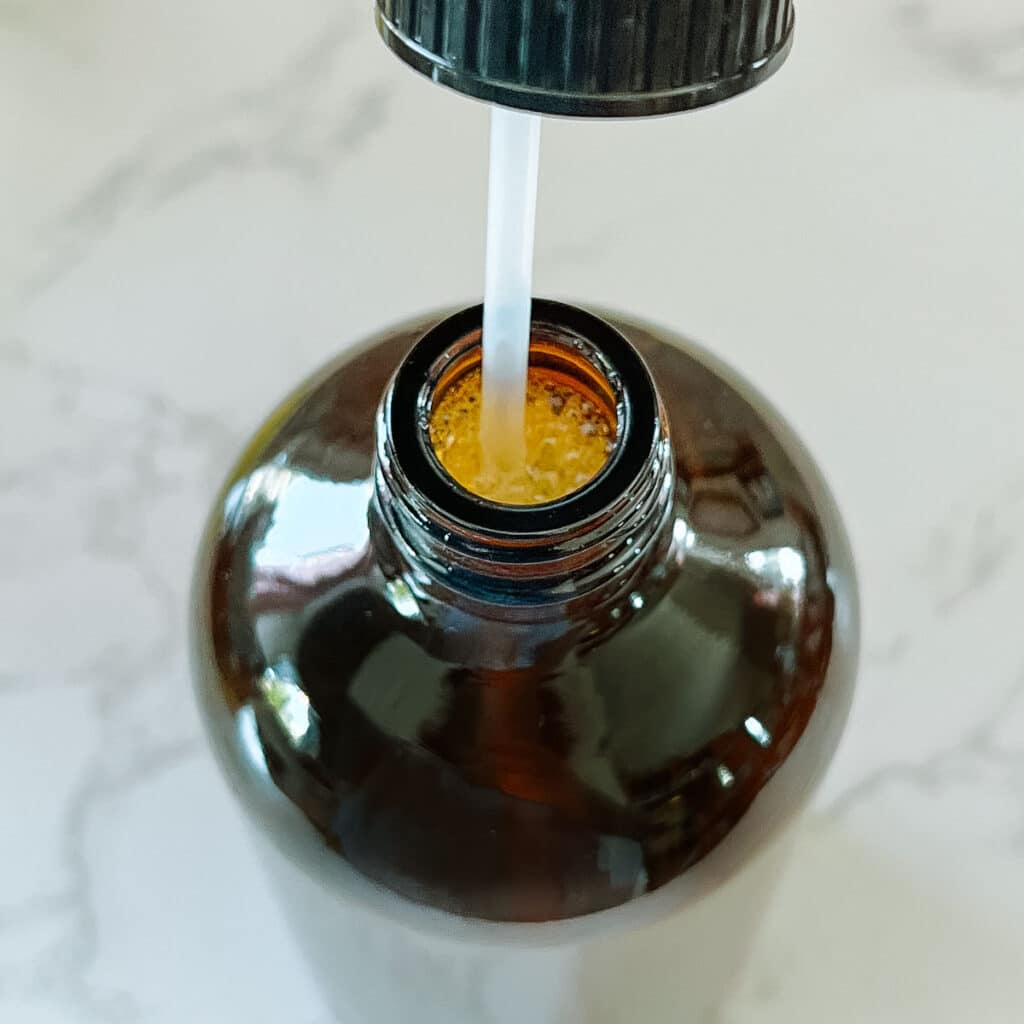
Step 4 (optional): Add 5-10 drops of essential oils per bottle. You can also add more fresh herbs, botanicals, or spices at this time.
Pro Tip: You can add some gentle dish soap (or Castile soap if you prefer to stick with natural ingredients) to give your orange peel and vinegar cleaner more cleaning power. Avoid mixing hydrogen peroxide with vinegar, as this can create potentially harmful compounds.
🧽 How To Use Orange Peel and Vinegar Cleaner
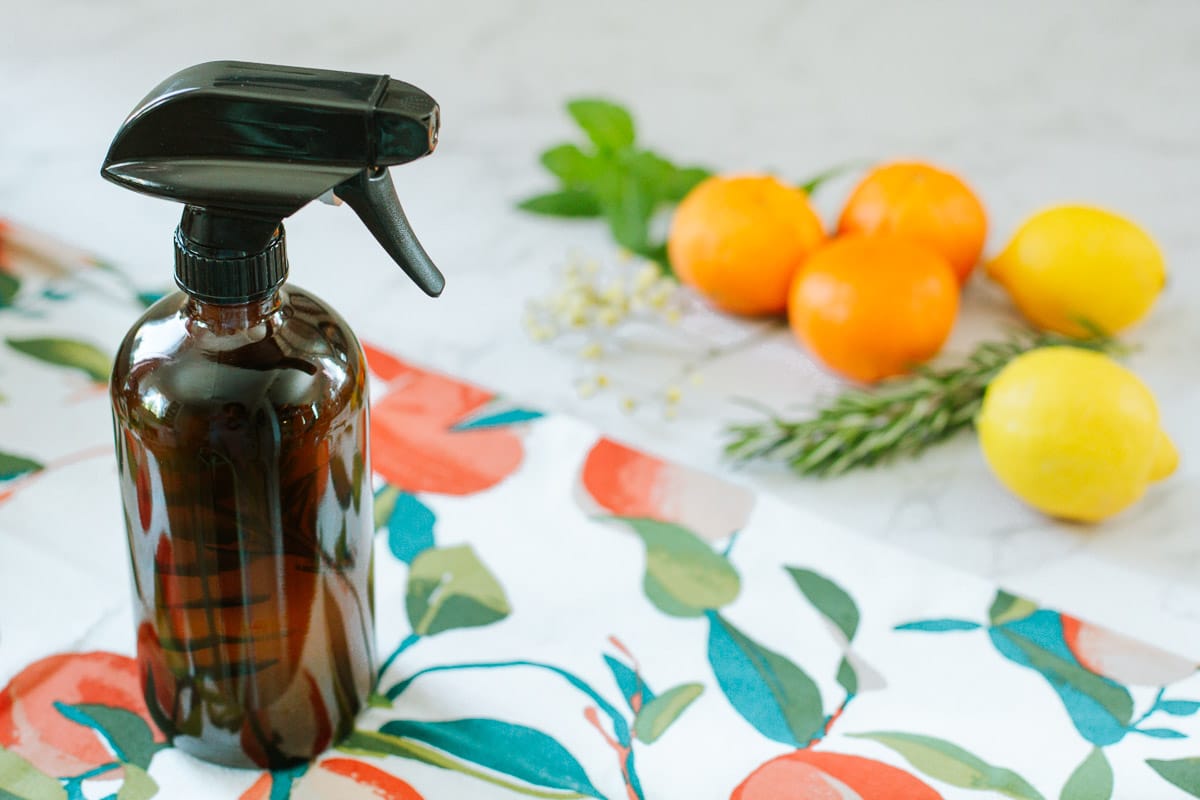
This orange peels & vinegar cleaner can be used in many different ways! You can use it to clean most surfaces around the house, such as:
Not only is it a great degreaser, but it is also a natural deodorant! You can use it on:
Because this cleaner is so gentle, you could even use a small amount to wash your hair in the shower before conditioning! While you’re at it, you can also use this homemade rosemary water for hair growth and this homemade turmeric scrub!
A Word of Caution
I’ve used this spray on wooden surfaces without issue, but some sources advise against using vinegar-based cleaners on wood, granite, and marble because of the acidity. Personally, I think you’re fine as long as you dilute the vinegar with water as instructed in this recipe, but I would avoid prolonged soaking of these surfaces.
Always use a soft cloth or sponge, and conduct a patch test on a small portion of the surface if you’re unsure if it will damage the finish.
While this orange peel & vinegar cleaning spray is an excellent cleaning solution for most messes, there are certain instances in which it is advised to use something with stronger disinfecting properties. I would not recommend using this for:
Consult the Environmental Protection Agency for more information about cleaning and disinfecting.
🤷🏻♀️ Recipe FAQs
Because vinegar contains acetic acid, it is effective at cleaning up grease, soap scum, sticky residue, and more. While you could use straight vinegar to clean around the home, you can use citrus peels to make an infused vinegar that is even more effective and has a much more pleasant scent.
Citrus peels tend to do a pretty good job masking the vinegar smell, but if your homemade cleanser still has a strong vinegar smell you can add essential oils such as lemongrass, jasmine, rose, etc. to enhance the fragrance.
When stored at room temperature in a dark cupboard, orange-infused vinegar will last up to 3 months, or 6 months in the refrigerator. Because it does not contain preservatives, it will eventually expire. Discard and make a new batch if you notice changes to the color, consistency, or odor.
👩🏻🌾 Pro Tips
- If you’re not planning to make this orange peel and vinegar cleaner the same day you eat the oranges, you can put the peels in a ziplock bag and store them in the refrigerator or freezer until you’re ready to work with them.
- Once you’re done with your citrus peels, use them one final time to clean the garbage disposal! Just toss ’em in and flip the switch.
- Give it a good shake before each use.
- Store your cleaner in a cool, dark cupboard for up to 3 months, or in the refrigerator for up to 6 months.
- Because this spray is not made with preservatives, it will eventually expire. Discard and make a new batch if you notice changes to the color, consistency, or odor.
DIY Natural Orange Peel & Vinegar Cleaner
Materials
- 4 cups citrus peels
- 3 sprigs rosemary
- 3 sprigs sage
- 3 sprigs mint
- 1 tsp sea salt
- 16 oz distilled white vinegar
- 16 oz distilled water
Instructions
- Layer citrus peels into a large glass jar, along with fresh herbs and sea salt.
- Add distilled white vinegar and distilled water, making sure contents are fully submerged. Seal with lid and store in a cupboard or other cool, dark place for 2 weeks.
- Strain liquid, then pour into glass spray bottles using a funnel.
- Add 5-10 drops of essential oils per bottle. You can also add more fresh herbs, botanicals, or spices at this time. (optional)
Notes
-
- The orange peels I used this time still had a lot of flesh on them because I had been juicing the oranges for a recipe. You can do what I did or just peel the oranges like normal. Either way, we’ll be straining it later.
- You can add some gentle dish soap (or Castile soap if you prefer to stick with natural ingredients) to give your orange peel and vinegar cleanser more cleaning power. Avoid mixing hydrogen peroxide with vinegar, as this can create potentially harmful compounds.
-
- If you’re not planning to make this orange peel and vinegar cleaner the same day you eat the oranges, you can put the peels in a ziplock bag and store them in the refrigerator or freezer until you’re ready to work with them.
-
- Once you’re done with your citrus peels, use them one final time to clean the garbage disposal! Just toss ’em in and flip the switch.
- Give it a good shake before each use.
-
- Store your cleaner in a cool, dark cupboard for up to 3 months, or in the refrigerator for up to 6 months.
-
- Because this spray is not made with preservatives, it will eventually expire. Discard and make a new batch if you notice changes to the color, consistency, or odor.
Very eco-friendly and stylish