
Lahana Sarmasi (Vegetarian Cabbage Dolma)
Affiliate Disclosure: This post may contain affiliate links. If you purchase through them, I may earn a commission at no extra cost to you.
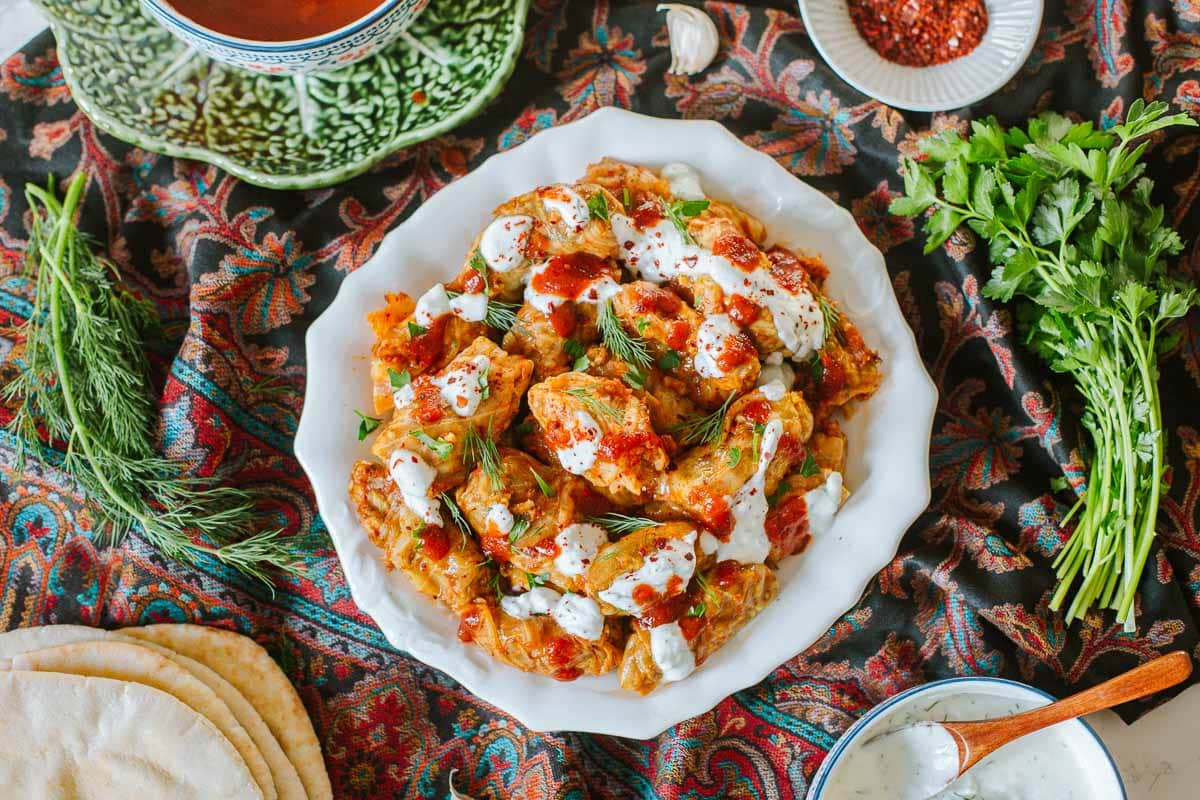
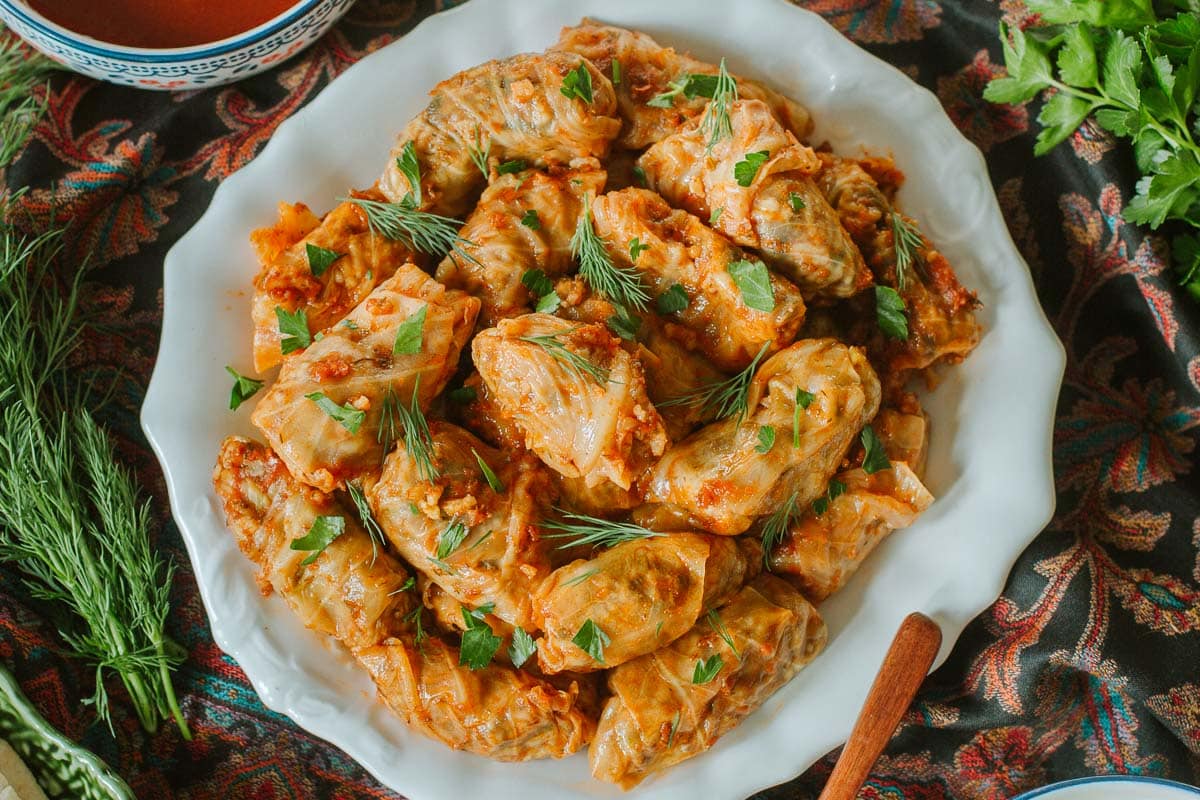
Lahana sarmasi, aka “lahana sarma” or “lahana dolma”, are traditional Turkish stuffed cabbage rolls made by wrapping tender blanched cabbage leaves around a savory rice mixture loaded with herbs and aromatic spices. This dish is boldly flavorful and gluten-free and vegan when served without the yogurt sauce. Leftover yogurt sauce can be used as a base for this roasted zucca in agrodolce.
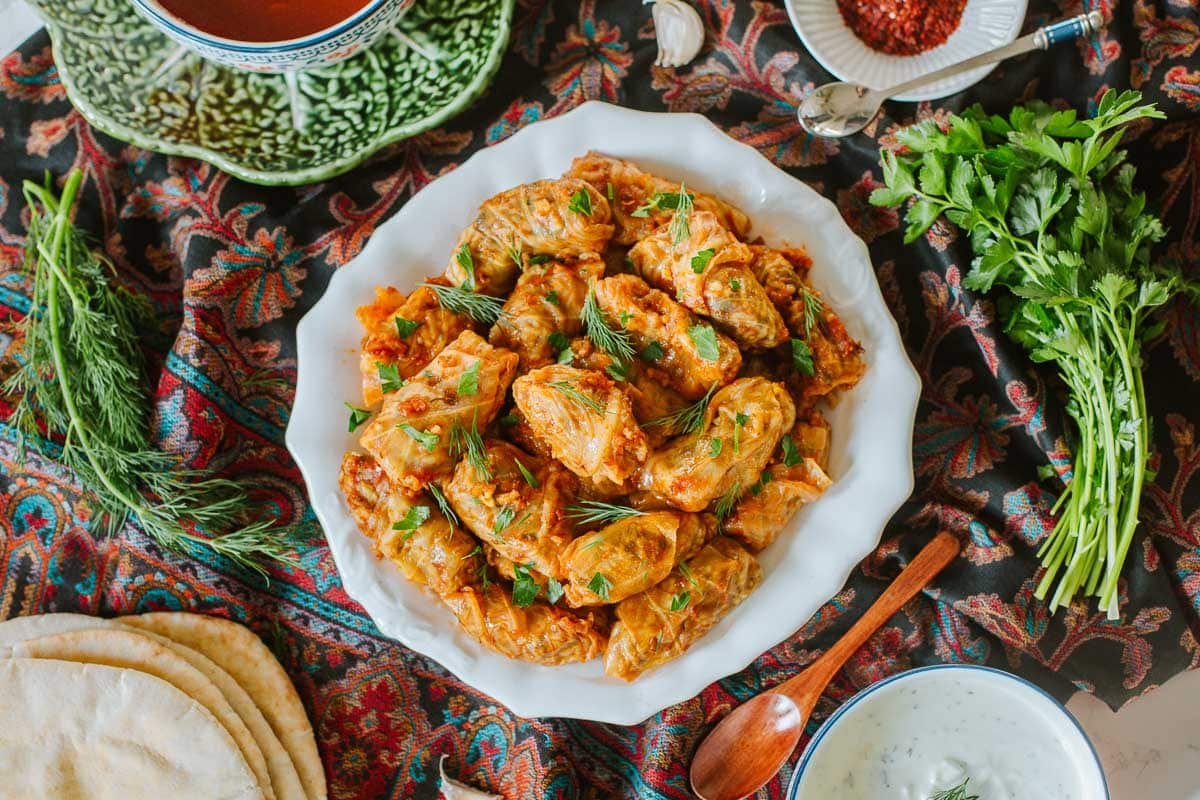
In Turkish, “lahana” means “cabbage”, and “sarmasi” means “to roll” or “to wrap”.
Whether you call it lahana sarmasi, lahana sarma, lahana dolmasi, malfouf, mahshi kromb, or simply cabbage dolma, I think everyone from a Middle Eastern family knows what a labor of love this feast-worthy dish is.
This dish, known by many names, exemplifies everything I love about food – the fragrant flavors, the care and patience required to make it, and the way it brings people together. Not only at family reunions and get-togethers, but on a larger scale as well; every ethnic group in an increasingly divided Middle East has some variation of this dish. So, when we eat it, we are reminded of the simple things that prove we’re more alike than different.
🥄 Why This Recipe Works
- Lahana sarma is a great dish to make for meal prepping and can easily keep one person fed for a week!
- This is the kind of dish that brings everyone together, perfect for family reunions, parties, and get-togethers. Not to mention, a successful pot of lahana dolmasi will impress any Middle Eastern grandma or aunty.
- These Turkish cabbage rolls are vegetarian and gluten-free, and can be made vegan by omitting the yogurt sauce.
- Many hands make light work with this dish! Teaming up with friends or family to make lahana dolma is definitely a bonding experience and makes the process much less daunting.
Estimated Cost of This Recipe ≈ $4
I calculate the total cost of each recipe based on the estimated cost of ingredients at average U.S. grocery prices, using only the portion needed for the recipe — not the full cost of entire packages. Keep in mind that prices can vary depending on location, season, brand, and a fluctuating economy.
My goal with these money-saving meal recipes is to make delicious & nutritious home-cooked meals feel more accessible, even during tough times. I believe that good food should bring comfort, joy, and dignity to our lives — no matter the size of our budget.
🛒 What You Need To Make Lahana Sarmasi
Cabbage Roll Ingredients
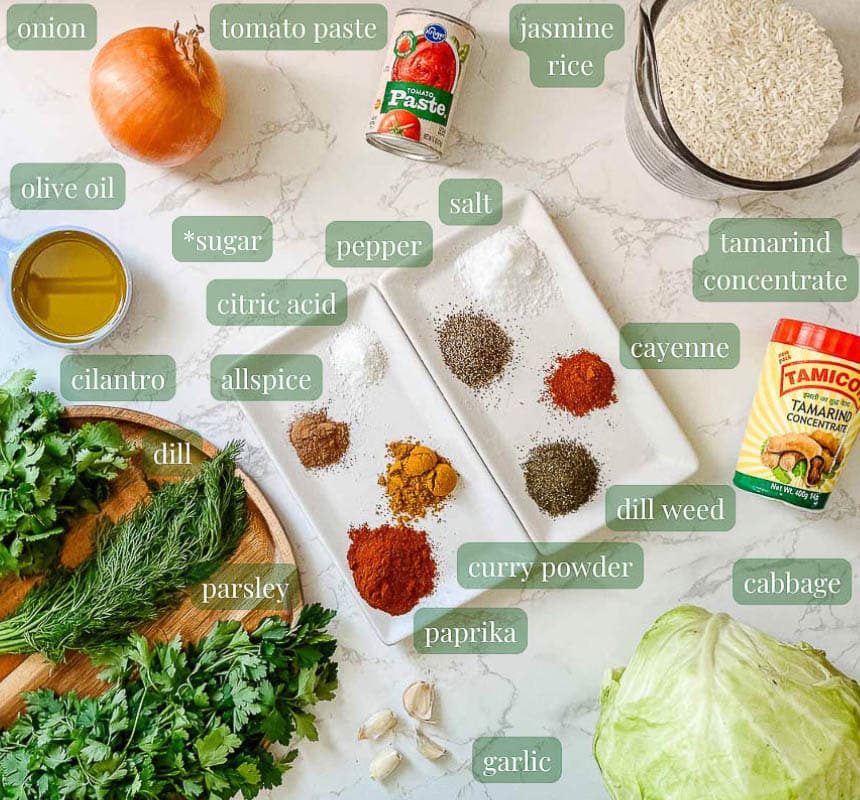
- Cabbage: Green cabbage is the traditional choice, and the only variety I personally use. I know some people use savoy cabbage or Napa cabbage, but they are much thinner and prone to tearing. I recommend doubling up on leaves if you choose either of those varieties, and either skipping the blanching process or making it a very short blanch.
- Rice: I always use jasmine rice, but basmati rice or white rice make good alternatives. Bulgur is sometimes used, but cooks much faster than this recipe instructs.
- Onion: Yellow, white, or red onions are all fine.
- Parsley: Italian parsley is ideal, but curly leaf parsley will work in a pinch.
- Citric acid & tamarind: I always add citric acid, but if you can’t find it, you can use ground dried lime or lemon juice. Tamarind concentrate is optional, but is also great for achieving that slightly sour flavor profile. You can also use pomegranate molasses.
Sauce Ingredients (Optional)
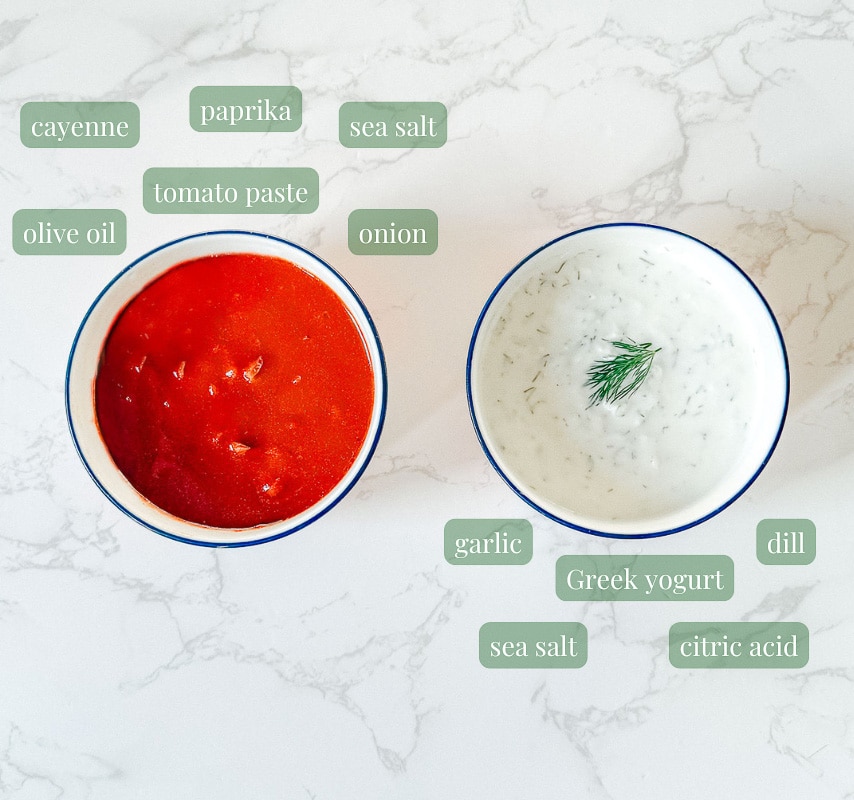
The spicy tomato sauce adds an extra kick, while the yogurt dill sauce serves as a cool, creamy contrast. I like to top my lanaha dolmasi with a bit of both, but these sauces are optional, so feel free to mix & match as you see fit.
🐷 Easy Dietary Swaps To Make It Your Way

Low-Carb
Substitute the jasmine rice with bulgur. This will also lessen the cooking time significantly, so make sure it doesn’t overcook.

Vegan
Simply omit the yogurt dill sauce or make it with an unsweetened plant-based yogurt alternative.

High-Protein
Lahana dolma can be made with leg of lamb or beef chuck roast. Just replace one of the 3 cups rice with 1 lb meat.
🥬 How To Make Lahana Sarmasi
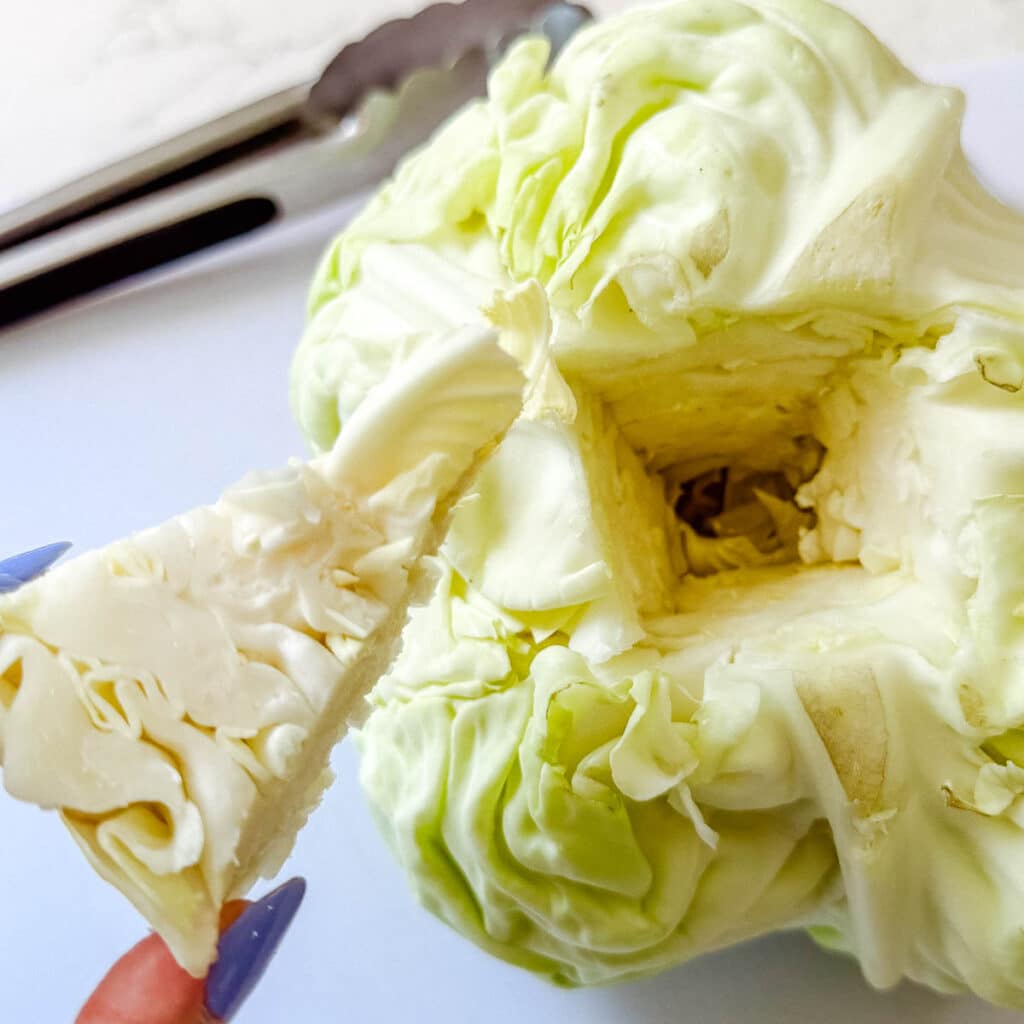
Step 1: Carefully carve the core out of the cabbages using a sharp serrated knife. I find the best way is to saw through the cabbage similarly to how you would carve a pumpkin, making sure to cut away from yourself. You should be able to pull the core out by wiggling it slightly; if it doesn’t easily come out, you may need to cut a little deeper. Discard the core.

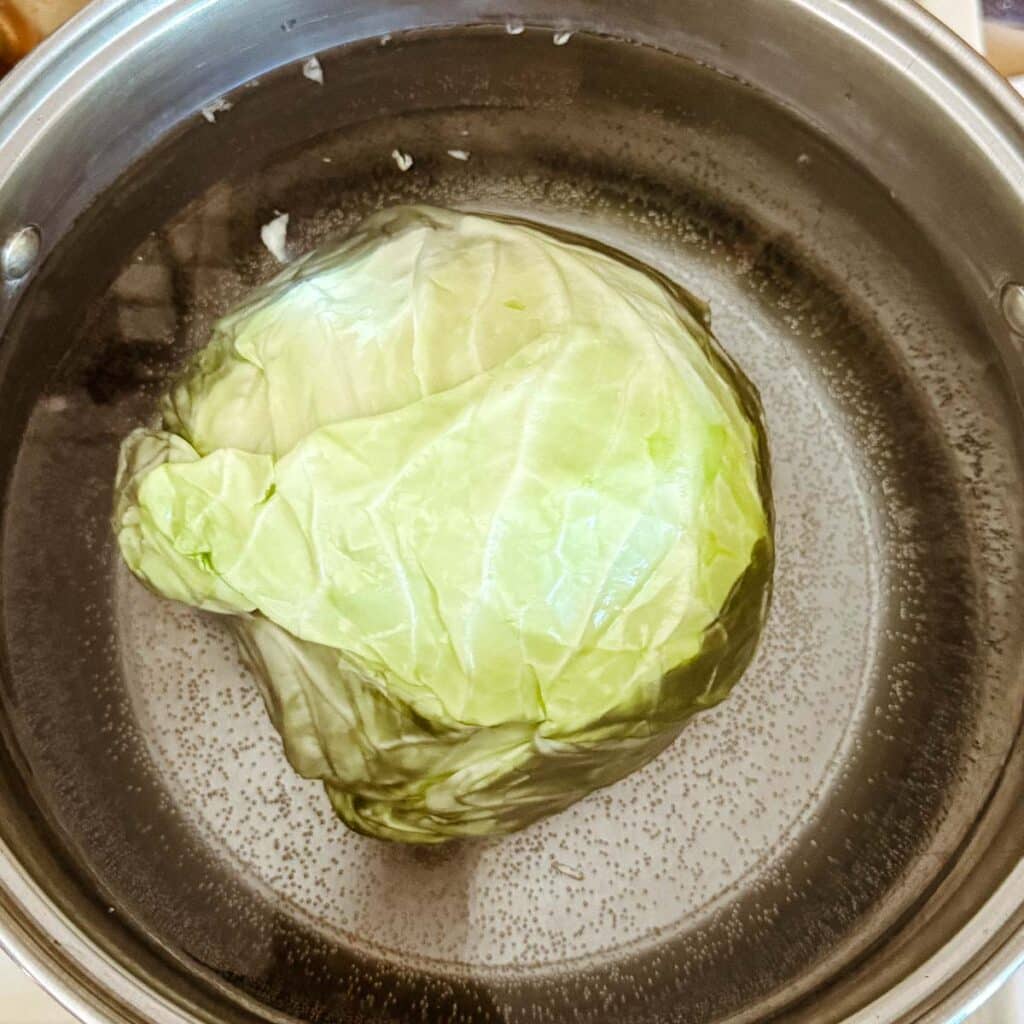
Step 2: Add cabbage to a large stockpot and boil until the leaves begin to soften and change color. When the leaves begin to fall away from the cabbage, use a pair of tongs to gently pull them off, setting them aside in a large bowl.
Pro Tip: You shouldn’t have to work hard to peel the leaves away. When they’re ready, they just need a gentle tug, and they’ll come right off. Usually, the center of the cabbage will need more time than the outer leaves. Be careful not to keep them in too longor they’ll start to fall apart.

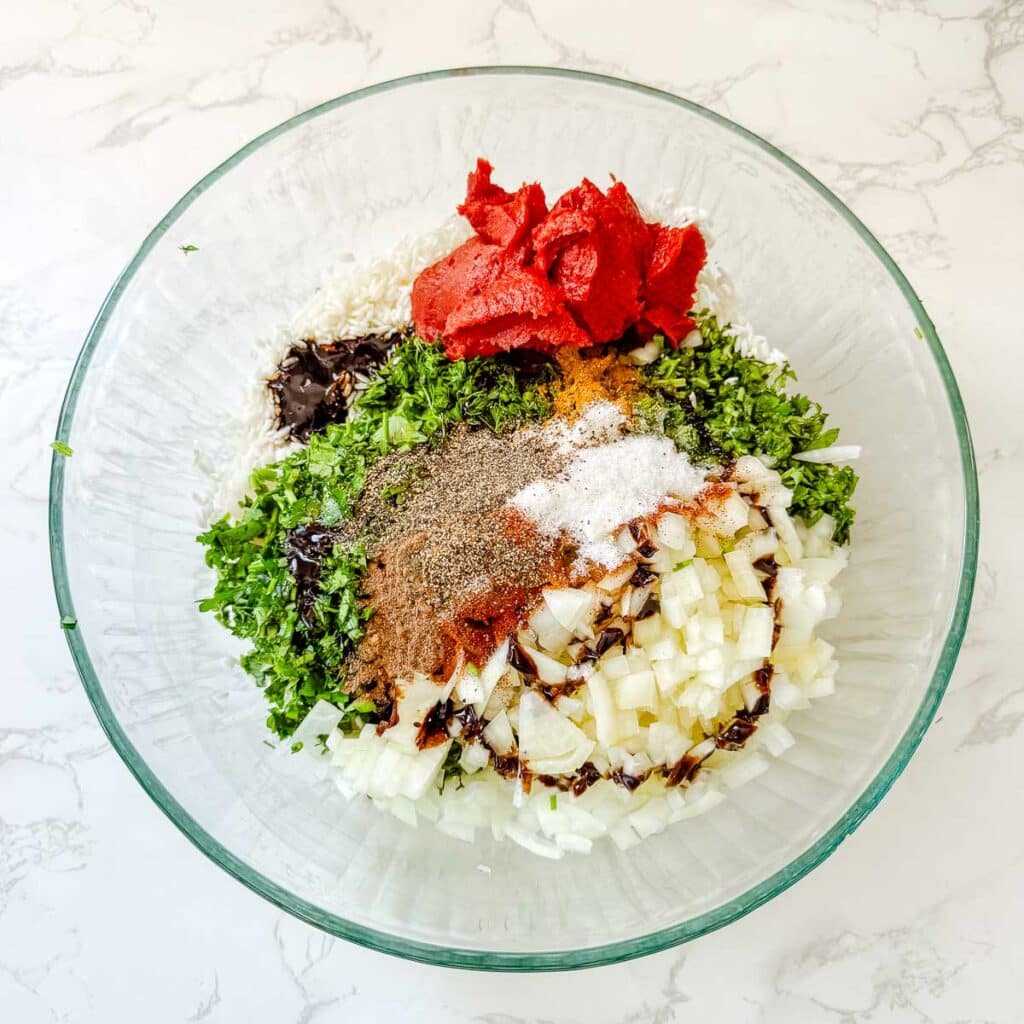
Step 3: Meanwhile, rinse the rice and soak for 20 minutes in a large mixing bowl, then strain. Add in chopped Italian parsley, cilantro, fresh dill, and diced onion, along with freshly minced garlic, spices, tamarind concentrate, tomato paste, and olive oil. Mix until thoroughly combined.

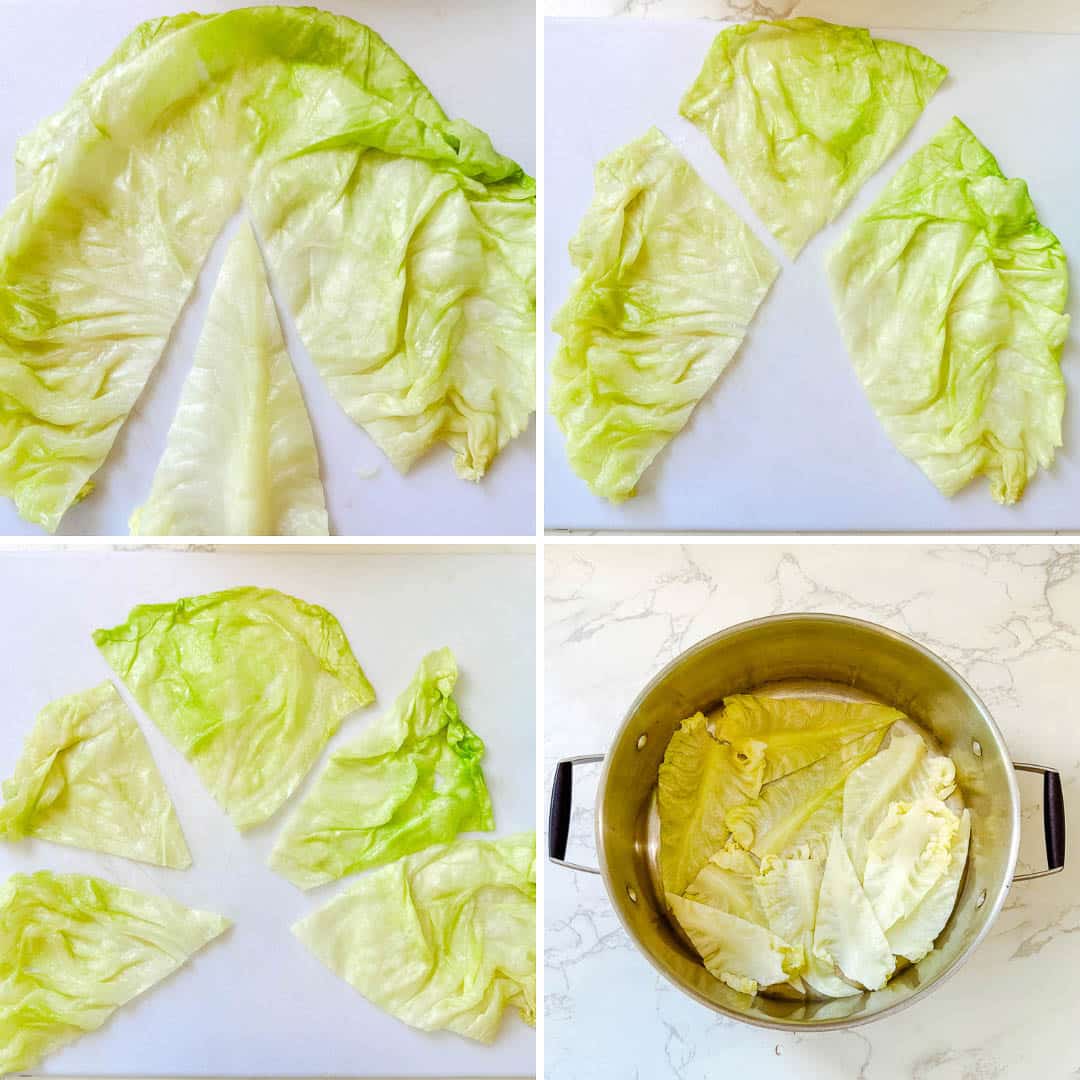
Step 4: Discard 2-4 of the outermost leaves if necessary, as these tend to be bruised, torn, and not as fresh as the internal leaves. Use a paring knife to de-stem all viable leaves, saving 10-20 of them to line the bottom of the pot, which will prevent the lahana dolma from burning. Cut the de-stemmed leaves into small triangular pieces, about the size of a tortilla chip. The larger leaves will yield around 5 pieces, whereas smaller leaves will usually only yield 3 or so. Place cut cabbage leaves in a large bowl and set aside.
Step 5: To roll, place about 1-2 Tbsp of the rice mixture in the center of the wide end of the cabbage leaf. Fold in the sides, then start to roll the cabbage leaf in an upward motion, starting from the bottom. The lahana sarma should be wrapped tightly so they don’t come apart while cooking, but not so tightly that you risk them ripping as the rice expands during the cooking process.

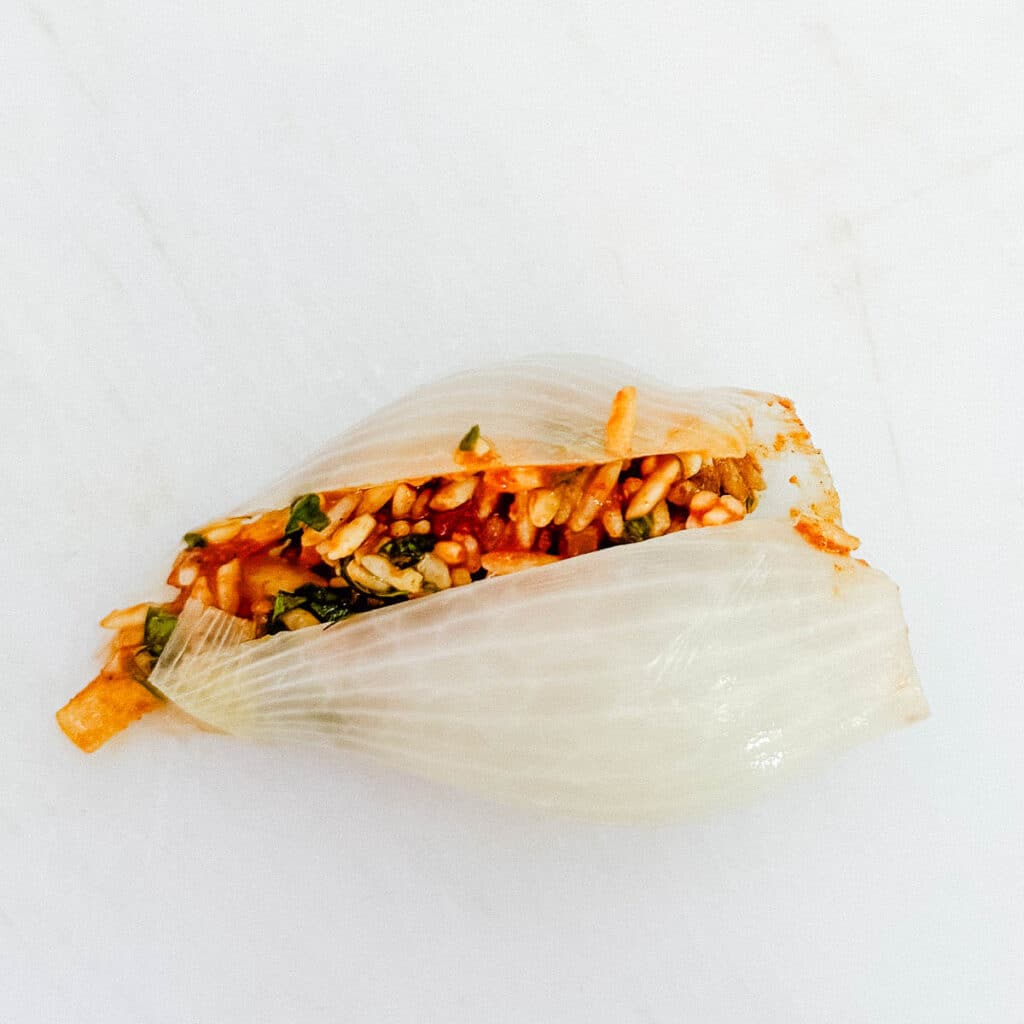
Pro Tip: If you end up with extra filling, you can use it to stuff other vegetables such as bell pepper, zucchini, eggplant, grape leaves, etc. I personally like to use an onion just because I always have them on hand, and they’re super easy to stuff.
Just peel the onion and cut the ends off, then slice the onion halfway through the middle and boil. The layers will become soft and pliable after 5-10 minutes. Pull the layers apart, then stuff with rice. The outer layers can be halved to make two pieces.


Step 6: Carefully transfer the lanaha sarmasi to a large, wide pot, sprinkling dill weed over the cabbage rolls between layers. Cover the pot and cook over medium heat for 15 minutes. This will cause the lahana dolmasi to release some of its liquid, which will begin to steam the rice.
Pro Tip: I find that a 5-qt. rondeau pot like the one pictured works best. Deeper pots or Dutch ovens can be used if necessary, but I find that this tends to result in uneven cooking, specifically the bottom layers cooking faster than the top ones.
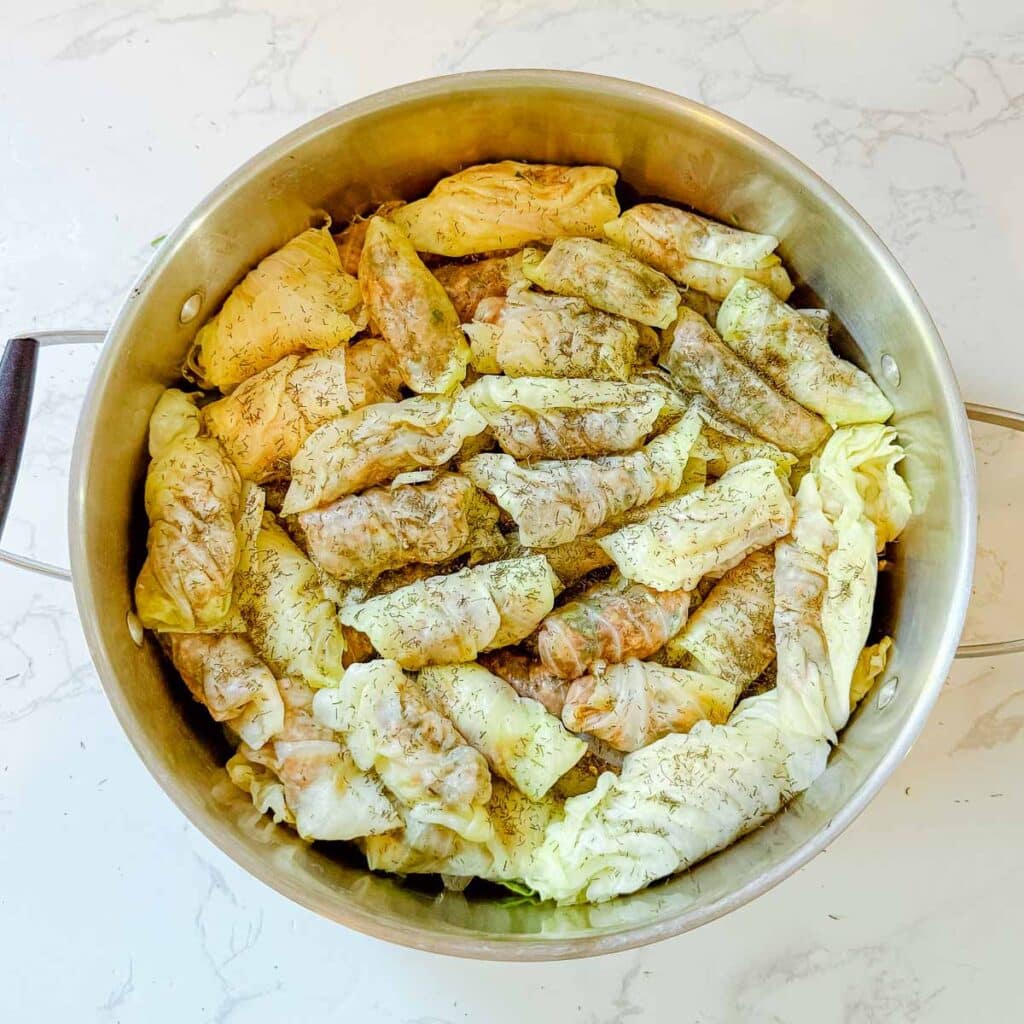
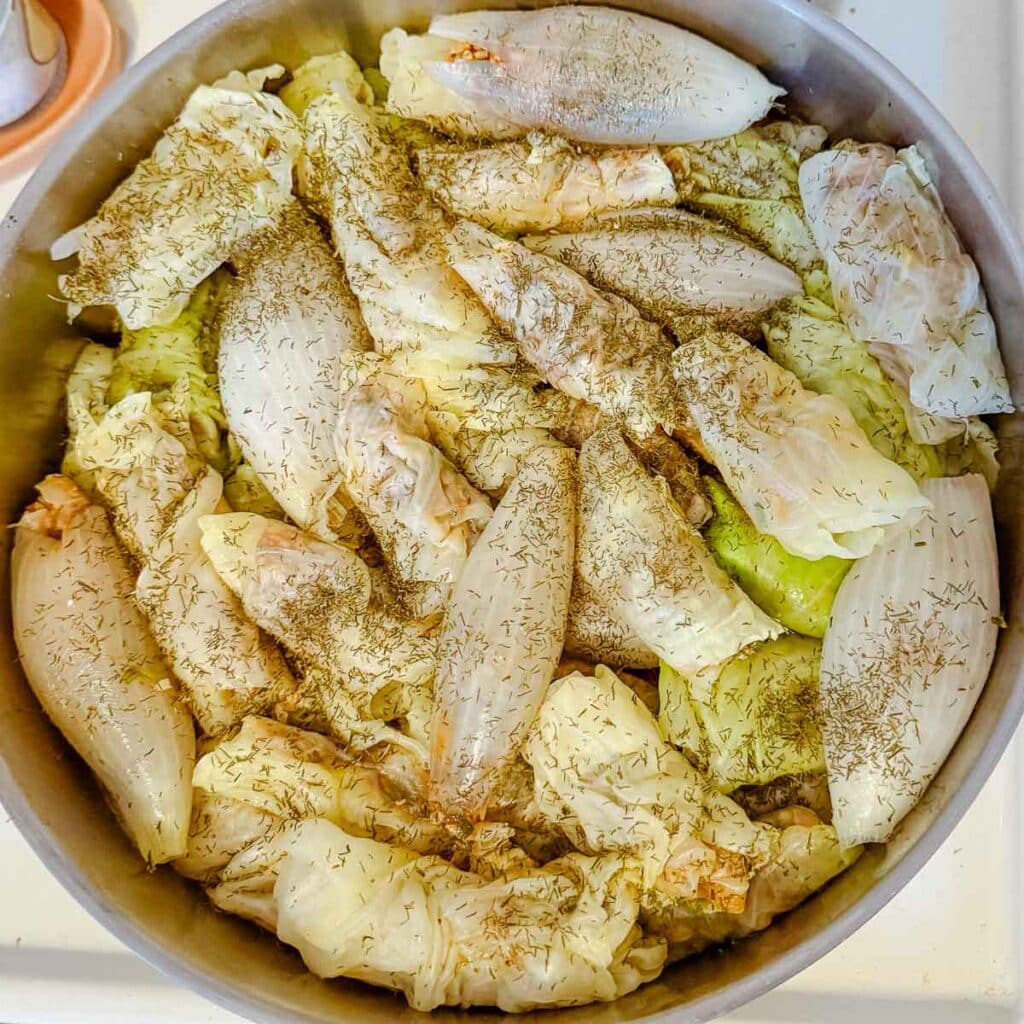
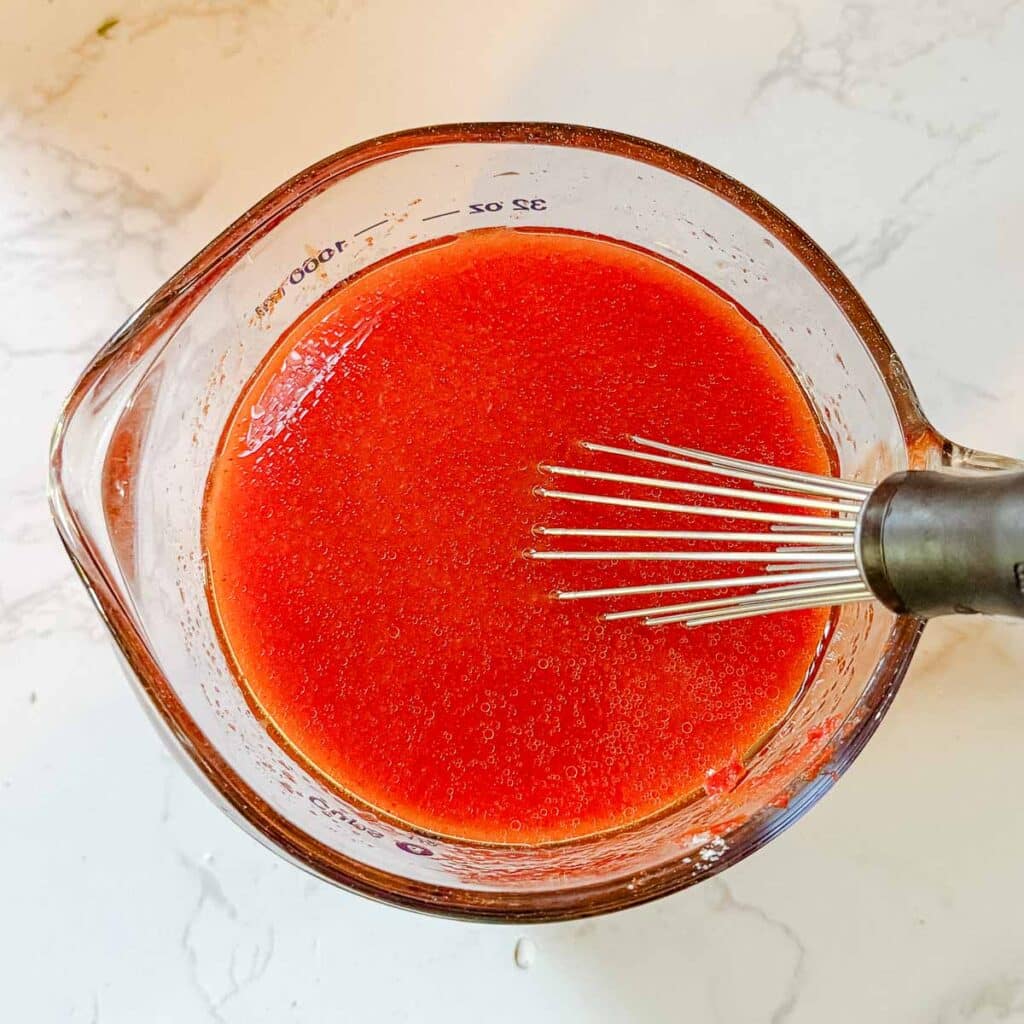
Step 7: In a large measuring cup, combine tomato paste, water, sugar, citric acid, sea salt, cayenne pepper, and olive oil. Whisk until consistent, then pour over the lahana sarma. Reduce heat to the lowest setting and cover. Cook until juices are absorbed and rice is tender. This usually takes an hour to an hour and a half.


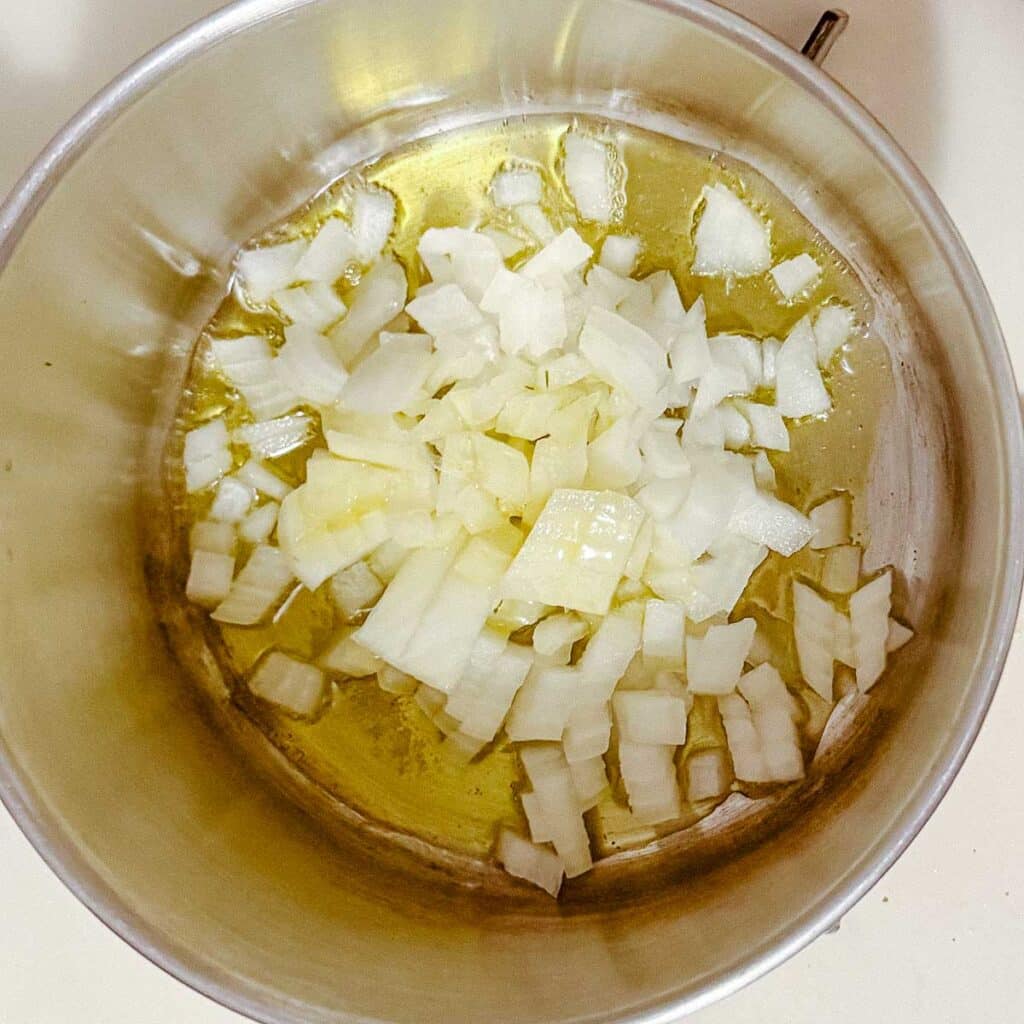
Step 8 (optional): In a small saucepan, sauté diced onions in olive oil until translucent, about five minutes. Mix in tomato paste, paprika, sea salt, cayenne pepper, and water, and bring to a gentle boil. Lower the heat and let it simmer gently for 5-10 minutes, then serve alongside lahana sarmasi.

Step 9 (optional): In a large bowl, combine Greek yogurt, water, salt, citric acid, minced garlic, and chopped fresh dill. Mix until consistent, then serve alongside lahana sarma.
🇹🇷 Variations & Regional Differences
While there are many kinds of stuffed vegetables that are widely eaten in the Middle East and beyond, lahana sarmasi is one of the most universally beloved. There are many variations across different regions, but here are a few worth noting:
Turkish lahana sarmasi usually consists of either rice or bulgur, flavored with onion, parsley, dill, tomato paste, pepper, and sometimes lemon. It often includes minced beef or lamb and is usually served hot with yogurt or cacik, similar to tzatziki.
Iraqi lahana dolma is very similar but usually has more of a tangy and slightly sweet flavor profile from ingredients like tamarind, pomegranate molasses, and dried lime.
Persian Iranians call it “dolmeh kalam”, which is usually very herb-heavy and includes dill, parsley, chives, and mint. Sometimes, yellow split peas and tomato sauce are also included in the rice mixture.
Palestinian malfouf is typically made with ground beef or lamb, rice, cumin, allspice, garlic, and plenty of lemon.
Egyptian mashi kromb is primarily rice-based and rarely includes meat. The rice is seasoned with lots and lots of garlic, as well as fresh dill, parsley, cilantro, and fresh grated tomato or tomato sauce.
But rice-filled cabbage reaches far beyond the Middle East. Ukrainians call it “holubtsi”, and usually stuff it with ground pork or beef, rice or buckwheat, and veggies like onion and carrot. It’s usually made with tomato sauce or diluted tomato paste and served with sour cream on top.
This vegetarian stuffed cabbage is inspired by Hungarian “töltött káposzta” and uses soy meat and mushrooms instead of the more traditional pork.
Even more far removed, the Catalan version found in northeastern Spain is called “farcellets de col” and is stuffed with fatty ground pork, or pork sausage. They often include soaked bread instead of rice, and are sometimes topped with ground nuts.
🇮🇶 A Personal & Cultural Note on Lahana Dolma
I’ve been eating this lahana sarmasi my entire life, and it’s my favorite food in the world – probably the only dish I could eat every day for the rest of my life and never get tired of.
Lahana sarmasi tends to be at the center of every family reunion, holiday, graduation, or special event. In Assyrian, we call it “dolma’t lahana”, or “dolma’t chalama,” both of which simply mean “cabbage dolma”.
My family has ties to Iraq, Iran, and Turkey, so you can find a little bit of influence from all of the above in this recipe that’s been passed down and tweaked slightly through the generations.
🤷🏻♀️ FAQs
“Lahana” is the Turkish word for cabbage, coming from the Byzantine Greek word, “lakhana”. It can also be used to refer to both green and red cabbage, as well as kale.
Lahana sarma is the Turkish name for cabbage rolls stuffed with rice and herbs, or “cabbage dolma.” “Lahana” means “cabbage”, and “sarmasi” means “rolled”.
Yes, lahana sarmasi can be made ahead of time, and, in fact, this is often ideal as it takes about 3 hours to prepare. For best results, I recommend making it within 24 hours of when it’s being served.
Yes, but I prefer to freeze the rice mixture in a Ziplock bag, then defrost and use it to stuff fresh cabbage, rather than freezing fully-prepared lahana sarmasi.
Green cabbage works best as it is tender and melts in your mouth when cooked, but is thicker than savoy or Napa cabbage and less likely to tear during the cooking process.
Lahana dolma originated in the Ottoman Empire, the heart of which was modern-day Turkey, though its borders encompassed Greece, Iraq, Hungary, Bosnia, Spain, Egypt, Palestine, and more.

🥖 How to Serve Lahana Sarmasi
Lahana sarmasi is usually enjoyed as a meal on its own, but can also be served as a side dish alongside kebabs, stews, rice, lamb, and more.
Leftovers can be reheated in the microwave or on the stovetop, but you can also eat them cold like you would with Greek grape leaf dolmadakia.
One of my family’s favorite ways to eat leftover lahana dolmasi is as a sandwich, though whether it’s best with French bread or pita bread is highly contested (I’m team French bread all day, every day.)
👩🏻🍳 Pro Tips
- You’ll most likely need to boil each head of cabbage separately. The cabbages will try to float on the surface of the water, which is fine, but I try to flip the cabbage periodically so it cooks evenly.
- Try to keep the size of the cabbage rolls as consistent as possible to ensure even cooking.
- Leftover rice filling can be frozen for later use.
- When properly stored in the fridge in an airtight container, lahana dolmasi will keep up to 2 weeks.
- To reheat, I recommend drizzling with spicy tomato sauce, then microwaving in 1-minute intervals until heated through before topping with yogurt sauce.

🍽️ More Recipes You’ll Love


Love this lahana dolmasi recipe? Please leave a 5-star 🌟🌟🌟🌟🌟 rating in the recipe card below & a review in the comments section further down the page.
Stay in touch with me through social media @ Instagram, Pinterest, and Facebook! Don’t forget to tag me when you try one of my recipes!

Lahana Sarmasi (Vegetarian Cabbage Dolma)
Equipment
Ingredients
- 2 large heads of cabbage
- 3 cups jasmine rice
- 1 bunch Italian parsley (chopped)
- 1 bunch cilantro (chopped)
- ⅓ cup fresh dill
- 1 medium onion
- 4 cloves garlic (minced)
- 1 Tbsp sea salt
- 1 Tbsp paprika
- 2 tsp black pepper
- 2 tsp curry powder
- 1 tsp citric acid
- 1 tsp allspice
- 1 tsp cayenne (optional)
- 1 Tbsp tamarind concentrate (optional)
- 6 oz tomato paste
- ½ cup olive oil
- 2 Tbsp dill weed (for sprinkling over each layer)
Cooking Liquid
- 6 oz tomato paste
- 3 cups water
- 1 Tbsp sugar
- 1 tsp citric acid
- 1 tsp sea salt
- ½ tsp cayenne pepper
- 1 Tbsp olive oil
Spicy Tomato Sauce (Optional)
- 4 Tbsp olive oil
- 1 cup onion (diced)
- 6 oz tomato paste
- 4 Tbsp paprika
- 1 tsp sea salt
- 1 tsp cayenne
- 2 cup water
Yogurt Sauce (Optional)
- 8 cups plain Greek yogurt
- 1 cup water
- 2 tsp salt
- 1 tsp citric acid
- 2 clove garlic
- ½ cup fresh dill (chopped)
Garnish Ingredients (Optional)
- 2 Tbsp Italian parsley (chopped)
- 1 Tbsp fresh dill (chopped)
- 1 Tbsp Aleppo pepper
Instructions
- Carefully carve the core out of the cabbages using a sharp serrated knife. I find the best way is to saw through the cabbage similarly to how you would carve a pumpkin, making sure to cut away from yourself. You should be able to pull the core out by wiggling it slightly; if it doesn't easily come out, you may need to cut a little deeper. Discard the core.
- Add cabbage to a large stockpot and boil until the leaves begin to soften and change color. When the leaves begin to fall away from the cabbage, use a pair of tongs to gently pull them off, setting them aside in a large bowl.
- Meanwhile, rinse the rice and soak for 20 minutes in a large mixing bowl, then strain. Add in chopped Italian parsley, cilantro, fresh dill, and diced onion, along with freshly minced garlic, spices, tamarind concentrate, tomato paste, and olive oil. Mix until thoroughly combined.
- Discard 2-4 of the outermost leaves if necessary, as these tend to be bruised, torn, and not as fresh as the internal leaves. Use a paring knife to de-stem all viable leaves, saving 10-20 of them to line the bottom of the pot, which will prevent the lahana dolma from burning. Cut the de-stemmed leaves into small triangular pieces, about the size of a tortilla chip. The larger leaves will yield around 5 pieces, whereas smaller leaves will usually only yield 3 or so. Place cut cabbage leaves in a large bowl and set aside.
- To roll, place about 1-2 Tbsp of the rice mixture in the center of the wide end of the cabbage leaf. Fold in the sides, then start to roll the cabbage leaf in an upward motion, starting from the bottom. The lahana sarma should be wrapped tightly so they don’t come apart while cooking, but not so tightly that you risk them ripping as the rice expands during the cooking process.
- Carefully transfer the lanaha sarmasi to a large, wide pot, sprinkling dill weed over the cabbage rolls between layers. Cover the pot and cook over medium heat for 15 minutes. This will cause the lahana dolmasi to release some of its liquid, which will begin to steam the rice.
- In a large measuring cup, combine tomato paste, water, sugar, citric acid, sea salt, cayenne pepper, and olive oil. Whisk until consistent, then pour over the lahana sarma. Reduce heat to the lowest setting and cover. Cook until juices are absorbed and rice is tender. This usually takes an hour to an hour and a half.
- In a small saucepan, sauté diced onions in olive oil until translucent, about five minutes. Mix in tomato paste, paprika, sea salt, cayenne pepper, and water, and bring to a gentle boil. Lower the heat and let it simmer gently for 5-10 minutes, then serve alongside lahana sarmasi.
- In a large bowl, combine Greek yogurt, water, salt, citric acid, minced garlic, and chopped fresh dill. Mix until consistent, then serve alongside lahana sarma.
Notes
- You shouldn’t have to work hard to peel the leaves away. When they’re ready, they just need a gentle tug, and they’ll come right off. Usually, the center of the cabbage will need more time than the outer leaves. Be careful not to keep them in too longor they’ll start to fall apart.
- If you end up with extra filling, you can use it to stuff other vegetables such as bell pepper, zucchini, eggplant, grape leaves, etc. I personally like to use an onion just because I always have them on hand, and they’re super easy to stuff. Just peel the onion and cut the ends off, then slice the onion halfway through the middle and boil. The layers will become soft and pliable after 5-10 minutes. Pull the layers apart, then stuff with rice. The outer layers can be halved to make two pieces.
- I find that a 5-qt. rondeau pot like the one pictured works best. Deeper pots or Dutch ovens can be used if necessary, but I find that this tends to result in uneven cooking, specifically the bottom layers cooking faster than the top ones.
- You’ll most likely need to boil each head of cabbage separately. The cabbages will try to float on the surface of the water, which is fine, but I try to flip the cabbage periodically so it cooks evenly.
- Try to keep the size of the cabbage rolls as consistent as possible to ensure even cooking.
- Leftover rice filling can be frozen for later use.
- When properly stored in the fridge in an airtight container, lahana dolmasi will keep up to 2 weeks.
- To reheat, I recommend drizzling with spicy tomato sauce, then microwaving in 1-minute intervals until heated through before topping with yogurt sauce.