
Bibimmyeon (Korean Spicy Cold Noodles)
Affiliate Disclosure: This post may contain affiliate links. If you purchase through them, I may earn a commission at no extra cost to you.
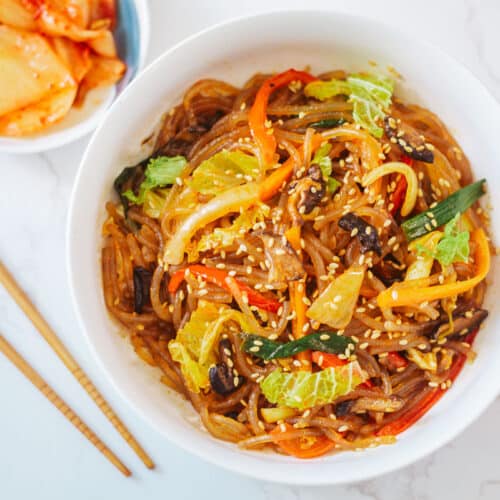
There’s nothing more refreshing on a hot day than a nice bowl of bibimmyeon! This Korean cold noodle dish is spicy, sweet, sour, and loaded with fresh veggies! If you like this recipe, try my spicy vegan japchae next.
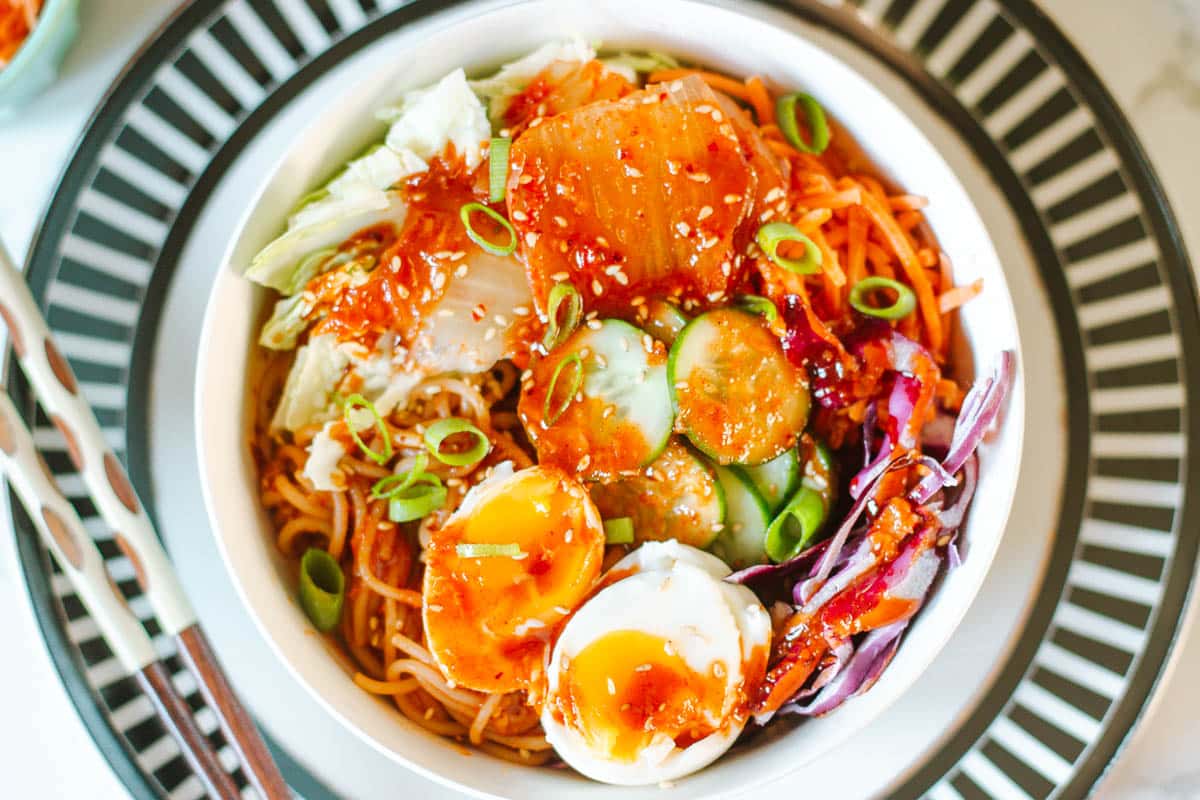
Korean food just might be my favorite cuisine when it comes to cooking. Bibimmyeon is one of my go-to Korean dishes because it makes the perfect refreshing, nutritious meal on a sweltering summer day (but I tend to eat it year-round)! These Korean spicy noodles are great for both meal prepping and enjoying right away.
The flavor of this bibimmyeon is hard to describe, but I’ll try to do it justice: The sauce is nutty, vinegary, garlicky, a little sweet, and spicy. There’s no one right way to prepare this dish, so feel free to get creative and customize it to your preference!
🥒 What Is Bibimmyeon?

“Bibimmyeon” (비빔면) is also sometimes referred to as “bibim-guksu” (비빔국수), both names literally translating to “mixed noodles”.
While “bibimmyeon” usually refers to a cold, dry-style (brothless) noodle dish tossed with a spicy, sweet, tangy sauce, it can also sometimes be used as a blanket term in reference to a variety of other mixed noodle dishes, such as mak-guksu, bibim milmyeon, etc. These dishes can be thought of as siblings to bibim naengmyeon, a buckwheat noodle dish served in a cold broth.
My favorite variety is jjolmyeon, which is simply a classic bibimmyeon made specifically with jjolmyeon noodles. These noodles have a distinct texture that is chewy, thick, and bouncy, and are made from wheat and starch.
The tradition of cold noodle dishes in Korea is thought to date back as far as the Goryeo era (918-1392), during which time buckwheat was introduced into Korean agriculture by Mongol influence. Cold noodle dishes are believed to have originated in Hamheung, in what is now North Korea.
Today, they can be found in restaurants all across South Korea, many of which were started by displaced North Korean refugees. Naturally, the North Korean diaspora in the south has led to some culinary evolution, as traditional recipes have been adapted to include local ingredients and tastes.
🐷 Easy Dietary Swaps To Make It Your Way

Gluten-Free
Substitute the noodles with dangmyeon noodles (Korean glass noodles), rice noodles, or Miracle noodles. Use GF soy sauce or coconut aminos.

Vegan
Simply omit the egg, or substitute it with tofu, mushrooms, or your preferred protein alternative.

High-Protein
Feel free to serve bibimmyeon with spicy beef bulgogi, jumulleok, chicken, edamame, mushrooms, avocado, etc.
🥄 Why You’ll Love This Recipe
- Bibimmyeon is easy to make and ready in minutes!
- You can make this recipe vegan or gluten-free with a few easy ingredient swaps.
- This dish is great for using up fresh veggies before they go bad.
- You can customize these noodles to your liking – make them as simple or as fancy as you want!
- Bibimmyeon costs very little to make, perfect for when you’re on a ramen noodle budget but wanting fresh new ways to enjoy it.
- This spicy noodle dish can be enjoyed as a main dish or a side dish.
Estimated Cost of This Recipe ≈ $3.90 Per Serving
I calculate the total cost of each recipe based on the estimated cost of ingredients at average U.S. grocery prices, using only the portion needed for the recipe — not the full cost of entire packages. Keep in mind that prices can vary depending on location, season, brand, and a fluctuating economy.
My goal with these money-saving meal recipes is to make delicious & nutritious home-cooked meals feel more accessible, even during tough times. I believe that good food should bring comfort, joy, and dignity to our lives — no matter the size of our budget.
🛒 What You Need To Make This Recipe
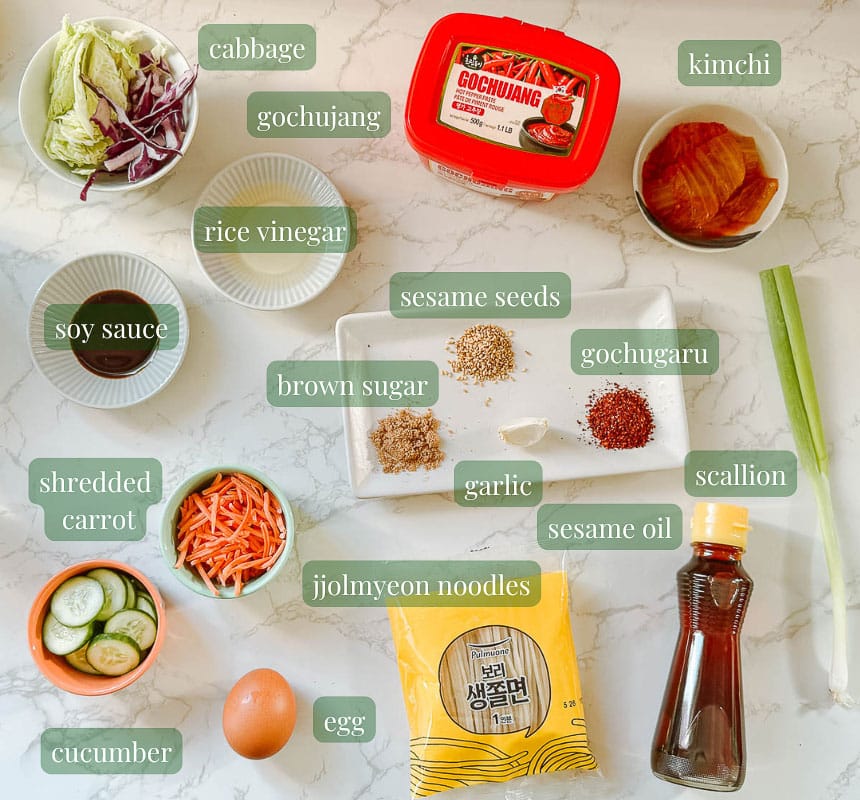
- Noodles: I use jjolmyeon noodles, which you can usually find at H Mart and other Korean grocery stores. Otherwise, you can use somyeon noodles (aka somen noodles), ramyeon noodles (ramen), naengmyeon noodles, soba, etc.
- Fresh veggies: Cucumber is a must, but I like to add savoy cabbage, red cabbage, and shredded carrots as well. You can also add Asian pear, bean sprouts, lettuce, etc.
- Gochujang: This is the base of the sauce, and shouldn’t be substituted. It isn’t terribly spicy, but you can reduce the amount if you want less heat.
- Brown sugar: You can also use granulated white sugar or honey.
- Rice vinegar: Or Mirin, or white wine vinegar
- Soy Sauce: Or coconut aminos.
- Sesame oil: You want toasted sesame oil, not pure sesame oil.
- Garlic: Fresh if you have it, otherwise, bottled minced garlic will do.
- Gochugaru: You can also use crushed red pepper, Aleppo pepper, or omit it.
- Egg: I like to add a jammy egg, but you can add a hard-boiled egg or fried egg, if you prefer.
- Optional garnishes: Green onion, sesame seeds, kimchi, nori.
- Other ingredients to consider: You may want to include a spoonful of gyeoja (Korean hot mustard), maesil-cheong (Korean plum extract), or ginger ale (or all of the above!)
*See above image or recipe card for full list of ingredients.
🍜 How To Make Bibimmyeon
Step 1: Combine gochujang, rice vinegar, soy sauce, sesame oil, brown sugar, gochugaru, toasted sesame seeds, and minced garlic. Mix until consistent, then place in the fridge.
Pro Tip: I like to prep the bibimmyeon sauce about 30-60 minutes before serving so it has time to get cold in the fridge, but you can use it straight away if you prefer it to be room temperature.


Step 2: Boil noodles according to package instructions, then drain and rinse under cold running water to prevent further cooking. Place noodles in a small bowl and top with spicy sauce.
Pro Tip: I like to reserve a few spoonfuls of the sauce to drizzle over the top before serving.
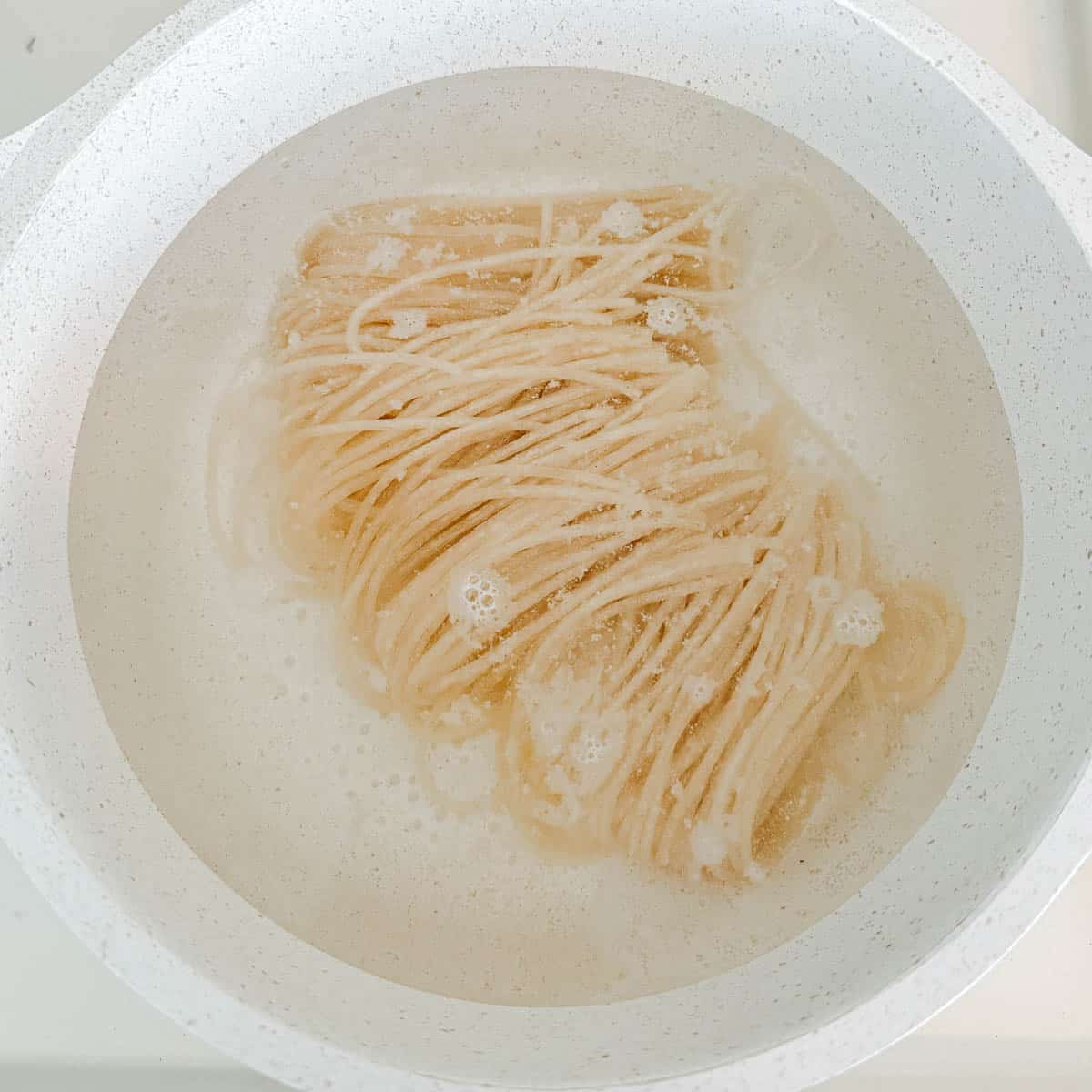

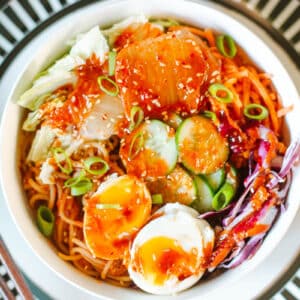
Step 3: Top bibimmyeon noodles with fresh cucumber slices, chopped cabbage, shredded carrots, kimchi, and a jammy egg. Top it with an extra drizzle of sauce (optional), then mix it all up and enjoy!

🥬 Bibimmyeon Variations:
Here are a few of the distinct Korean noodle dishes that fall under the “bibimmyeon” family.
Jjolmyeon: Thick, chewy noodles made from wheat and starch tossed in a spicy, vinegary gochujang sauce and topped with fresh veggies like cabbage, lettuce, carrot, and cucumber.
Bibim guksu: Similar to jjolmyeon, but is made using thin wheat noodles (somyeon) instead of jjolmyeon noodles.
Makguksu: Buckwheat noodles served cold in either a spicy gochujang-based sauce or a simple soy sauce and perilla oil dressing. Traditional toppings sometimes include cucumber chopped into matchsticks, pickled vegetables, boiled egg, roasted seaweed, and perilla leaf.
Bibim milmyeon: This wheat noodle dish is served with a spicy gochujang sauce and is the “dry” counterpart to mul milmyeon, which is served in a cold meat broth, similar to mul-naengmyeon.
🤷🏻♀️ Recipe FAQs
Jjolmyeon is a type of bibimmyeon (mixed noodles) made with jjolmyeon noodles, which are very chewy.
Bibimmyeon can be made using a variety of noodles such as jjolmyeon noodles, somyeon, ramyeon, naengmyeon, and more.
Korean cold mixed noodles can be traced as far back as the Goryeo era (918-1392) in regions that are now considered part of North Korea. Bibimmyeon has become a popular dish throughout South Korea, and is believed to have been introduced by displaced North Korean refugees.
👩🏻🍳 Pro Tips
- If you aren’t adding the sauce to the cooled noodles right away, I recommend tossing the noodles with a little neutral oil to keep them from sticking together.
- Some bibimmyeon recipes I’ve seen add a lot more sugar than this recipe calls for. My recipe uses just enough to give it a slight sweetness, but you can increase the amount of sugar to your liking.
- The best way to store bibimmyeon for meal prepping is to mix the noodles with the sauce and refrigerate in an airtight container for up to 3 days. Veggies and eggs should ideally be added just before serving for peak freshness.
- If you’ve already mixed everything together, you should still store it in an airtight container in the fridge, though I would try to eat it within 2 days.

🥢 More Delicious Asian Recipes
Love this bibimmyeon recipe? Please leave a 5-star 🌟🌟🌟🌟🌟 rating in the recipe card below & a review in the comments section further down the page.
Stay in touch with me through social media @ Instagram, Pinterest, and Facebook! Don’t forget to tag me when you try one of my recipes!
Bibimmyeon (Korean Spicy Cold Noodles)
Ingredients
- 2 Tbsp gochujang
- 2 Tbsp rice vinegar
- 1 tsp soy sauce
- 2 tsp toasted sesame oil
- 2 tsp brown sugar
- 1 tsp gochugaru
- 1 clove garlic
- 1 tsp toasted sesame seeds
- 1 serving jjolmyeon noodles
- 1 Persian cucumber
- ¼ cup savoy cabbage
- ¼ cup red cabbage
- ¼ cup shredded carrots
- ¼ cup kimchi
- 1 scallion
- 1 large egg
Instructions
- Combine gochujang, rice vinegar, soy sauce, sesame oil, brown sugar, gochugaru, toasted sesame seeds, and minced garlic. Mix until consistent, then place in the fridge.
- Boil noodles according to package instructions, then drain and rinse under cold running water to prevent further cooking. Place noodles in a small bowl and top with spicy sauce.
- Top bibimmyeon noodles with fresh cucumber slices, chopped cabbage, shredded carrots, kimchi, scalions, and a jammy egg. Top it with an extra drizzle of sauce (optional), then mix it all up and enjoy!
Notes
- I like to prep the bibimmyeon sauce about 30-60 minutes before serving so it has time to get cold in the fridge, but you can use it straight away if you prefer it to be room temperature.
- I like to reserve a few spoonfuls of the sauce to drizzle over the top before serving.
- If you aren’t adding the sauce to the cooled noodles right away, I recommend tossing the noodles with a little neutral oil to keep them from sticking together.
- Some bibimmyeon recipes I’ve seen add a lot more sugar than this recipe calls for. My recipe uses just enough to give it a slight sweetness, but you can increase the amount of sugar to your liking.
- The best way to store this dish for meal prepping is to mix the noodles with the sauce and refrigerate in an airtight container for up to 3 days. Veggies and eggs should ideally be added just before serving for peak freshness.
- If you’ve already mixed everything together, you should still store it in an airtight container in the fridge, though I would try to eat it within 2 days.
Have you considered, frequently, that you’re a genius?! Because, if not, just know that YOU ARE, IN FACT, A GENIUS. Looks WILDLY DELECTABLE. I’m in awe! I’ve never had this dish, but I’m going to have to try it immediately!
haha, thanks! I try 😂 It’s one of my favorites, and so easy to make! Let me know if you try it! 🥰
I love how this recipe combines spicy, sweet, and tangy flavors—makes Bibimmyeon perfect for hot days. Definitely trying this at home soon!
I hope you like it! It really does offer a little bit of everything in terms of flavor! 🙂
Thank you for sharing this recipe
Bibimmyeon looks like a perfect dish for hot days—refreshing yet spicy. I like how versatile the toppings can be, making it easy to customize to personal taste. Would love to try making it at home!
That’s exactly what I love about it! Hope you enjoy it as much as I do!