
Seasoned Fried Lotus Root Chips 2 Ways
Affiliate Disclosure: This post may contain affiliate links. If you purchase through them, I may earn a commission at no extra cost to you.
Seasoned fried lotus root chips are a crispy, crunchy snack that’s affordable, ready in minutes, and insanely addictive. I’ll show you how to prep & fry lotus root, and what seasonings enhance its flavor. We’ll also make battered lotus root fries. If you like these lotus chips, try my favorite air fryer parsnip chips next!

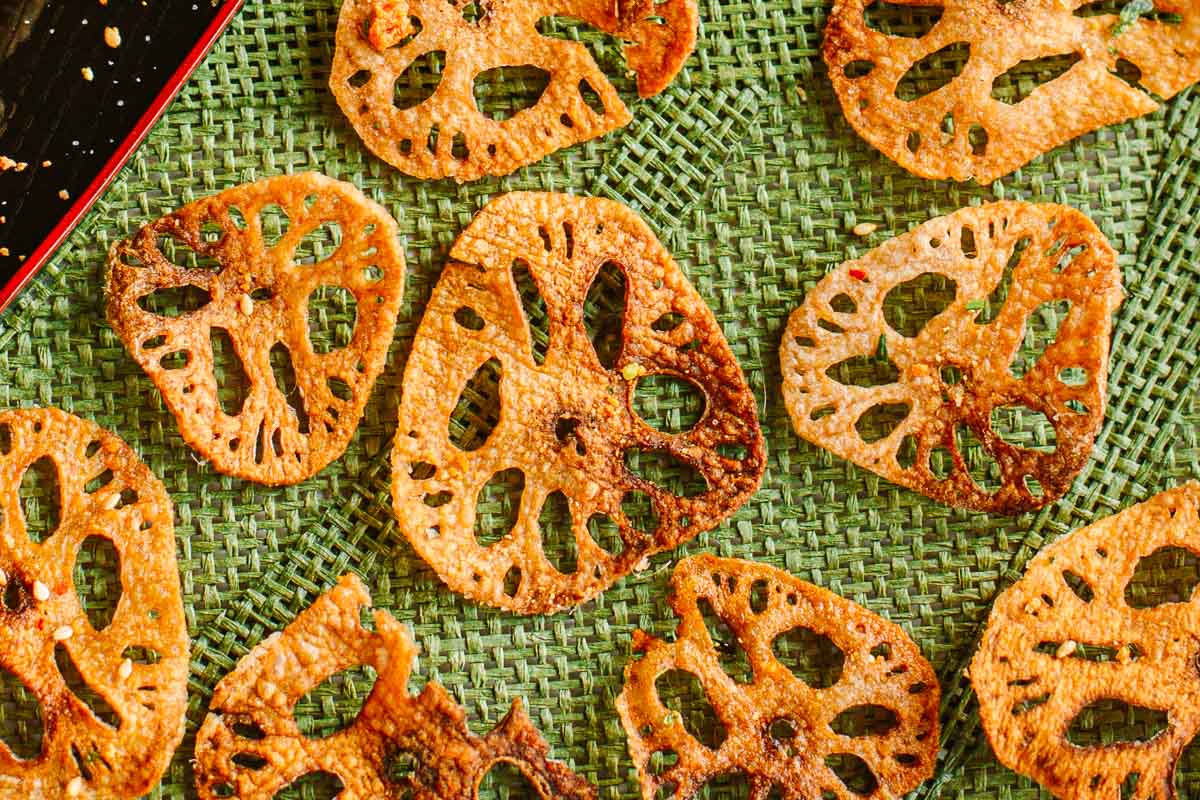
Fried lotus root chips taste a lot like homemade potato chips, but even crunchier! As great as they are on their own, they’re even better when seasoned with salt, furikake, or even BBQ seasoning. The amazing thing about these lotus chips is that they stay crispy long after they cool off, even for several days when stored properly, unlike most veggie chips.
The second recipe is for breaded lotus root “fries”, for lack of a better word, but they’re almost more like a vegan & gluten-free alternative to calamari. It’s hard to describe, but absolutely delicious!
🛒 What You Need To Make This Recipe
Lotus Chip Ingredients
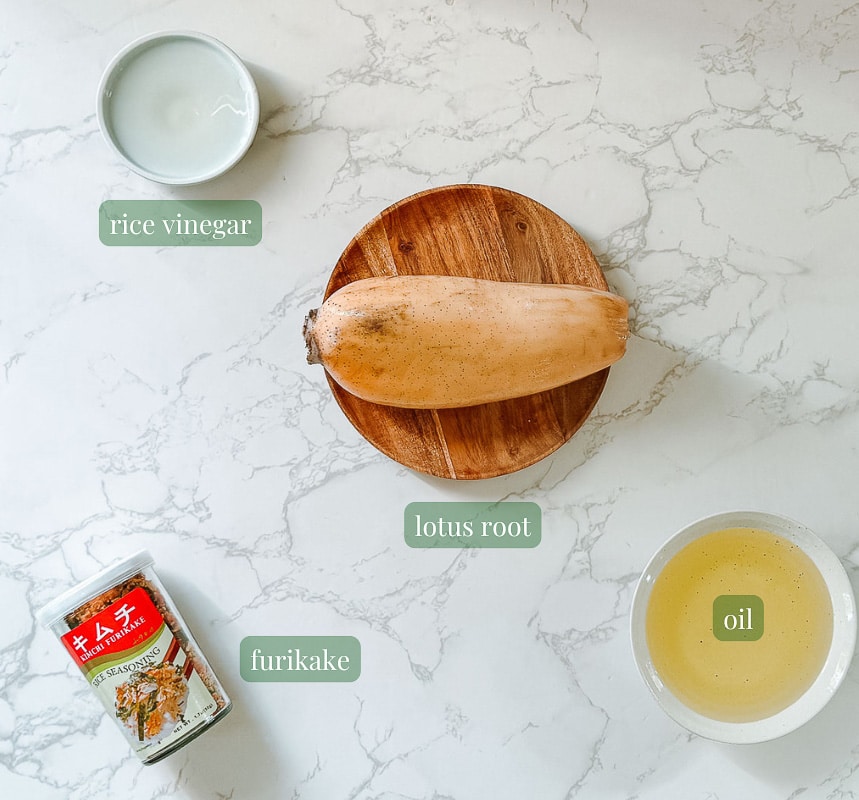
- Lotus root: Large is ideal.
- Rice vinegar: You can also use white vinegar or lemon.
- Oil: Peanut oil, avocado oil, canola oil, and vegetable oil all work.
- Furikake: This is a Japanese rice seasoning. I recommend using nori komi furikake or kimchi furikake.
Lotus Root Fry Ingredients
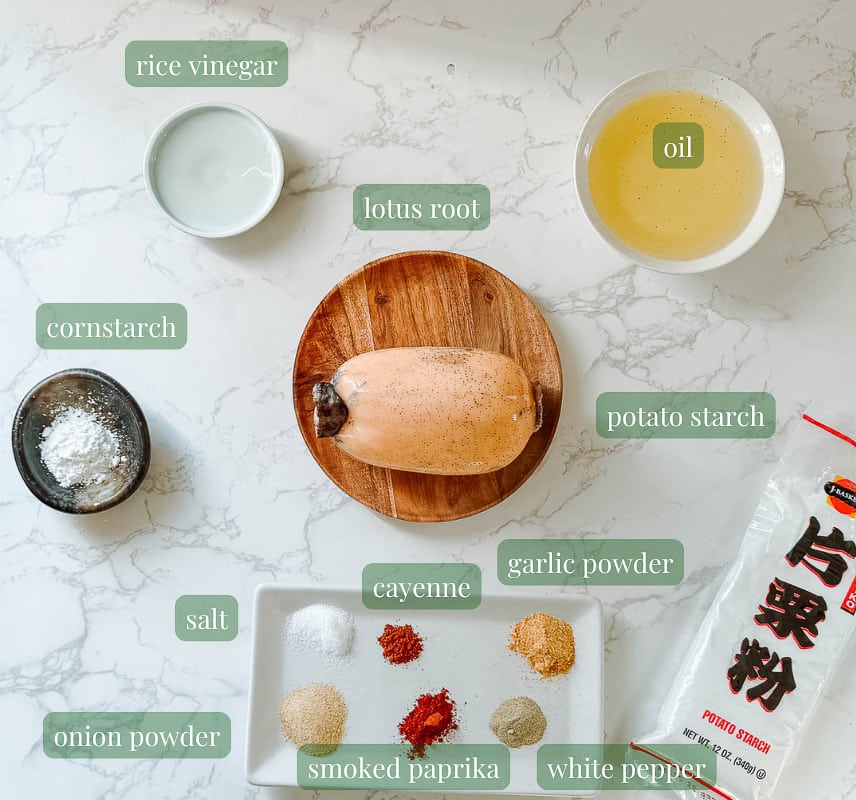
- Lotus root: Medium sized.
- Potato starch & cornstarch: Potato starch makes the batter shatteringly crisp, but you can just use cornstarch if you don’t have it.
- Rice vinegar: Or lemon.
- Spices: Salt, garlic powder, onion powder, smoked paprika, cayenne.
🥔 Tips For Using Lotus Root
If you’ve never shopped for and/or cooked with lotus root, fear not! Here are some helpful tips for selecting and preparing these delicious and beautiful root vegetables.
First of all, the label should say “lotus root”, “renkon”, “lian”, or “kamal kakdi”, depending on where you buy it from. They often come vacuum-sealed, but not always.
Fresh lotus root should feel firm and heavy with smooth, pale skin. Some external discoloration is normal, but avoid those with large gashes, mushy texture, or fuzzy growth.
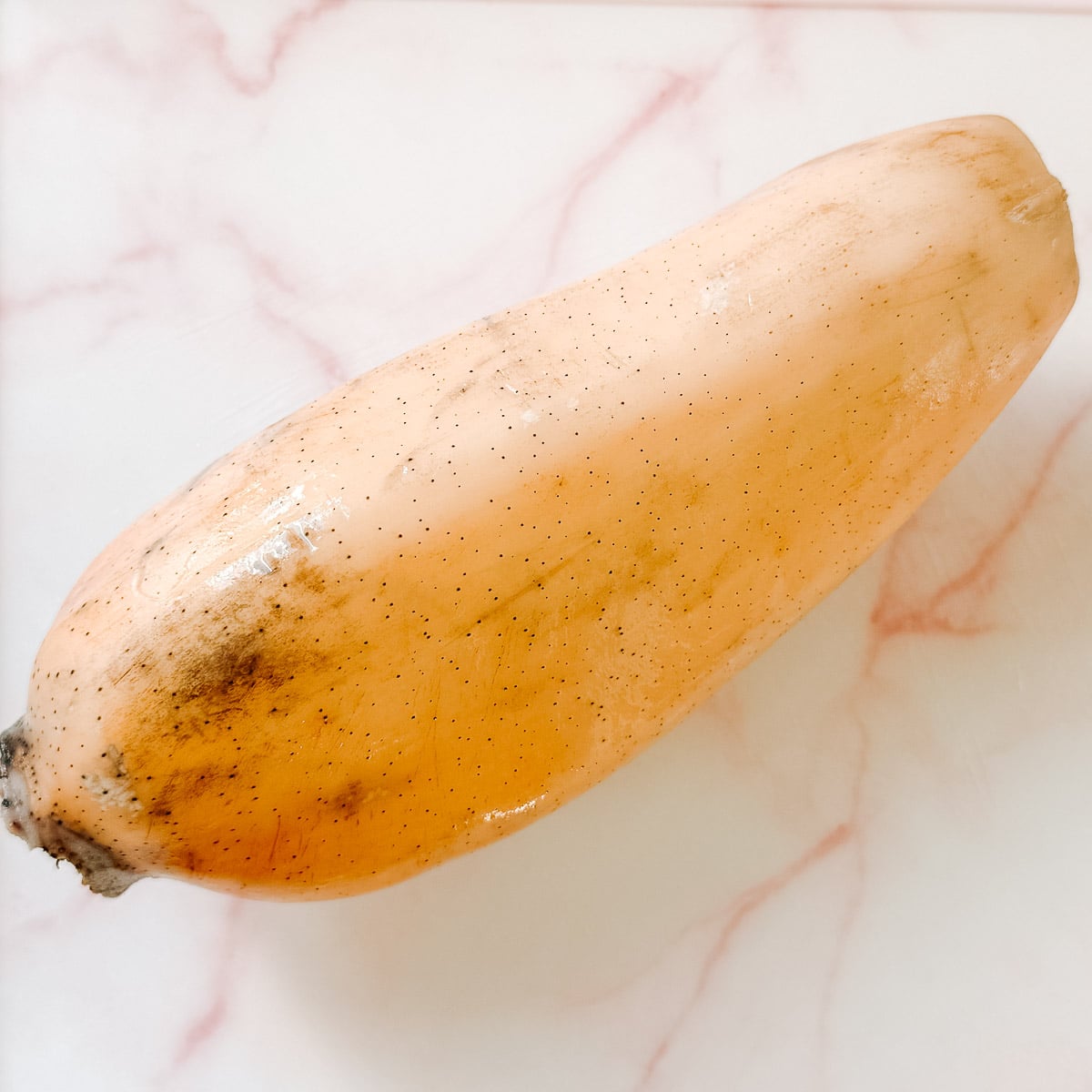
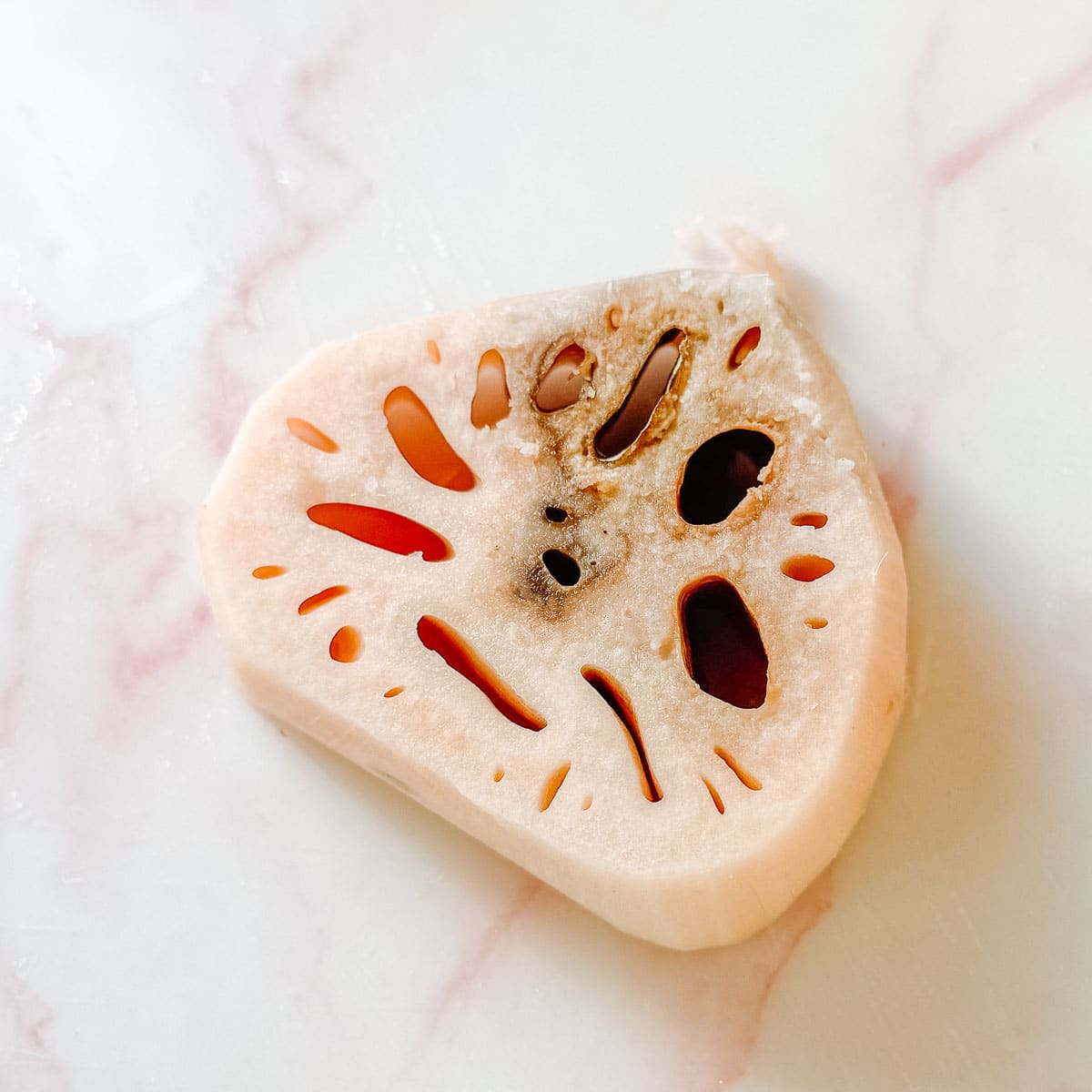
Once peeled, it’s generally okay if some of the lotus root looks bruised as long as it feels firm and crisp, doesn’t smell sour, and isn’t slimy. The hollow cavities can sometimes trap soil, bruise, or oxidize, causing some discoloration.
If it has a strong sour smell, feels soft or mushy, or has large, slimy dark patches or mold, it has likely gone bad.
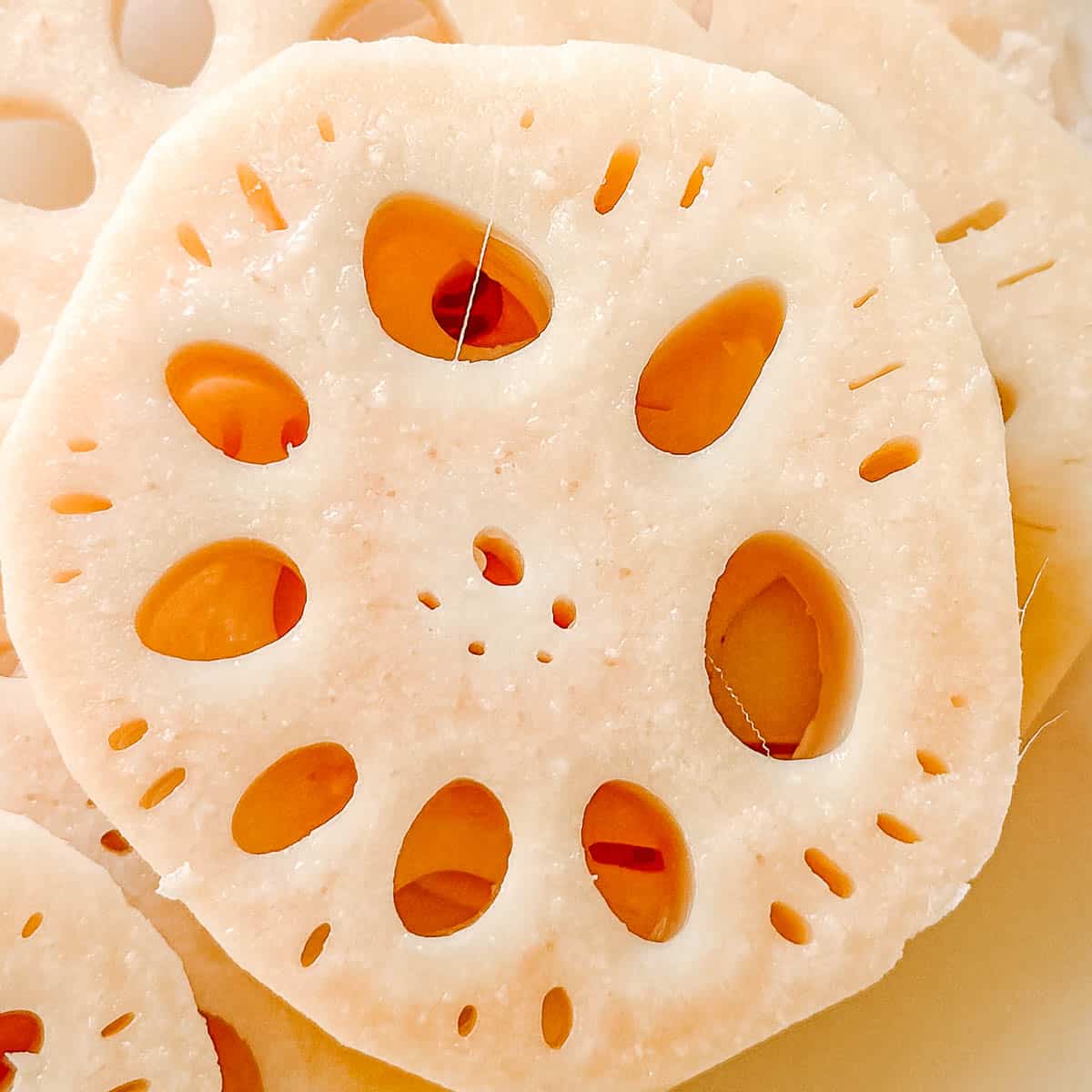
When peeling and slicing lotus root, you’ll likely encounter silk-like threads inside. This is totally normal, and not a sign of spoilage, as lotus roots are naturally fibrous.
🪷 How To Make Fried Lotus Root Chips
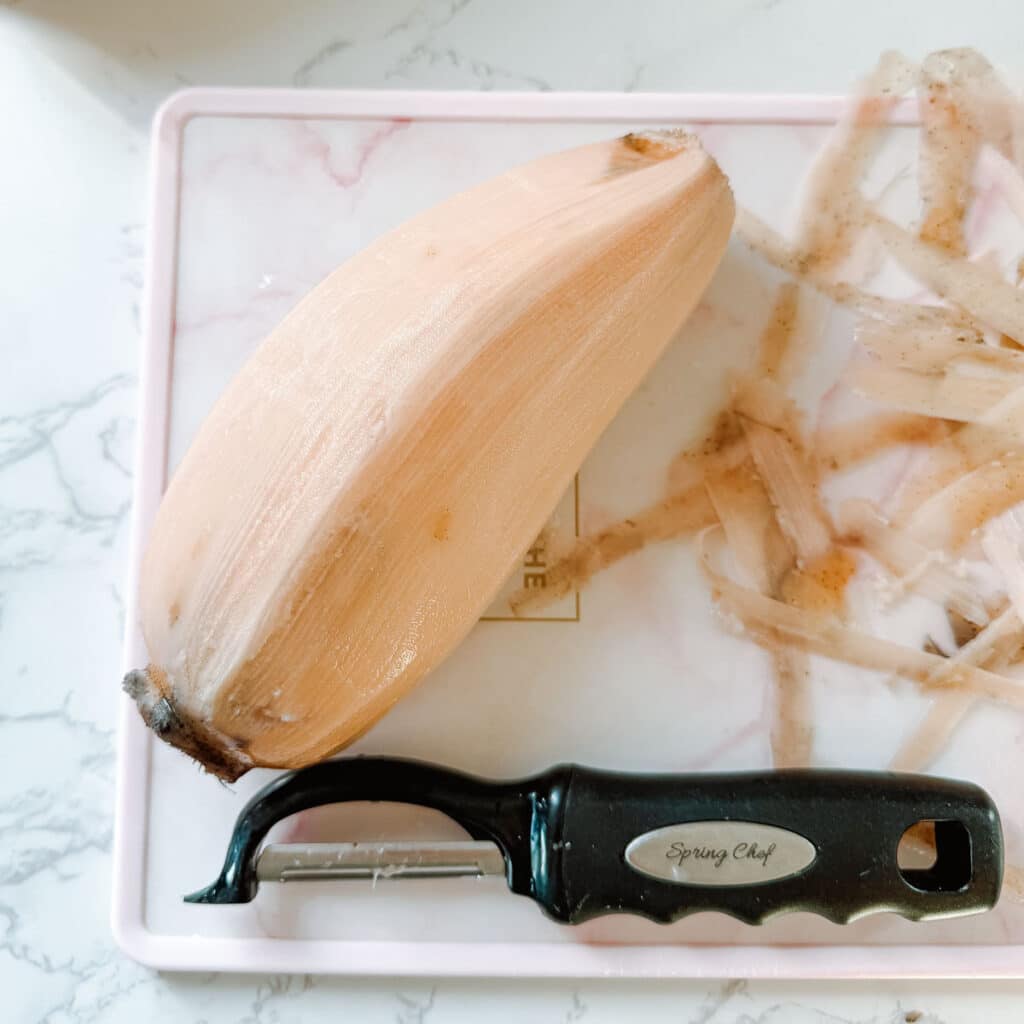
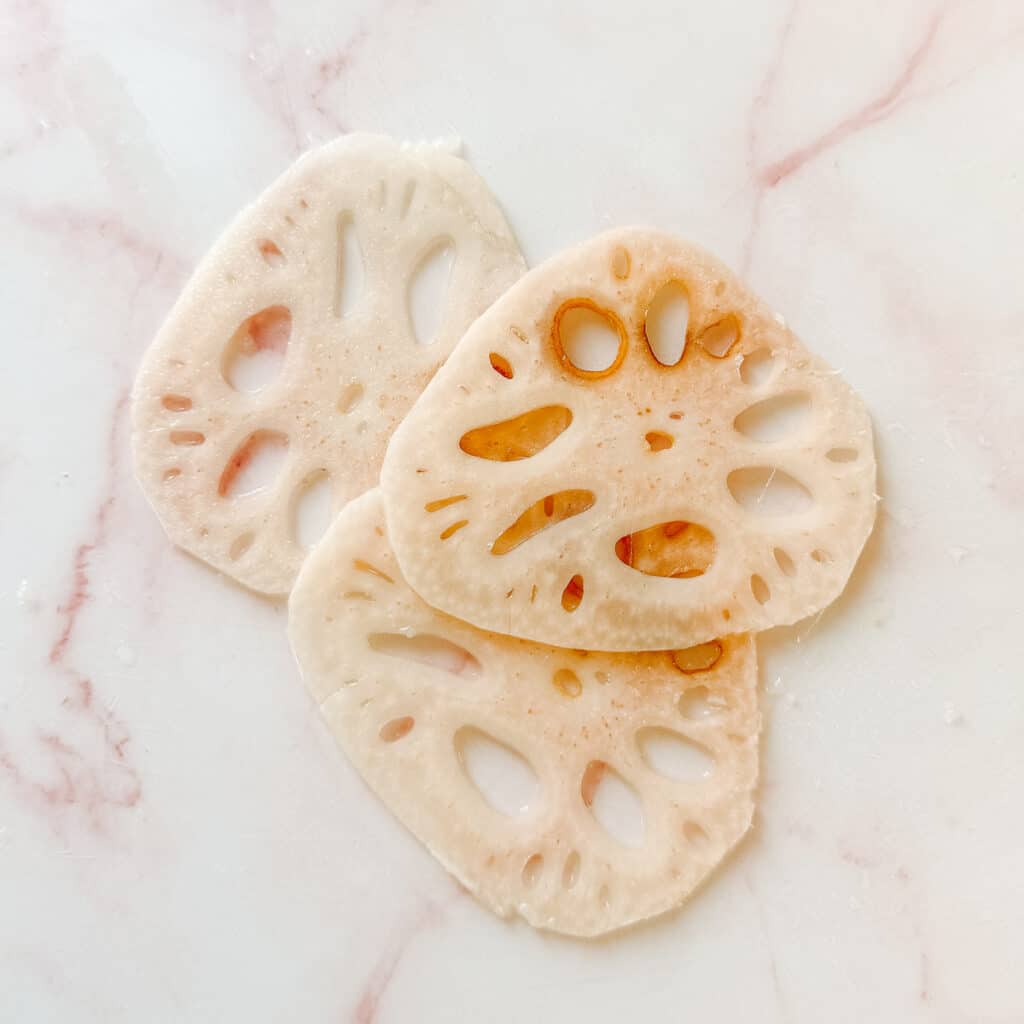
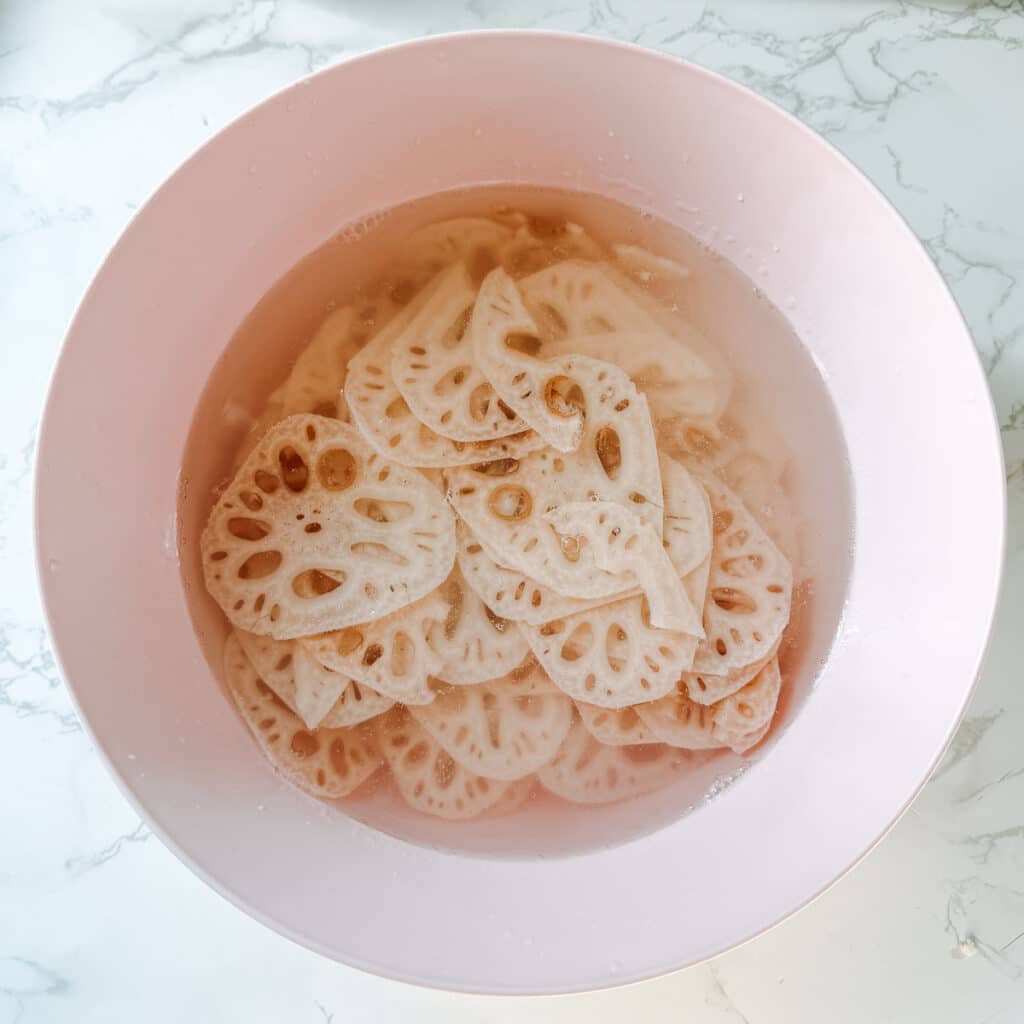
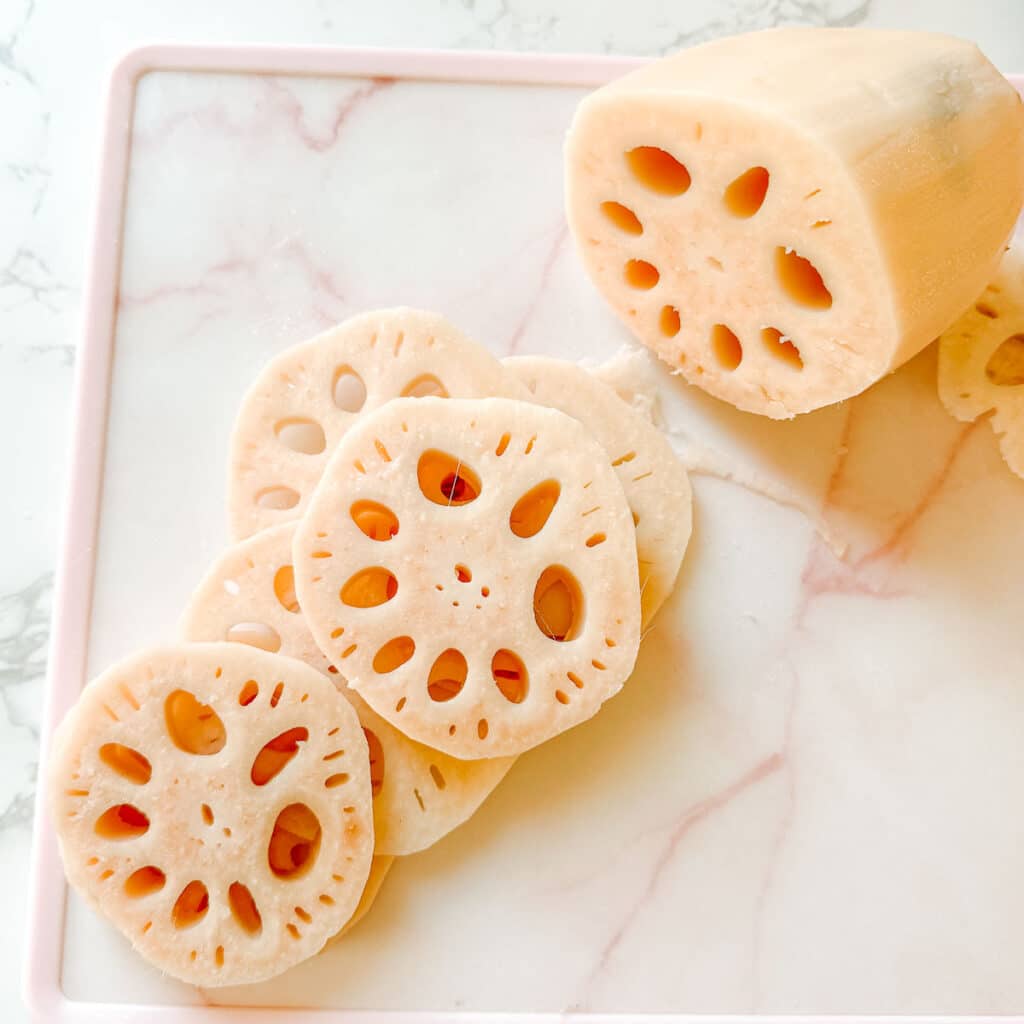
Step 1: Peel lotus root and cut off ends, then slice into very thin rounds, about 1-2mm thick, using a mandoline or sharp knife. Place slices in a bowl of water and vinegar and soak for 5-10 minutes to prevent browning and remove excess starch.
Step 2: Drain lotus root slices and pat dry with paper towels, removing as much moisture as possible to help the chips crisp up while frying. Meanwhile, pour 2 inches of oil into pan and heat to 350°F. Working in batches, carefully add the lotus root slices to the hot oil. Fry 2-3 minutes, turning occasionally, until golden and crisp.

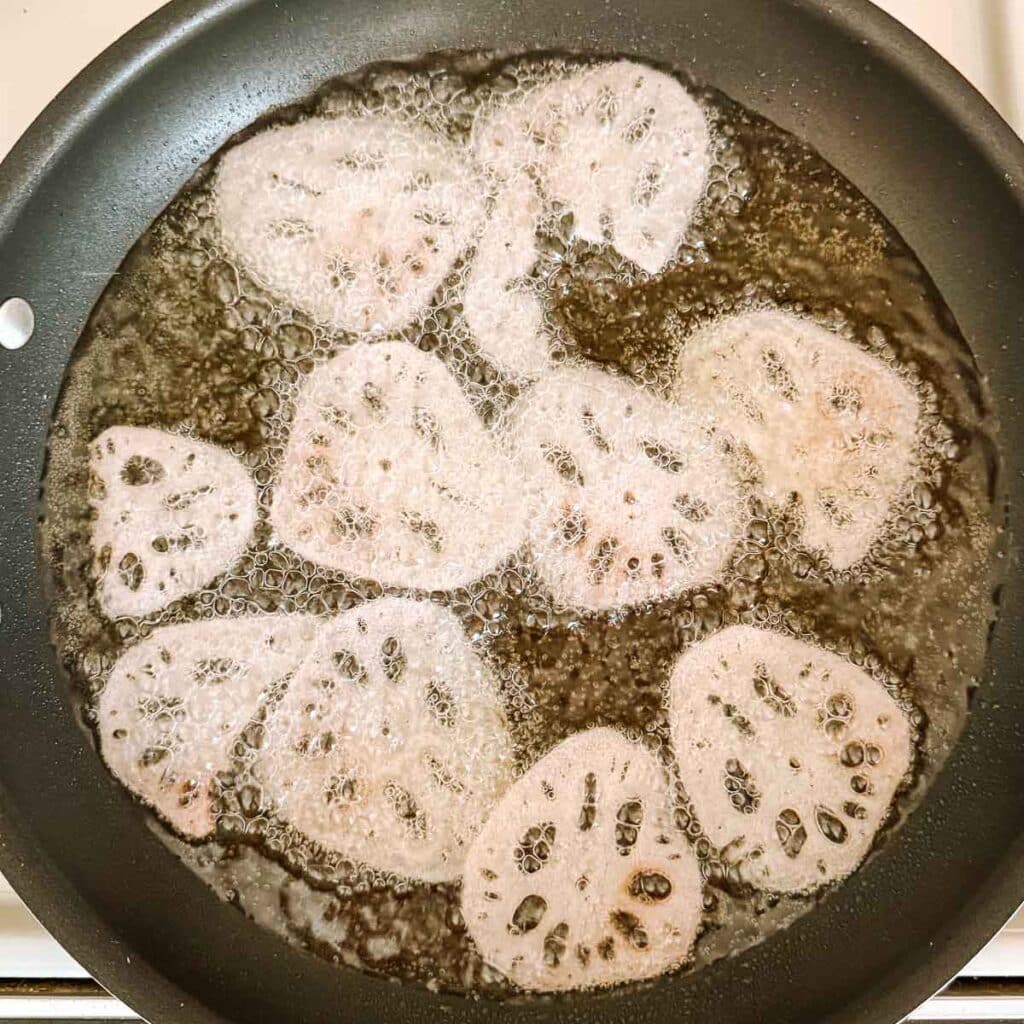
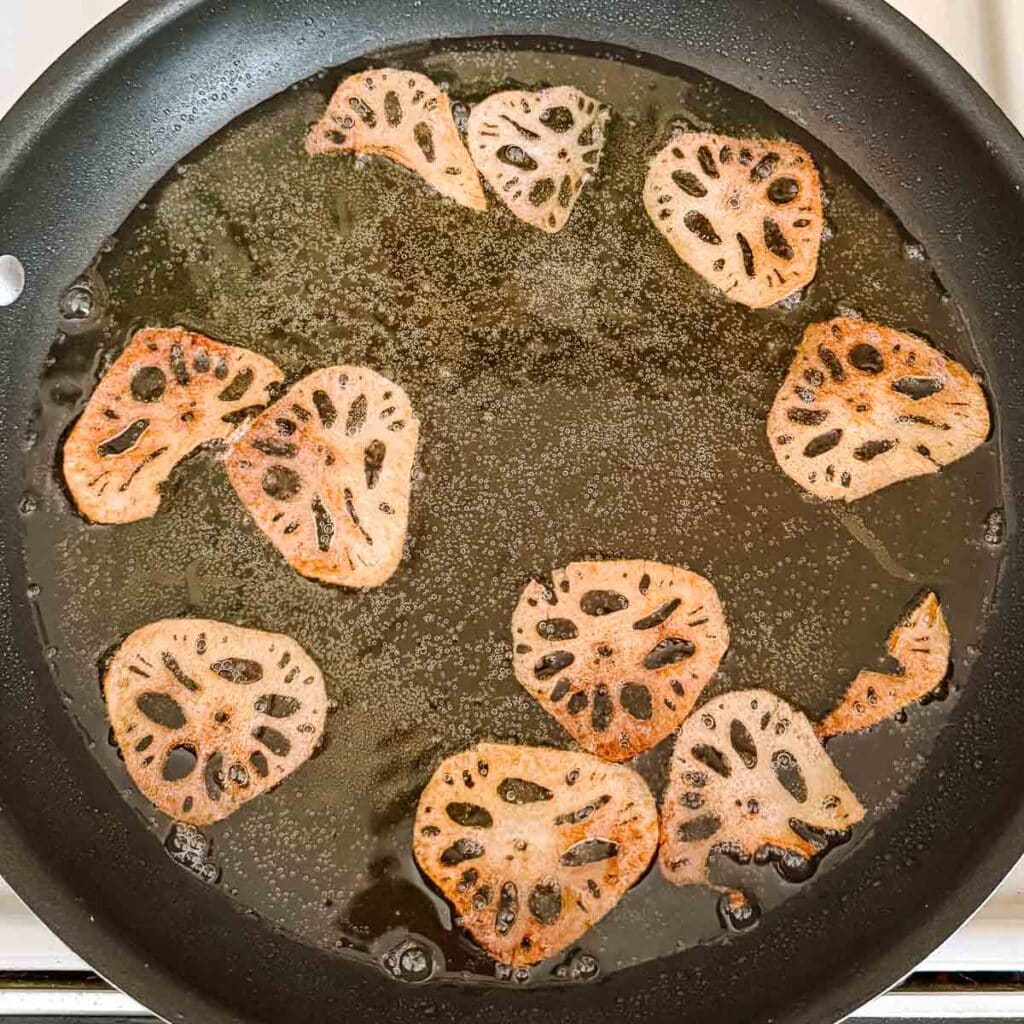
Step 3: Drain on a wire rack and sprinkle lightly with furikake seasoning.
Pro Tip: Try to sprinkle with seasonings while lotus chips are still hot! They cool very quickly, and the seasonings won’t adhere as well when they’re cold.
🍟 How To Make Breaded Lotus Root Fries
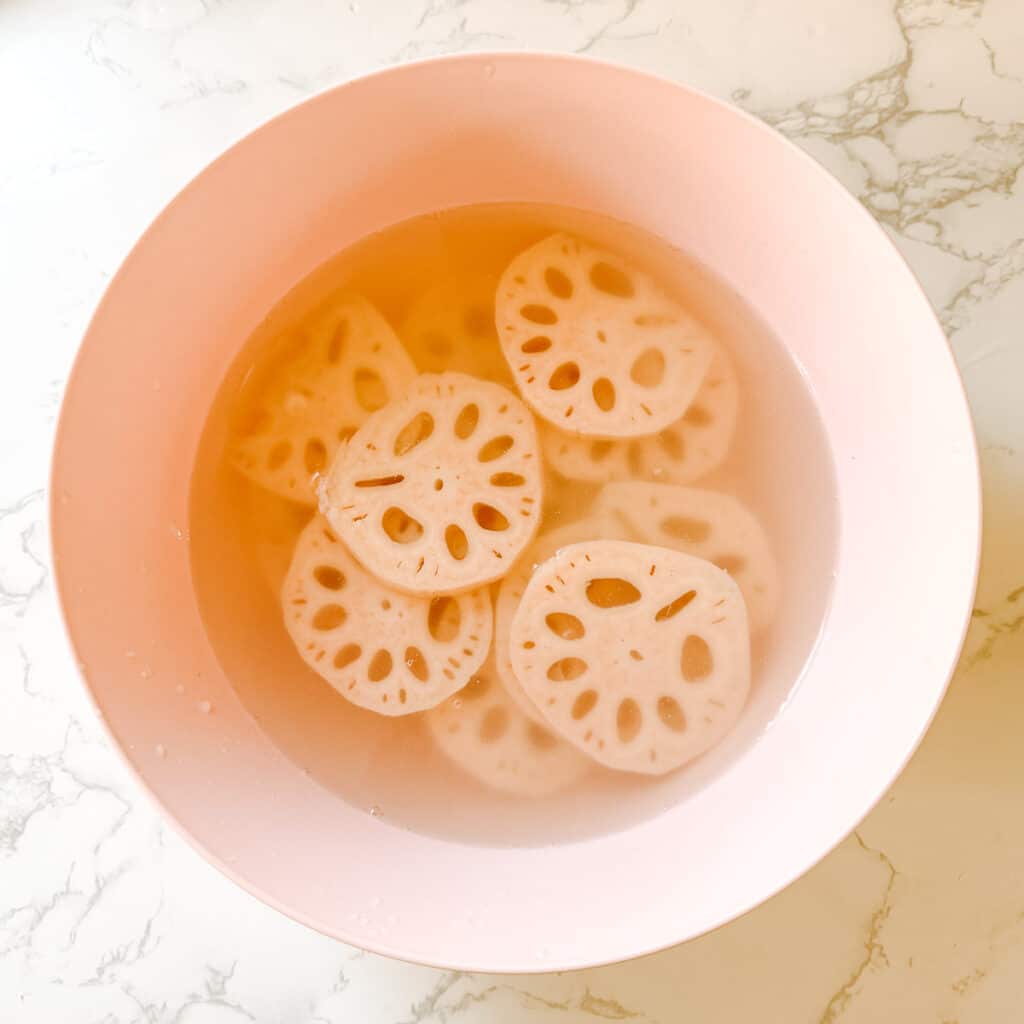
Step 1: Peel lotus root and slice into 1/4-inch thick rounds. Soak slices in water and vinegar for 10 minutes, then drain and pat completely dry.
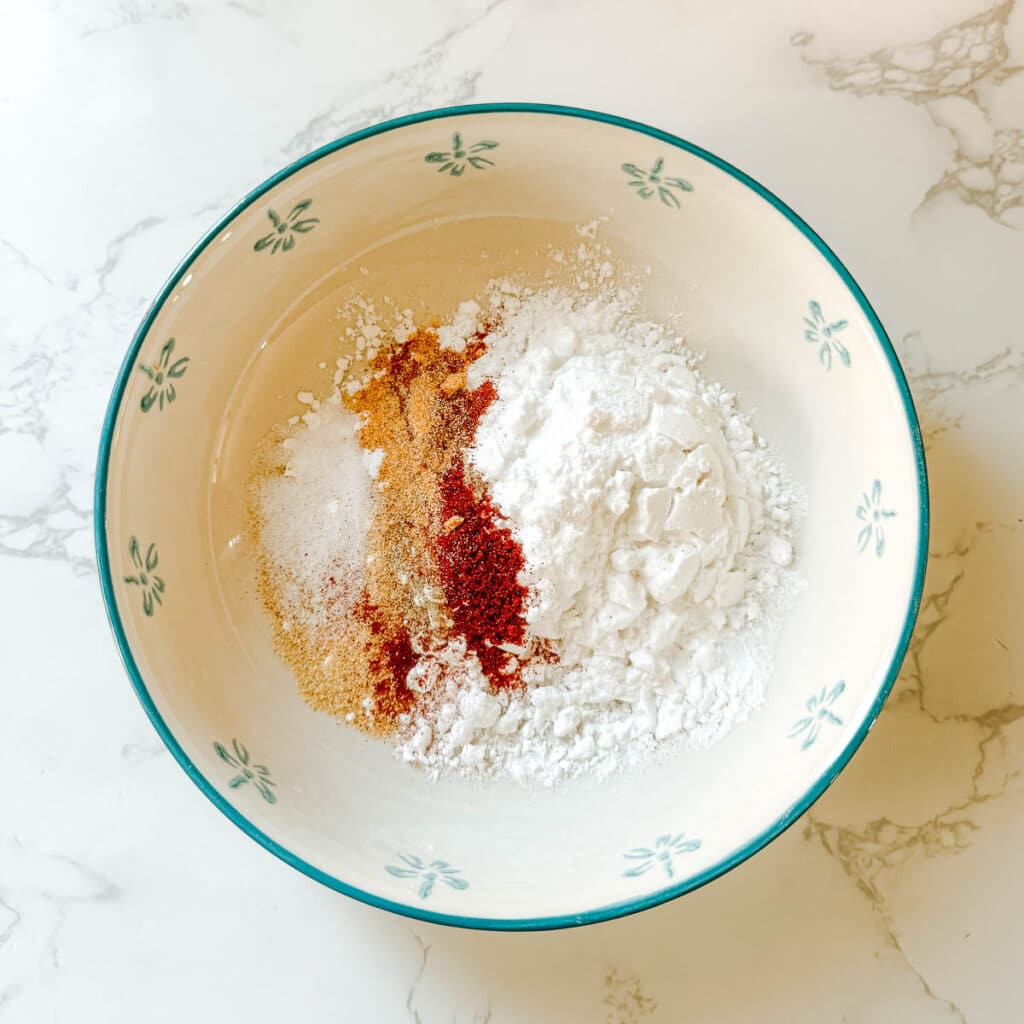
Step 2: In a bowl, whisk together potato starch, cornstarch, garlic powder, onion powder, salt, white pepper, smoked paprika, and cayenne.
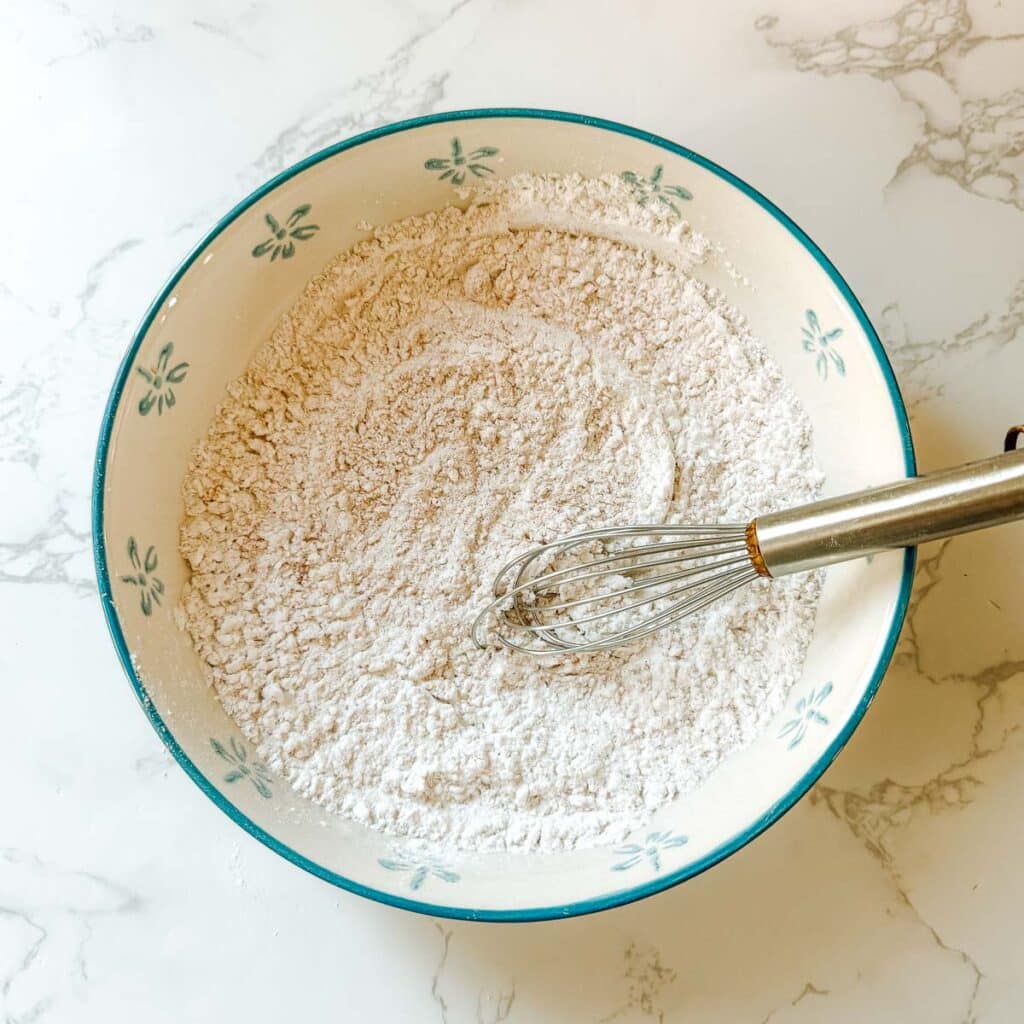
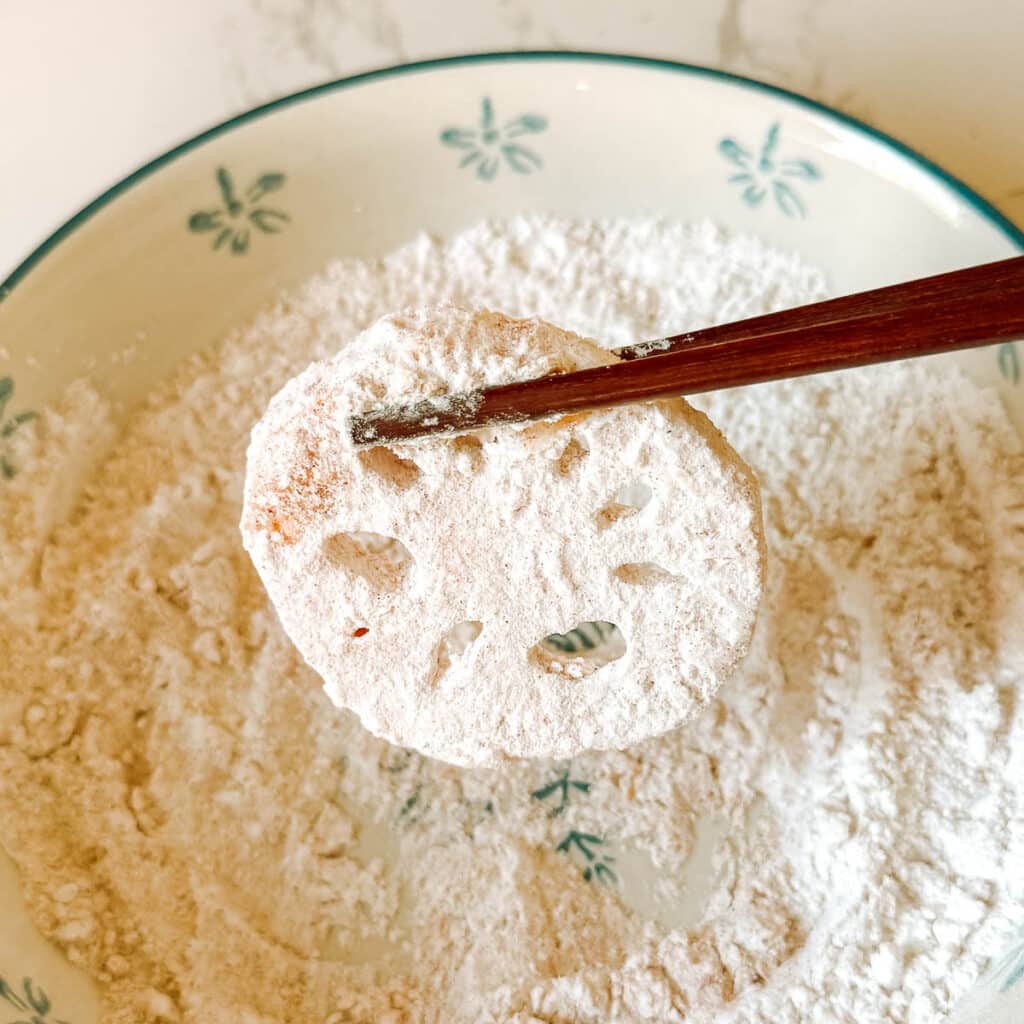
Step 3: Add the lotus root slices to the bowl and toss until evenly coated with the starch mixture. Shake off excess coating so only a thin layer remains. Heat 2 inches of oil in a pan to 350°F. Fry lotus slices for 2-5 minutes on each side until golden and crisp.

Step 4: Transfer to wire rack to drain, then season with flaky salt. Optionally, you can drizzle with masago sauce or spicy mayo.

🤷🏻♀️ Recipe FAQs
Lotus root, also known as renkon, kamal kakdi, and lian, is the edible rhizome of the lotus plant (Nelumbo nucifera). It’s commonly used in Chinese, Japanese, Korean, and Indian cuisine and has a starchy texture similar to potatoes. When sliced, lotus root reveals its distinctive lace-like pattern of holes and has a mildly sweet, slightly nutty flavor. Its crisp texture often stays crunchy even after cooking.
Soaking sliced lotus root in water with a splash of vinegar helps prevent oxidation, which can cause the slices to turn brown. It also helps remove excess starch and keeps the lotus root crisp, which is especially helpful when you fry lotus root.
Yes, lotus root is usually peeled before cooking as the skin is tough and bitter.
Yes, you can air fry lotus chips by slicing them very thin with a mandolin, tossing them with oil, and cooking at about 375°F for 10-15 minutes or until crisp, flipping halfway.
🧂 Seasoning & Serving Suggestions
You can enjoy fried lotus root seasoned with various flavors of furikake, or with your favorite potato chip seasoning. Lotus chips make an excellent crunchy addition to a sushi bowl, bulgogi bowl, or salad.
Whichever method you use to fry lotus roots, I recommend dipping them in masago sauce, spicy mayo, ranch, or whatever dips you’d usually serve with potato chips.
If you want more deep-fried goodness, try this crispy onion ring recipe!
🍲 More Lotus Root Recipes
Want more ways to serve lotus root? I recommend trying this Korean braised lotus root, Sri Lankan vegan lotus root curry, and this Chinese lotus root soup with pork ribs.
Kinpira renkon is a Japanese lotus root stir-fry that’s really flavorful and light, perfect as a side dish. Another popular Japanese dish is renkon hasami-age, which are basically lotus root “sandwiches” stuffed with ground pork or chicken.
👩🏻🍳 Pro Tips
- Allow fried lotus root to completely cool before storing so as not to trap moisture.
- Store lotus root chips in a ziplock bag or airtight container in a pantry or cool, dark place for up to 1 week.
- As for the lotus root fries, I recommend eating right after frying for best texture. Otherwise, you could store them in an airtight container for up to 24 hours and reheat in an air fryer.

🥢 More Recipes You’ll Love




Love this fried lotus root chips recipe? Please leave a 5-star
🌟🌟🌟🌟🌟 rating in the recipe card below & a review in the comments section further down the page.
Stay in touch with me through social media @ Instagram, Pinterest, and Facebook! Don’t forget to tag me when you try one of my recipes!

Seasoned Fried Lotus Root Chips
Ingredients
- 1 large lotus root
- 4 cups water
- 1 Tbsp rice vinegar
- 3 cups peanut oil
- 1 Tbsp furikake
Instructions
- Peel lotus root and cut off ends, then slice into very thin rounds, about 1-2mm thick, using a mandoline or sharp knife. Place slices in a bowl of water and vinegar and soak for 5-10 minutes to prevent browning and remove excess starch.
- Drain lotus root slices and pat dry with paper towels, removing as much moisture as possible to help the chips crisp up while frying. Meanwhile, pour 2 inches of oil into pan and heat to 350°F. Working in batches, carefully add the lotus root slices to the hot oil. Fry 2-3 minutes, turning occasionally, until golden and crisp.
- Drain on a wire rack and sprinkle lightly with furikake seasoning.
Notes
- Try to sprinkle with seasonings while chips are still hot! They cool very quickly, and the seasonings won’t adhere as well when they’re cold.
- Allow fried lotus root to completely cool before storing so as not to trap moisture.
- Store lotus root chips in a ziplock bag or airtight container in a pantry or cool, dark place for up to 1 week.
Nutrition

Lotus Root Fries
Ingredients
- 1 medium lotus root
- 4 cups water
- 1 Tbsp rice vinegar
- ½ cup potato starch
- 1 Tbsp cornstarch
- 1 tsp garlic powder
- 1 tsp onion powder
- 1 tsp salt
- ½ tsp white pepper
- ½ tsp smoked paprika
- ¼ tsp cayenne pepper
- 3 cups peanut oil
Instructions
- Peel lotus root and slice into 1/4-inch thick rounds. Soak slices in water and vinegar for 10 minutes, then drain and pat completely dry.
- In a bowl, whisk together potato starch, cornstarch, garlic powder, onion powder, salt, white pepper, smoked paprika, and cayenne.
- Add the lotus root slices to the bowl and toss until evenly coated with the starch mixture. Shake off excess coating so only a thin layer remains. Heat 2 inches of oil in a pan to 350°F. Fry lotus slices for 2-5 minutes on each side until golden and crisp.
- Transfer to wire rack to drain, then season with flaky salt. Optionally, you can drizzle with masago sauce or spicy mayo.
Notes
- I recommend eating these right after frying for best texture. Otherwise, you could store them in an airtight container for up to 24 hours and reheat in an air fryer.
Thank you for sharing this recipe