
Coconut Milk Sago with Mixed Fruit
Affiliate Disclosure: This post may contain affiliate links. If you purchase through them, I may earn a commission at no extra cost to you.
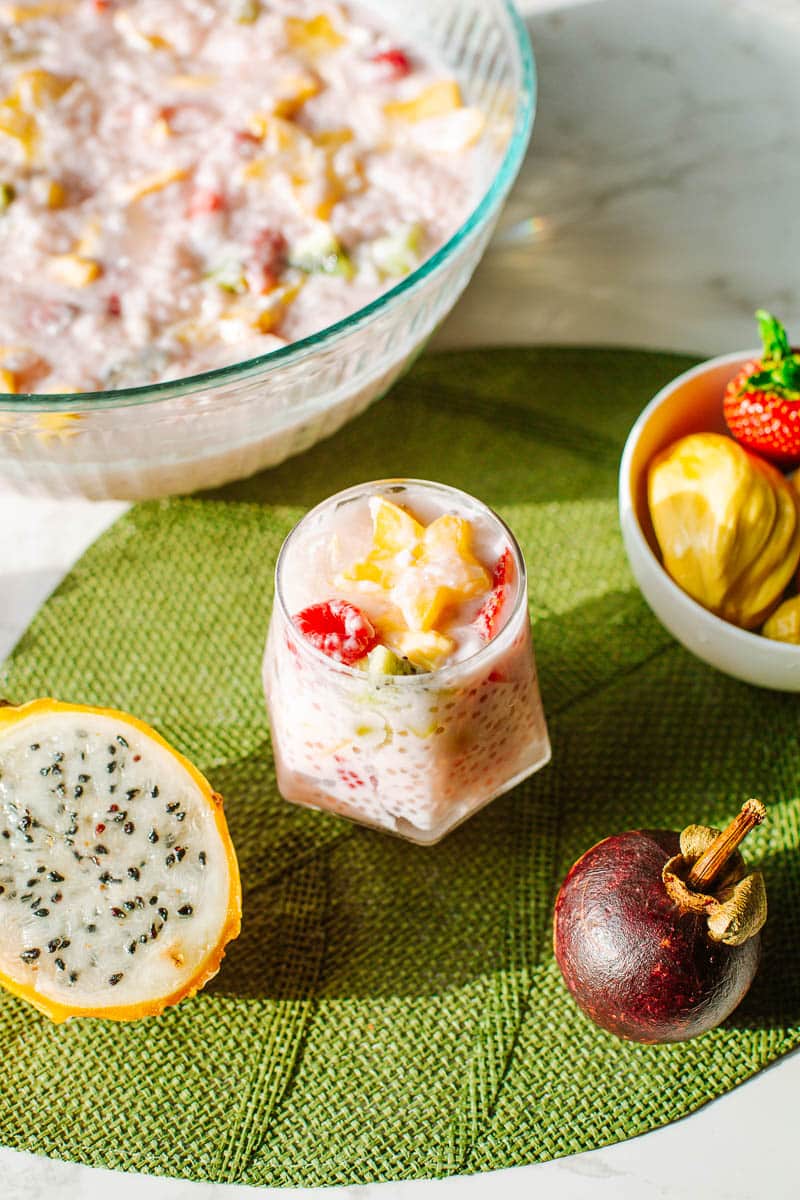
Creamy, fruity, and delightfully refreshing, this coconut milk sago combines sweet tropical flavors with chewy tapioca pearls and plenty of fun, contrasting textures. Served cold, it’s the perfect dessert for cooling off on a hot day, and it’s naturally vegan and gluten-free, too! Try it with a drizzle of jasmine simple syrup for added sweetness.
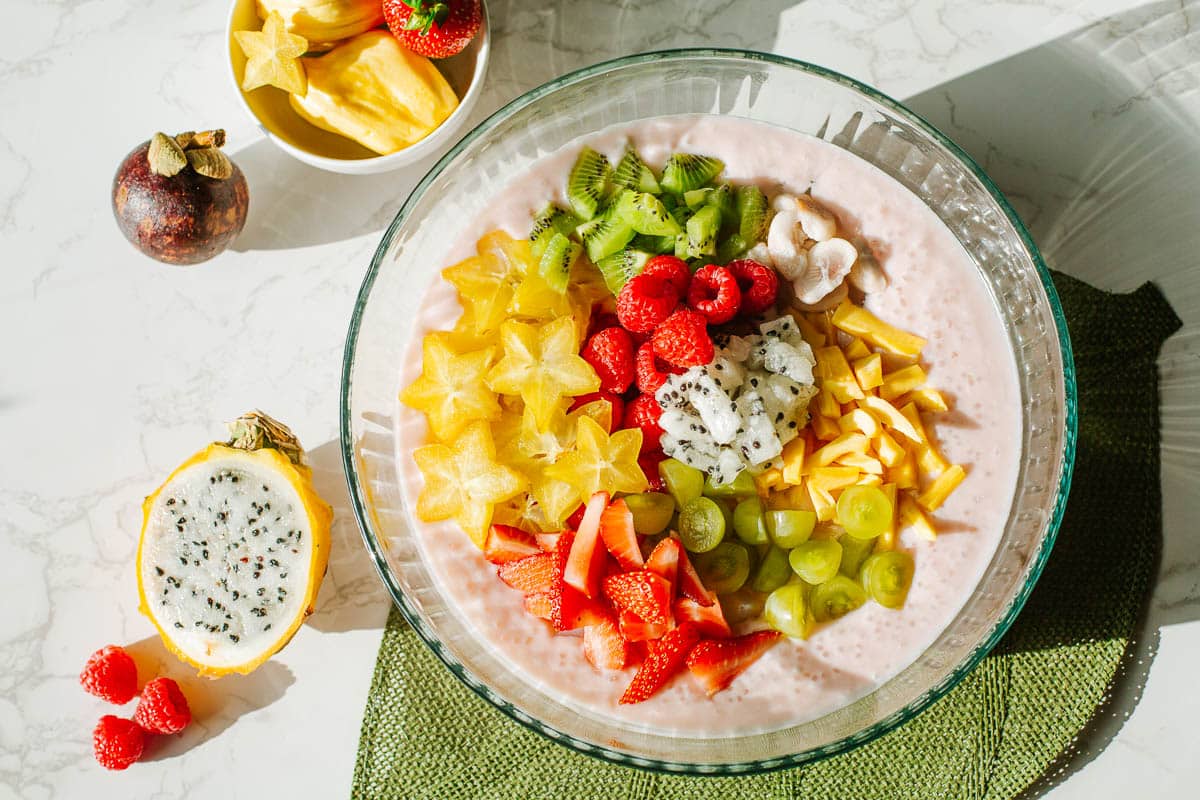
You could say this coconut milk sago is my personal love letter to chè Thái, one of my favorite summer desserts. Traditional Vietnamese chè Thái is usually described as a sweet soup or fruit cocktail and is made by mixing assorted tropical fruits and jellies into coconut milk and serving it over ice. One of the quintessential ingredients is the “red rubies” – water chestnuts coated in tapioca starch, boiled, and dyed red with food coloring.
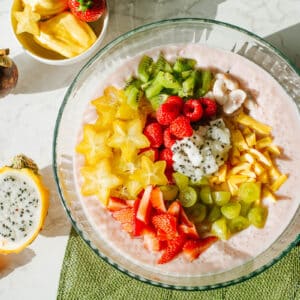
My rendition pays homage to these eye-catching “rubies” with the addition of red raspberries and strawberries, accompanied by some of my favorite seasonal tropical fruits as well. It’s less like a sweet soup and more of a fruity tapioca pudding. If you like it, I encourage you to try a more traditional chè Thái next.
This coconut milk sago recipe is fun to eat, highly customizable, ready in minutes, and easy enough to make with the kids.
🛒 What You Need To Make This Recipe
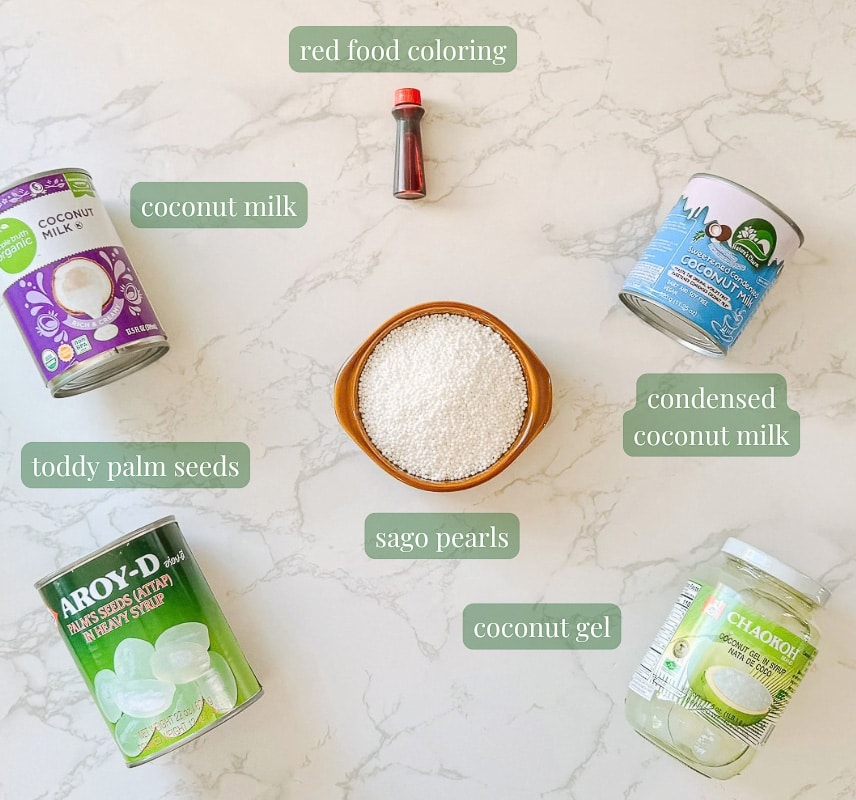
- Coconut milk: Unsweetened full-fat coconut milk is best.
- Sweetened condensed coconut milk: You could use regular sweetened condensed milk if you prefer.
- Sago: I recommend using these small sago pearls or small-pearl tapioca.
- Red food coloring: Totally optional, but it gives the coconut milk a nice pink hue.
- Jellies: I like to use coconut gel (nata de coco) and toddy palm seeds, which have an amazing gelatinous texture. You can also use coconut sport, pandan jelly, or other Jell-O flavors you like. I recommend looking for most of these at your local Asian market, as they can be expensive online.
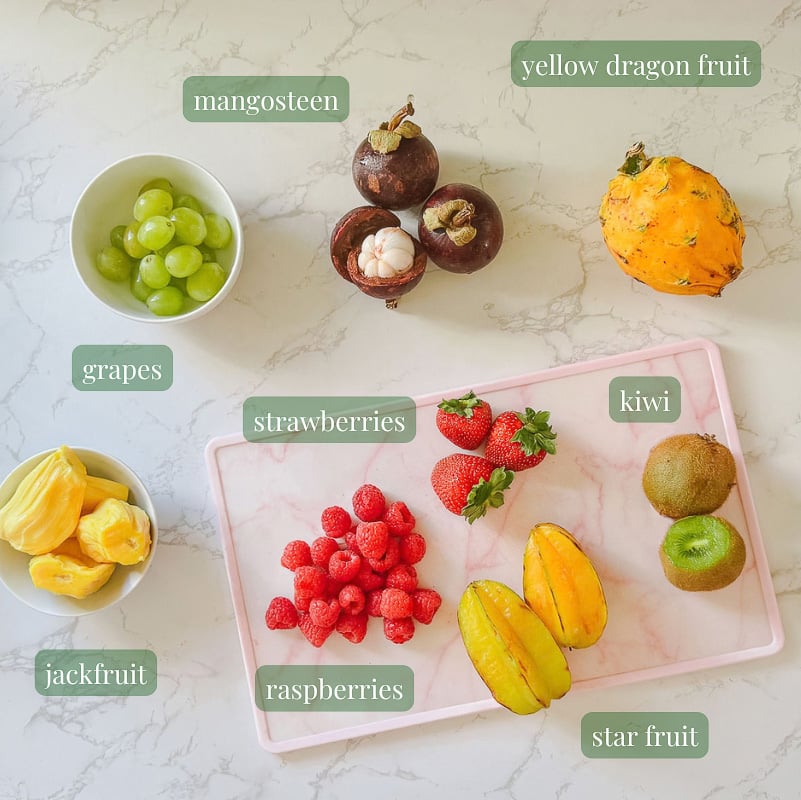
- Fruit: I like to use a combination of raspberries, strawberries, cotton candy grapes, kiwi, yellow dragon fruit (much sweeter than pink dragon fruit), star fruit, mangosteen, and fresh jackfruit. Some of these ingredients may be hard to find, depending on where you live and the time of year, so feel free to make it your own. Try it with mangoes, melon balls, rambutans, longan, cherries, tangerines, pineapple, pomegranate, pomelo, and more.
*I like to use fresh jackfruit, personally, but you can buy canned jackfruit in syrup if you can’t find it fresh.
🥥 How To Make Coconut Milk Sago
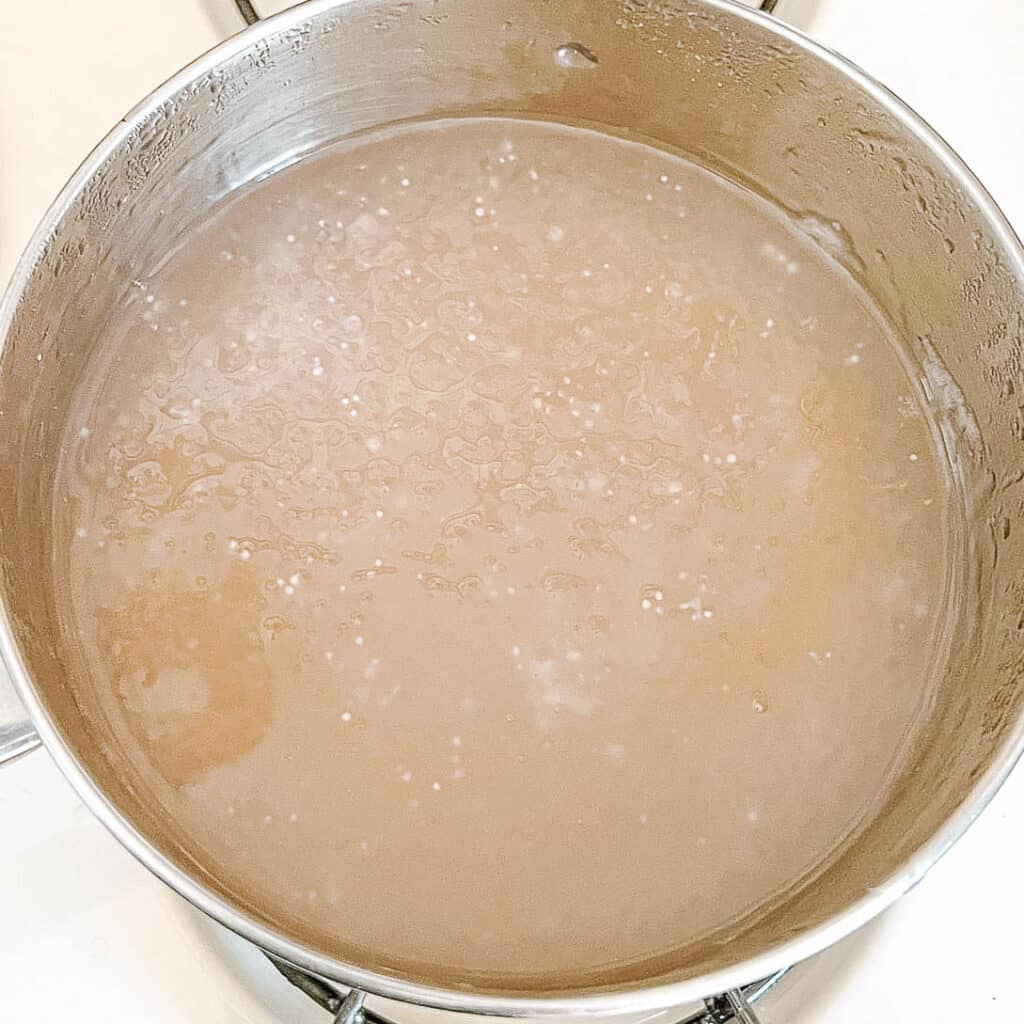
Step 1: Boil 6 cups of water, then add sago pearls. Turn heat to low and simmer for 10 minutes. Turn off the heat, stir, cover, and let sit for another 15 minutes until pearls are translucent.
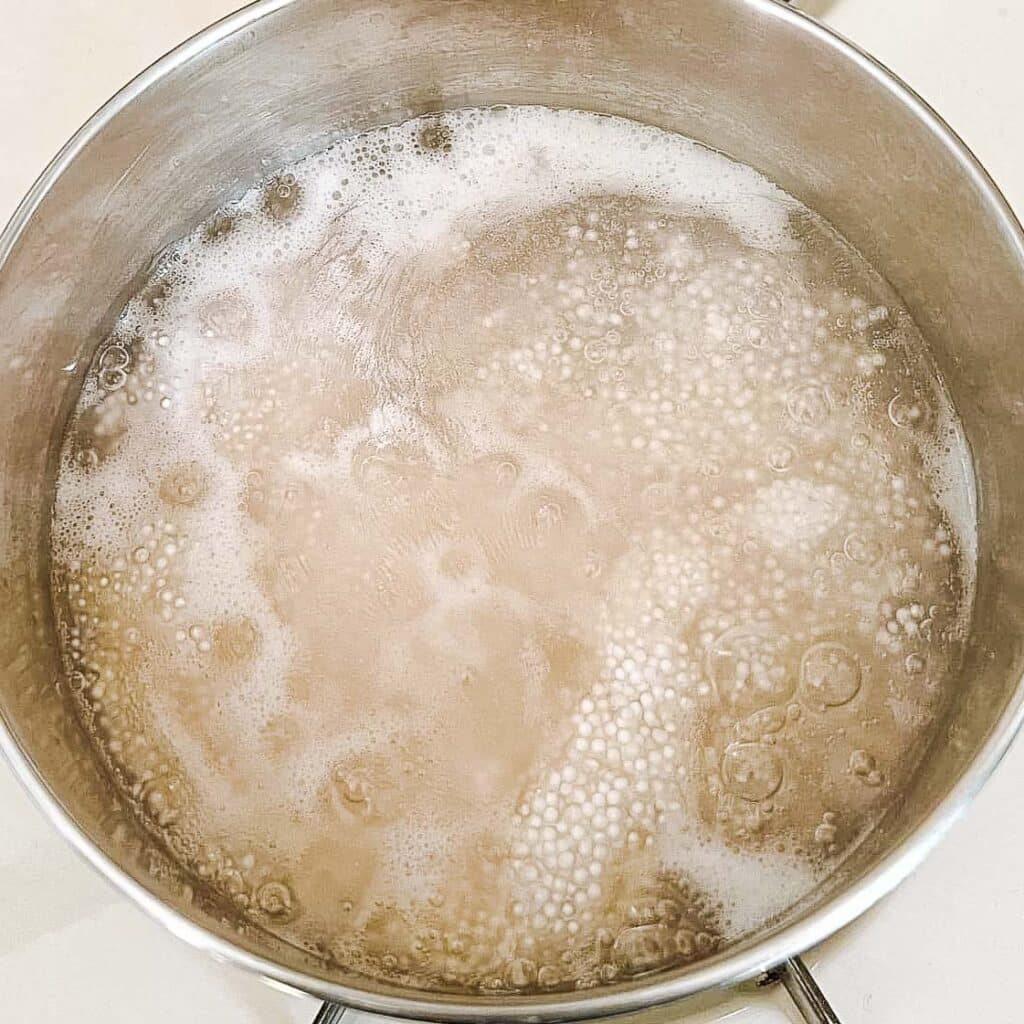
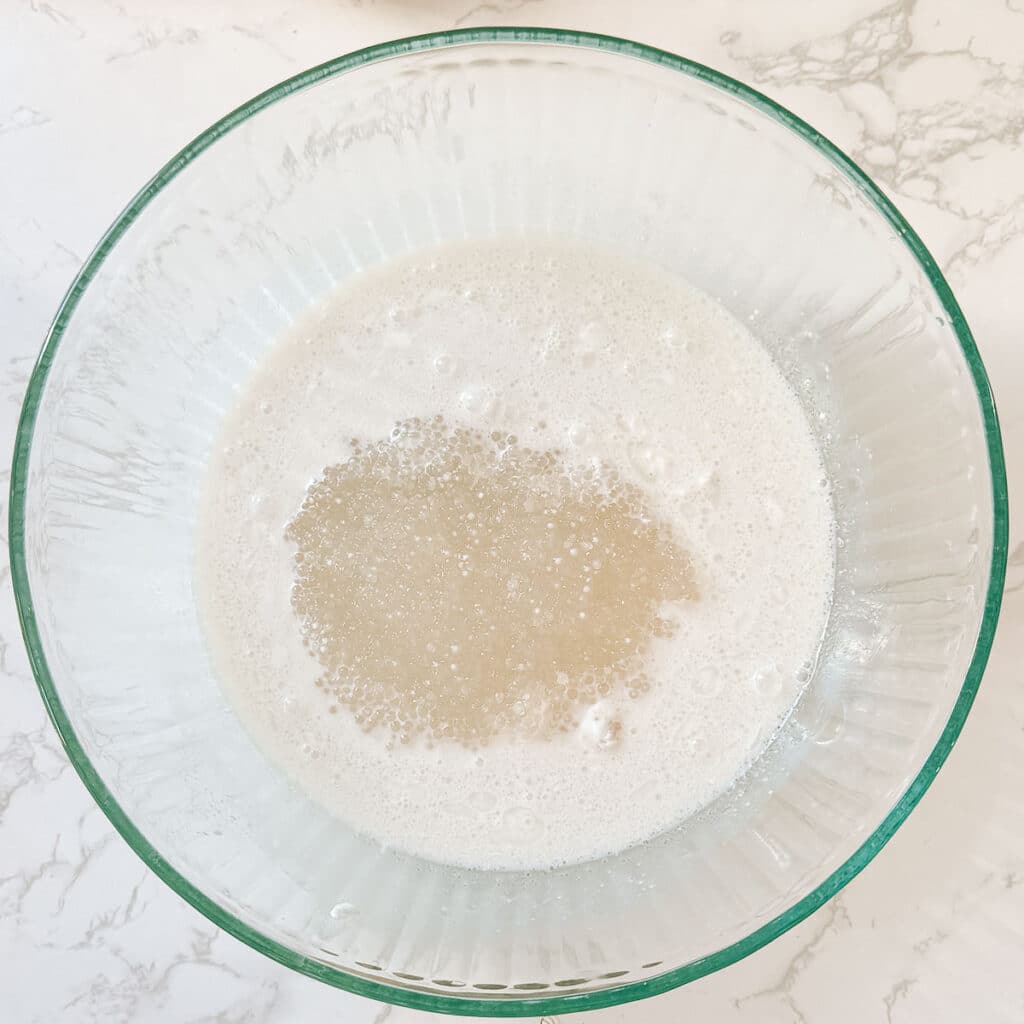
Step 2: Strain tapioca pearls and rinse with cold water until pearls are no longer hot and excess starch is removed. Add to a large mixing bowl along with coconut milk, cream of coconut, and red food coloring, then stir to combine.
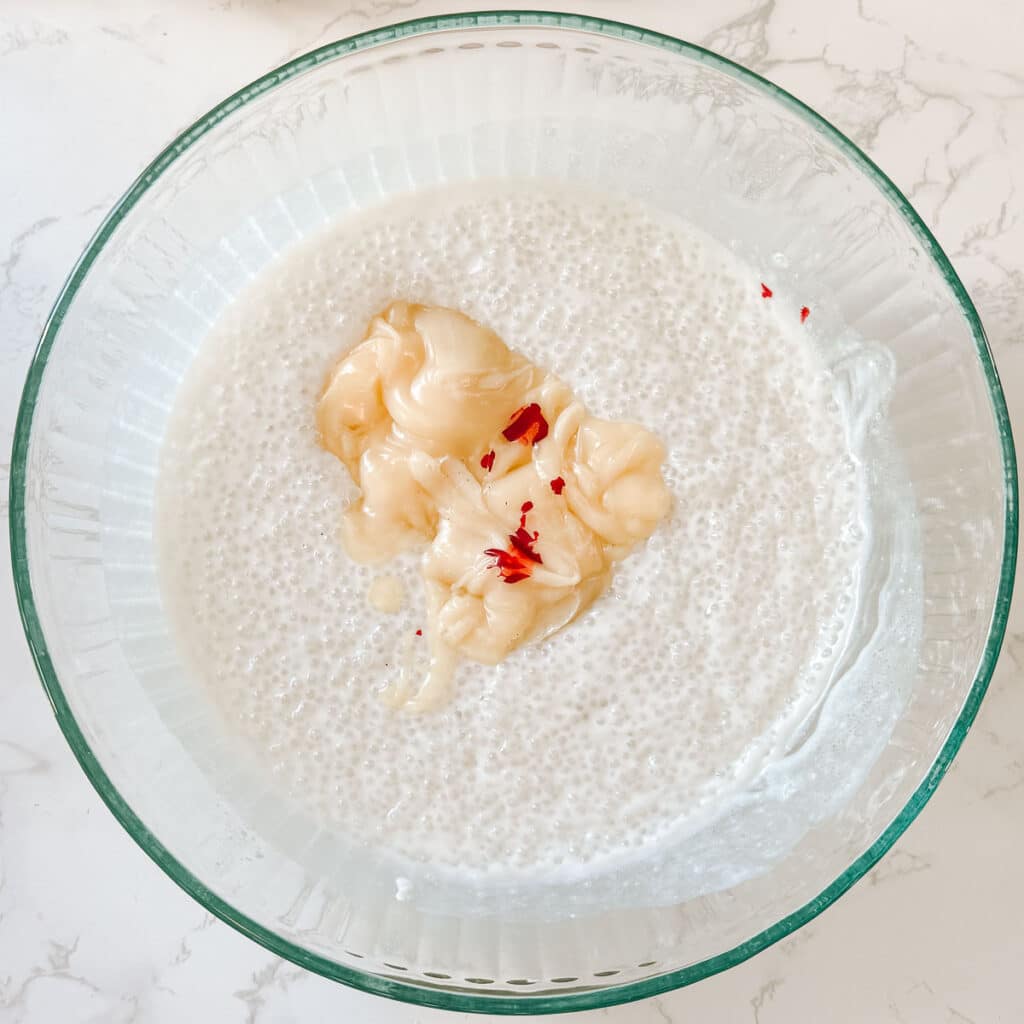
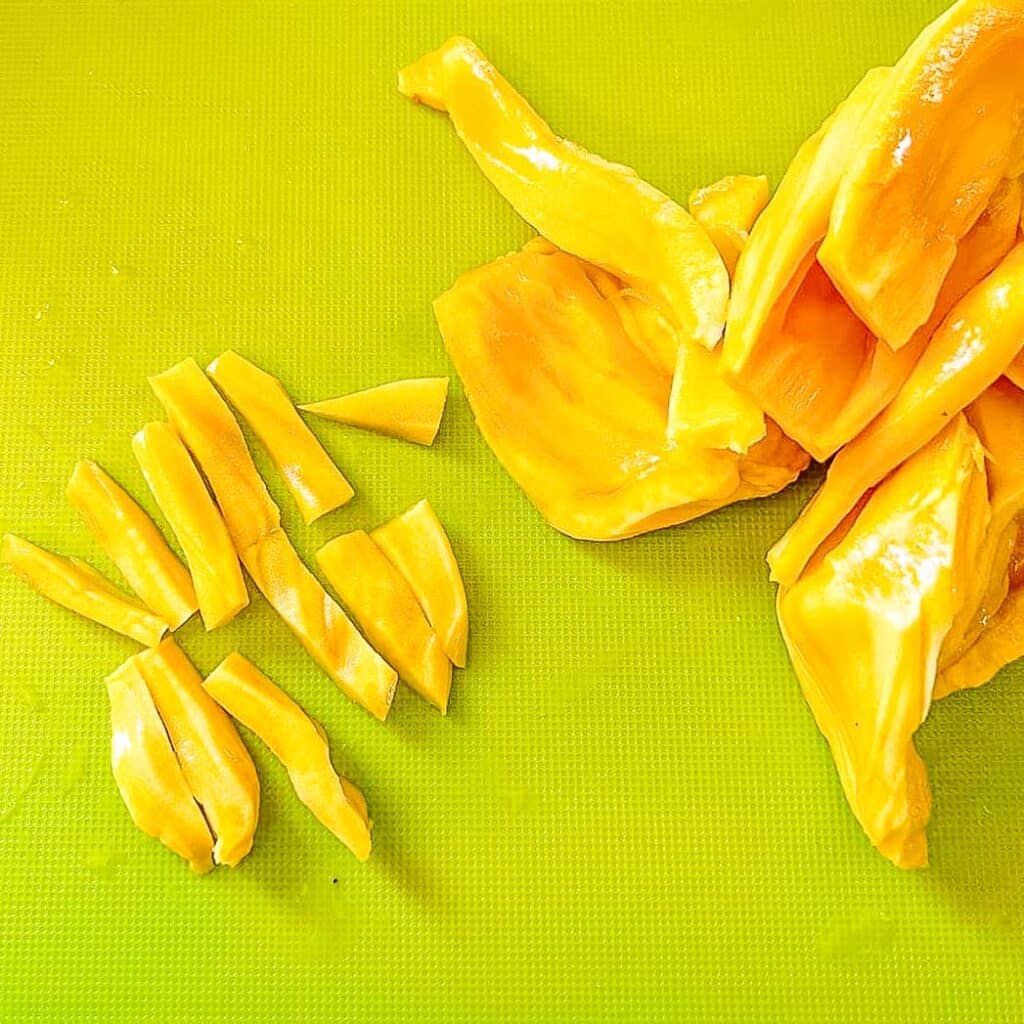
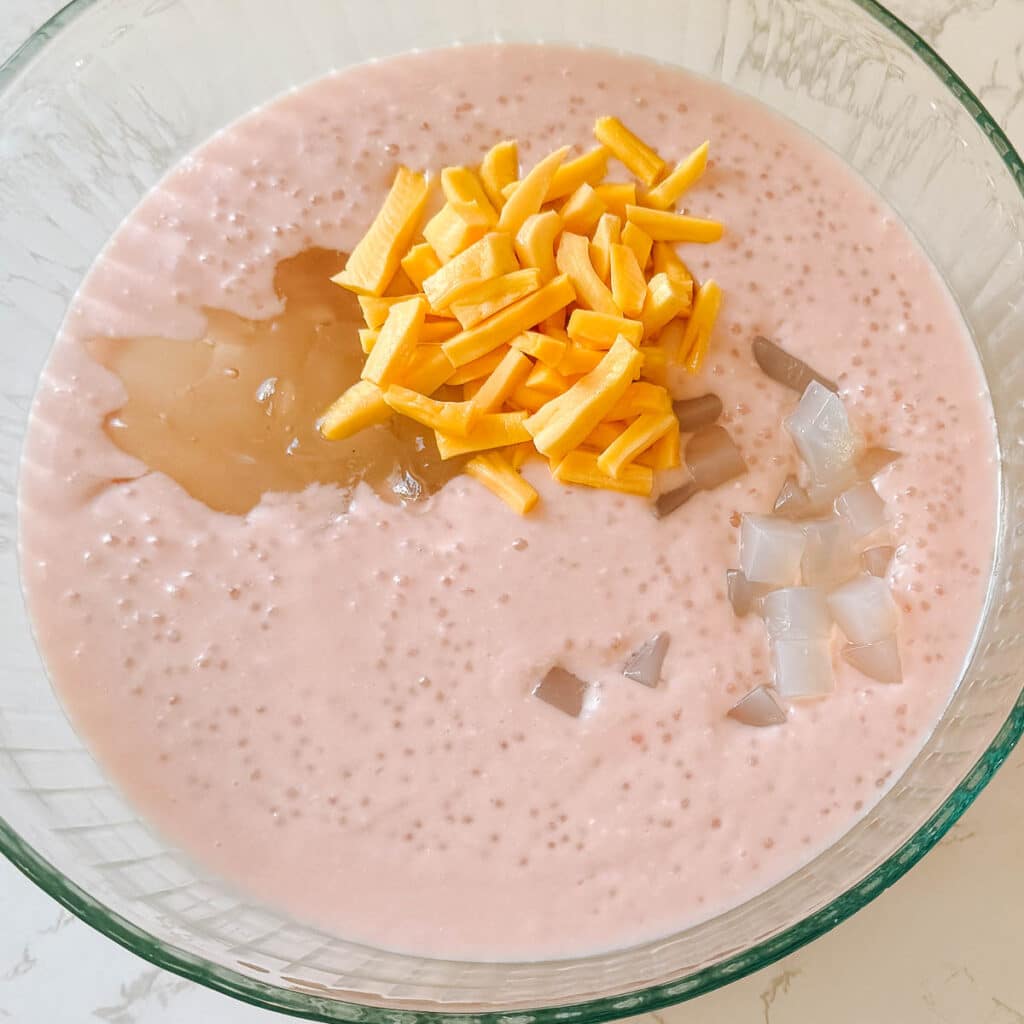
Step 3: Drain toddy palm seeds and coconut gel, then add to a large mixing bowl. Cut jackfruit into thin strips (draining first if using canned jackfruit) and add to the bowl.
Pro Tip: I recommend reserving the syrup from the toddy palm seeds. You can use it to adjust the sweetness level to your liking if the finished sago isn’t as sweet as you want it after chilling.
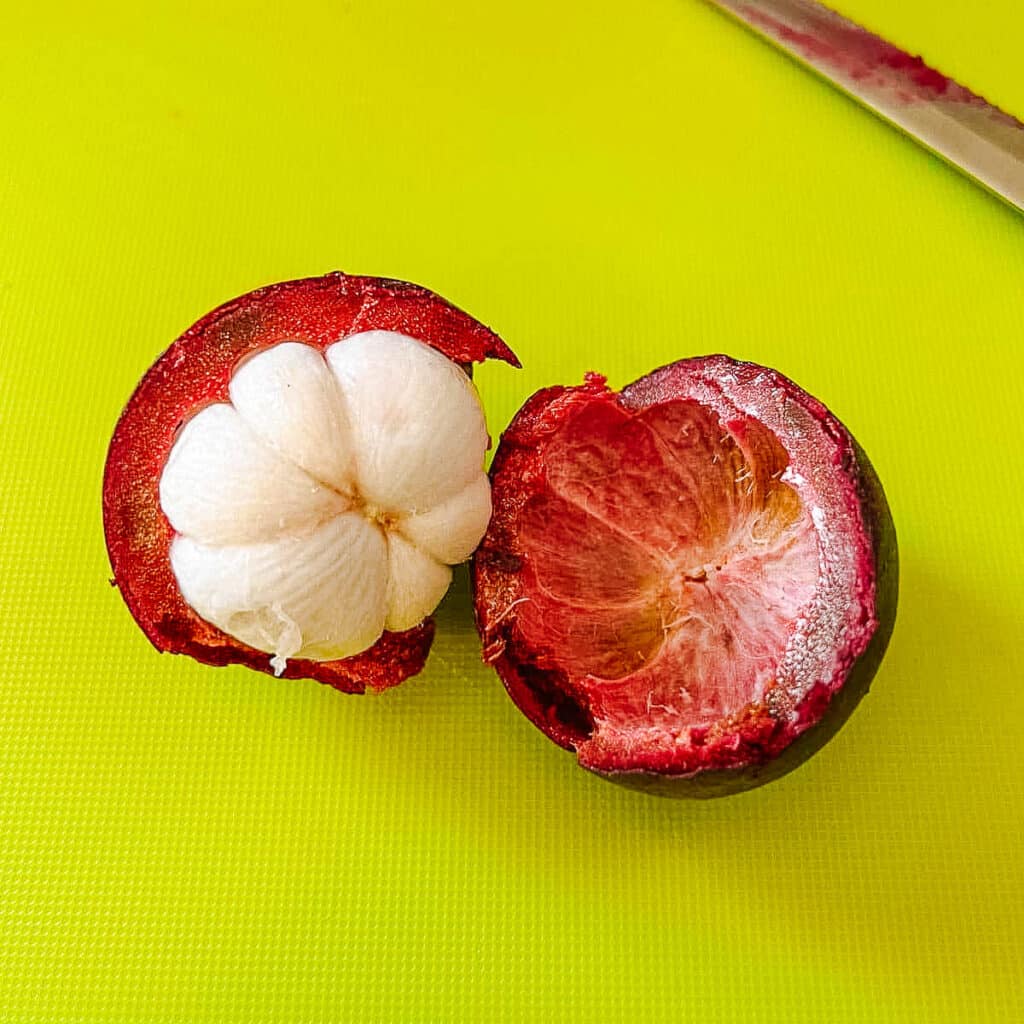
Step 4: Use a serrated knife to score a shallow line around the mangosteen rind, then gently twist and pull the two halves apart. Harvest the white fruit and add to the bowl. Cut strawberries, grapes, kiwi, star fruit, and yellow dragon fruit into bite-sized pieces and add them to the bowl, along with the raspberries.
Pro Tip: You may want to leave the largest mangosteen pieces out of the mixture as they often have pits.
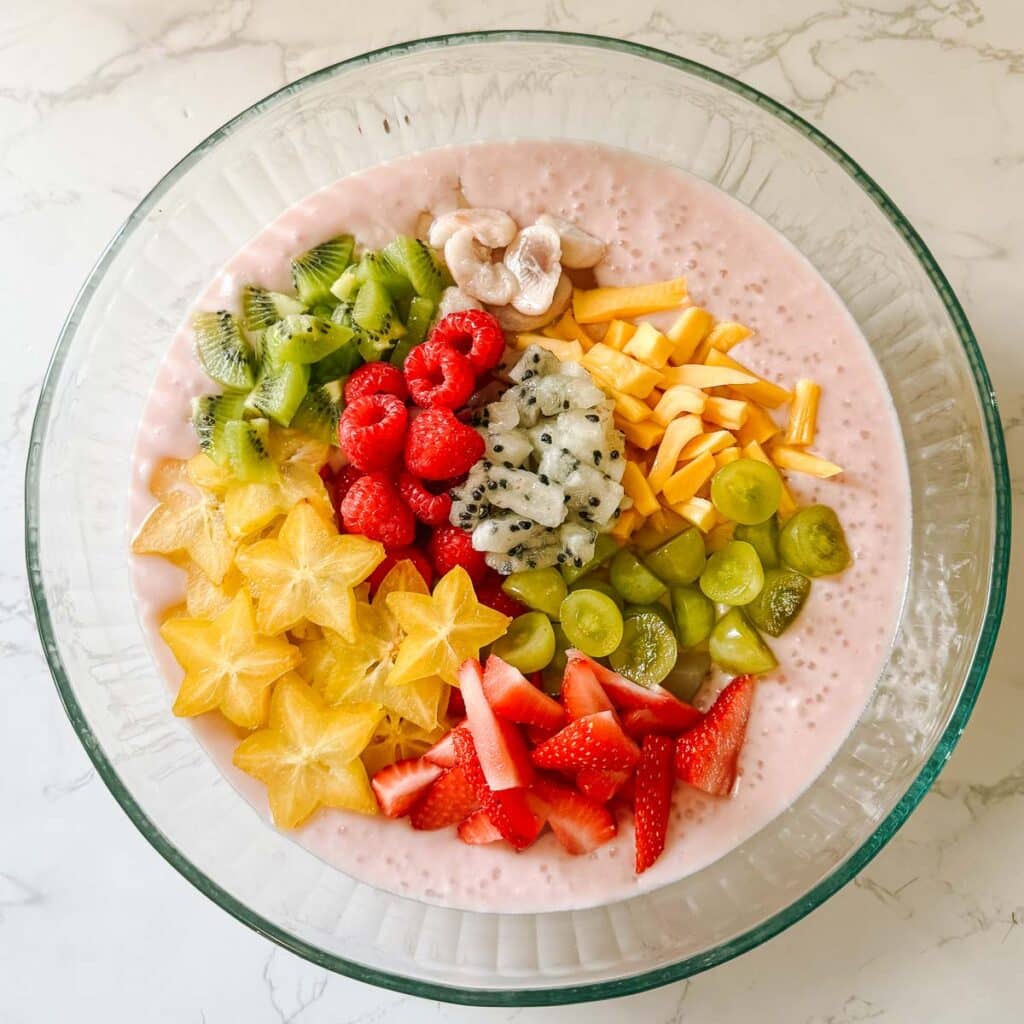
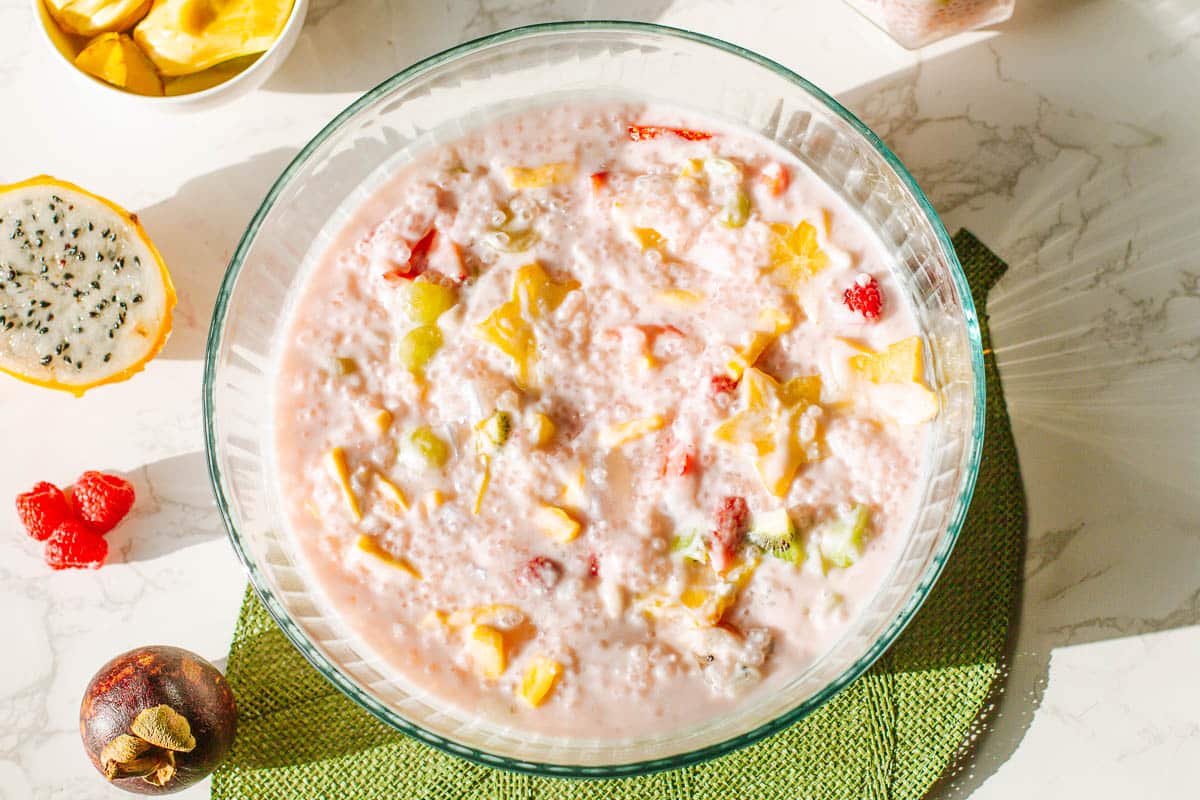
Step 5: Gently mix until fully incorporated, then cover and chill in the fridge for 1-2 hours so the flavors can meld. Serve individual portions over ice.
🤷🏻♀️ Recipe FAQs
What is the origin of sago?
True sago is a starch extracted from the inner trunk of the sago palm, a plant thought to originate in New Guinea and the Moluccas. The starch is formed into balls, which are then boiled and added to drinks and desserts across Southeast Asia, providing a chewy tapioca-like texture.
What kind of coconut milk is best for sago?
Full-fat unsweetened coconut milk is the way to go. Using unsweetened coconut milk allows you more control over the sweetness level.
Are sago pearls gluten-free?
Plain sago pearls are naturally gluten-free and vegan when made from sago palm starch. Tapioca pearls typically sold as sago are plant-based too, though it’s always wise to double-check the listed ingredients.
How do I know if a mangosteen is ripe?
Look for mangosteens with a reddish-purple to deep purple rind that gives slightly when pressed; there will usually be a soft spot. Avoid fruit with major cracks or damage. The flesh should be mostly white, although sometimes it will have brown stains from the pigment in the rind or a yellowish resin called “gamboge” that can resemble bee pollen. While unsightly, neither of these poses any harm, but I recommend rinsing the gamboge off if you can, as it is often bitter. Ripe mangosteen flesh should be sweet and juicy, while unripe mangosteen will taste astringent, and rotten ones will emit a sour odor, and the rind will be very difficult to cut through.
Who shouldn’t eat star fruit?
Star fruit is generally safe to eat for people with healthy kidneys, but should be avoided by anyone with kidney disease.
👩🏻🍳 Pro Tips
- The cook time I mention in the recipe is for small sago pearls. If you’re using a larger size pearl, they may require longer cooking time, so I suggest referring to package instructions.
- Rinse sago pearls well with cold water to remove excess starch and stop the cooking process.
- Drained sago pearls will clump together if they start to dry. Stirring the sago into the coconut milk promptly keeps them separated.
- You can store coconut milk sago in an airtight container in the fridge for up to 3 days.
- Be mindful that the longer you store the coconut milk sago, the less fresh the texture of the fruit will be.
- Coconut milk sago will thicken in the fridge. You can stir in a splash of coconut milk before serving to restore its creamy consistency.
🍰 More Dessert Recipes You’ll Love

Love this coconut milk sago recipe? Please leave a 5-star 🌟🌟🌟🌟🌟 rating in the recipe card below & a review in the comments section further down the page.
Stay in touch with me through social media @ Instagram, Pinterest, and Facebook! Don’t forget to tag me when you try one of my recipes!
Coconut Milk Sago with Mixed Fruit
Equipment
Ingredients
- 1 cup sago pearls (uncooked)
- 2 14-oz cans coconut milk
- 1 11-oz can sweetened condensed coconut milk
- 2 drops red food coloring
- 1 cup toddy palm seeds (drained)
- 1 cup coconut gel (drained)
- 1 cup jackfruit (sliced)
- 3 mangosteen
- 1 cup strawberries (sliced)
- 1 cup cotton candy grapes (halved)
- 2 kiwi
- 1 star fruit
- 1 yellow dragon fruit
- 1 cup raspberries
Instructions
- Boil 6 cups of water, then add sago pearls. Turn heat to low and simmer for 10 minutes. Turn off the heat, stir, cover, and let sit for another 15 minutes until pearls are translucent.
- Strain tapioca pearls and rinse with cold water until pearls are no longer hot and excess starch is removed. Add to a large mixing bowl along with coconut milk, cream of coconut, and red food coloring, then stir to combine.
- Drain toddy palm seeds and coconut gel, then add to a large mixing bowl. Cut jackfruit into thin strips (draining first if using canned jackfruit) and add to the bowl.
- Use a serrated knife to score a shallow line around the mangosteen rind, then gently twist and pull the two halves apart. Harvest the white fruit and add to the bowl. Cut strawberries, grapes, kiwi, star fruit, and yellow dragon fruit into bite-sized pieces and add them to the bowl, along with the raspberries.
- Gently mix until fully incorporated, then cover and chill in the fridge for 1-2 hours so the flavors can meld. Serve individual portions over ice.
Notes
- I recommend reserving the syrup from the toddy palm seeds. You can use it to adjust the sweetness level to your liking if the finished sago isn’t as sweet as you want it after chilling.
- You may want to leave the largest pieces of mangosteen out of the mixture as they often have pits.
- The cook time I mention in the recipe is for small sago pearls. If you’re using a larger size pearl, they may require longer cooking time, so I suggest referring to package instructions.
- Rinse sago pearls well with cold water to remove excess starch and stop the cooking process.
- Drained sago pearls will clump together if they start to dry. Stirring the sago into the coconut milk promptly keeps them separated.
- You can store coconut milk sago in an airtight container in the fridge for up to 3 days.
- Be mindful that the longer you store the coconut milk sago, the less fresh the texture of the fruit will be.
- Coconut milk sago will thicken in the fridge. You can stir in a splash of coconut milk before serving to restore its creamy consistency.